















How to Report a Crime in Florida

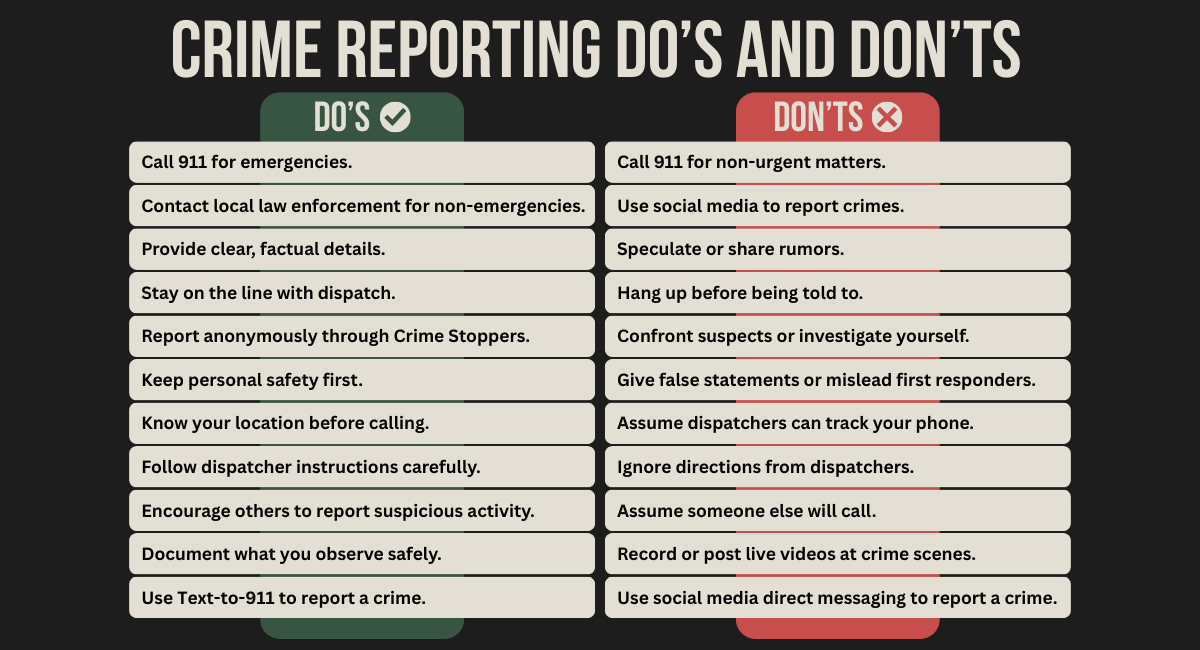
Staying informed and taking action are key parts of keeping Florida communities safe. Florida residents can learn how to report a crime safely and effectively — from knowing when to call 911 to submitting anonymous tips. By providing accurate details and understanding the difference between emergency and non-emergency situations, you can be empowered to make the right call when it matters most.
Five Ways to Report a Crime in Florida
There are several reliable ways to report suspicious activity or crime in Florida. Knowing your options ensures the right people receive the right information at the right time.
- Call 911: For emergencies or crimes in progress that pose immediate danger to life or property.
- Use a Non-Emergency Line: Report non-urgent incidents such as vandalism, theft with no suspect on scene or noise complaints through your local sheriff’s or police department’s non-emergency number.
- Submit an Anonymous Tip: Many Florida counties partner with Crime Stoppers programs, allowing you to share information without revealing your identity.
- Report Online: Some agencies provide online portals for filing non-emergency reports or tips.
- Visit a Local Law Enforcement Office: For ongoing concerns, in-person reporting may be best especially if you need to share detailed information or documentation.
How to Report a Crime Effectively
Accurate, detailed information helps law enforcement respond quickly and efficiently. When reporting a crime:
- Stay calm and clear. Speak slowly and provide specific details such as location, time and descriptions of people or vehicles involved.
- Avoid speculation. Stick to the facts and avoid assumptions about motives or relationships.
- Provide contact information if possible. Anonymous tips are helpful, but a callback number can make follow-up easier.
- Note any evidence. If you have photos, videos or witness details, mention them when reporting.
- Follow instructions. When dispatchers or deputies ask clarifying questions, listen carefully and answer as completely as possible.
- Be thorough but concise. Give all relevant details, but focus on information that directly helps solve the crime.
- Record key details. Write down what you observed while it’s fresh in your memory, including license plate numbers, clothing and distinguishing features.
- Report suspicious activity early. Don’t wait, as timely information can prevent escalation and help law enforcement respond more quickly.
- Use multiple reporting methods if needed. Many agencies accept phone calls, online forms, apps or in-person reports.
- Stay safe. Do not confront suspects or put yourself in danger while gathering information.
Calling 911 to Report a Crime
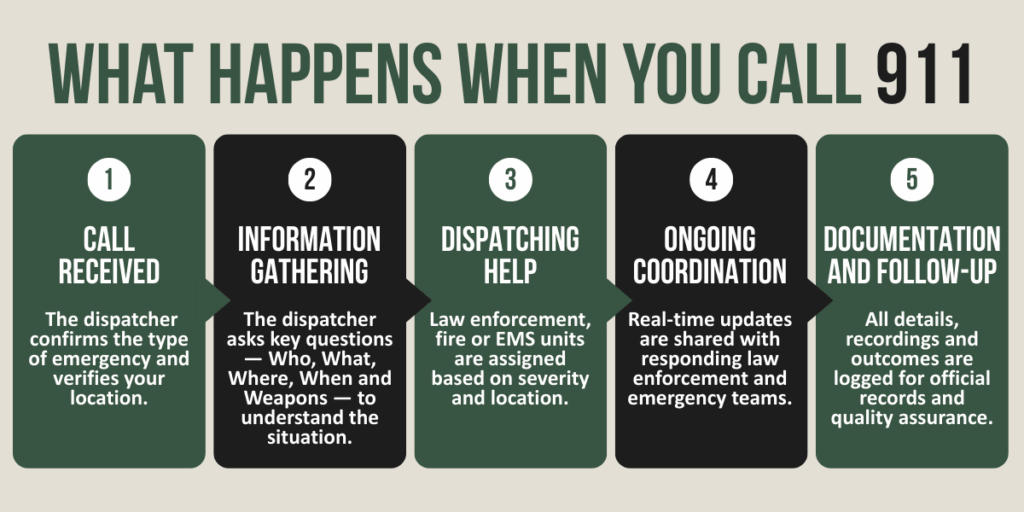
When you call 911, your call sets a carefully coordinated process in motion. First, the dispatcher confirms the type of emergency and your location, then gathers key details by asking questions such as Who, What, Where, When and whether any weapons are involved. Based on the information, the dispatcher quickly assigns the appropriate response units — police, fire or EMS — prioritizing based on severity and proximity. Throughout the response, they relay real-time updates to ensure responders have the most current information. Finally, all details, recordings and outcomes are documented, creating an official record that supports investigations, training and future emergency response efforts.
Texting 911 to Report a Crime
In Florida, the Text-to-911 service provides an alternative way to reach emergency help when calling isn’t possible. It’s especially useful if you are deaf or hard of hearing, have a speech disability or find yourself in a dangerous situation (for example, a home invasion, kidnapping or domestic-violence scenario) where making a voice call could risk your safety.
To use it, simply open your phone’s text app, type “911” (no spaces or dashes) as the recipient and send a clear, brief message with your exact location and a description of the emergency — then stay available to respond to dispatchers. Remember: if you can safely make a call, calling 911 is still the fastest and most reliable way to get help.
When to Avoid Calling 911
- Non-urgent incidents like lost property, delayed reports or minor traffic accidents with no injuries.
- General information requests or complaints about utilities, weather or noise.
- Reporting power outages, which should go to your utility provider.
If a situation isn’t life-threatening or time-sensitive, use your local agency’s non-emergency line or online reporting options instead. This helps ensure 911 dispatchers remain available for true emergencies.
If you are unsure if you’ve witnessed a crime, and there is no immediate threat to life or property, calling the non-emergency line is appropriate. Remember: even if you’re unsure, it’s still important to report it. Law enforcement can assess the situation and decide if further action is needed. It’s better to report something uncertain than to say nothing. Your tip could prevent a crime or help solve one.
What Happens When You Report a Crime?
Reporting a crime can feel intimidating, especially if you’re worried about being a witness. Understanding the process can ease concerns.
- Your role as a witness: If law enforcement needs your testimony, you may be asked to provide a statement or appear in court. Officers can explain the process and help you feel prepared. In many cases, your identity can be kept confidential, especially through programs like Crime Stoppers.
- Protection from peer pressure: Law enforcement recognizes that reporting crimes can involve social pressures. You are not alone — authorities are trained to handle these situations sensitively and provide guidance.
- It’s not “snitching”: Providing information is about helping protect your community and prevent harm. Reporting suspicious or criminal activity is a civic responsibility, not a betrayal.
- Safety measures: Agencies can often take steps to protect your identity and ensure your safety if you fear retaliation.
Florida Crime Stoppers Programs
Crime Stoppers programs are community-driven initiatives that encourage citizens to report information about crimes safely and anonymously. These programs operate in partnership with local law enforcement agencies to help solve crimes, prevent future incidents and keep neighborhoods safe.
Crime Stoppers tips are completely confidential, allowing you to report crimes without fear of retaliation. Tips can be submitted 24/7 through phone, online forms or apps, and rewards may be offered for information that helps solve cases.
How Crime Stoppers Works
- Observe Suspicious Activity or a Crime: If you witness a crime, see suspicious behavior or have information about criminal activity, take note of key details. This may include:
- Location and time of the incident
- Descriptions of suspects, vehicles or objects
- Any evidence you may have, such as photos, videos or documents
- Submit Your Tip: Florida crime stoppers programs provide several safe ways to submit tips. Remember: You do not have to give your name — your identity remains confidential.
- Phone: Call the regional Crime Stoppers’ tip line (usually 1‑800 or local toll-free number).
- Online: Many programs allow you to submit tips through a secure website form.
- Mobile App or Text: Some programs provide apps or text-based submission options.
- Receive a Tip Number: After submitting a tip, you are usually given a tip ID or reference number. Keep this number safe; it allows you to check back on the status of your tip or claim a reward if applicable.
- Law Enforcement Investigates: Once the tip is received, local law enforcement evaluates the information and begins an investigation if necessary. Crime Stoppers programs do not investigate directly — they serve as a conduit between the public and the police.
- Receive a Reward: If your tip leads to an arrest or case resolution, you may be eligible for a reward. Payments are handled anonymously, and law enforcement will never know your identity.
To find a Florida Crime Stoppers program near you or for more information, visit myfloridalegal.com.
Stay Prepared and Connected
Knowing how and when to report a crime is an important part of keeping your community safe. Save your local law enforcement’s non-emergency number, familiarize yourself with anonymous tip programs and stay up to date with alerts from your sheriff’s office or police department. By staying informed and prepared, you can act quickly and help protect yourself, your neighbors and your community.
The Florida Sheriffs Association is here to help you stay informed and empowered. Explore more practical public safety tips and connect with your local sheriff’s office to stay engaged in protecting your community.
About the Florida Sheriffs Association
Founded in 1893, the Florida Sheriffs Association was established to unite Florida’s sheriffs in advancing public safety, shaping legislation and fostering collaboration among law enforcement agencies. Over the decades, FSA has grown into a powerful advocate for law enforcement; providing training, resources and support to ensure the protection and security of Florida’s communities.
The Florida Sheriffs Association helps you stay informed on the latest law enforcement initiatives, public safety updates and the work of Florida’s sheriffs. From in-depth blogs to legislative news and community programs, we keep you connected to the issues that matter. Explore more at flsheriffs.org and stay engaged with Florida’s law enforcement community.