

Law Enforcement Mounted Patrol Units Spotlight
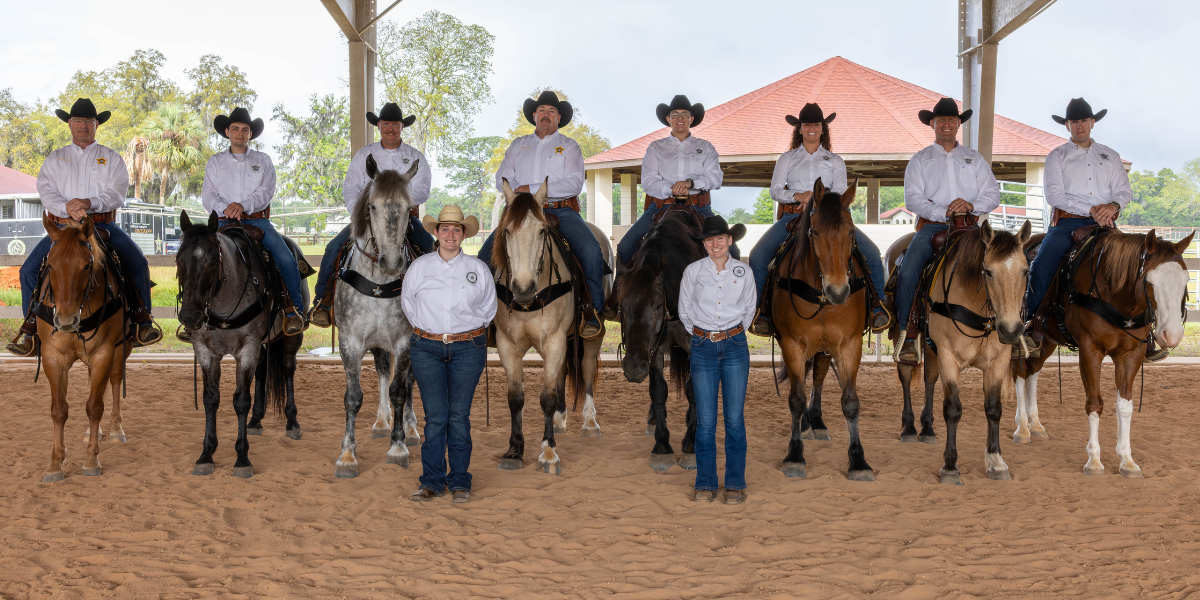
Ask most Floridians where they have seen a mounted patrol unit, and the answer is probably a parade, fair, or football game. While those public appearances are often the most visible part of a mounted unit’s work, they tell only part of the story. Behind every mounted patrol is a partnership between a trained law enforcement professional and a specially trained horse, one that combines mobility, visibility, and a unique ability to connect with the community.
Mounted Patrol Unit Mission and Purpose
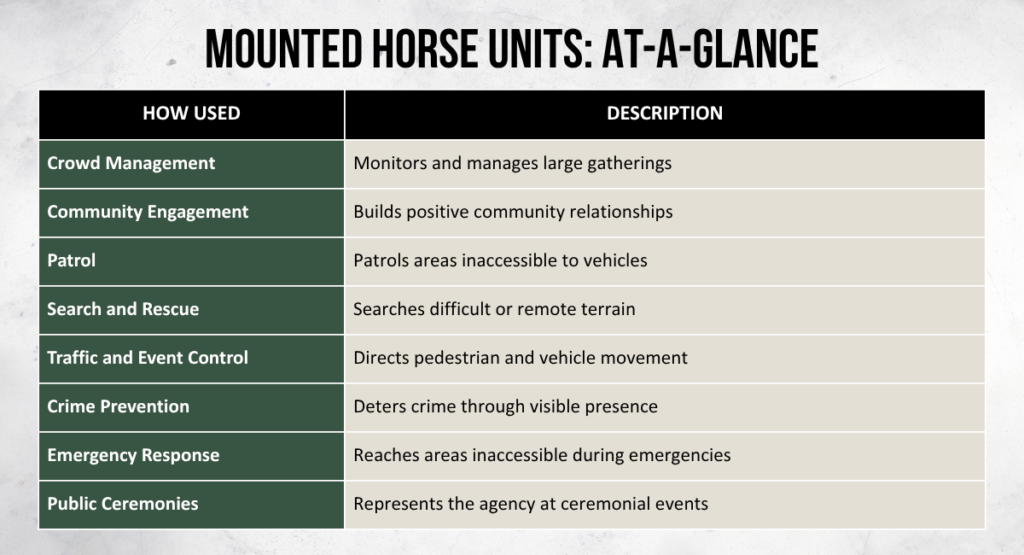
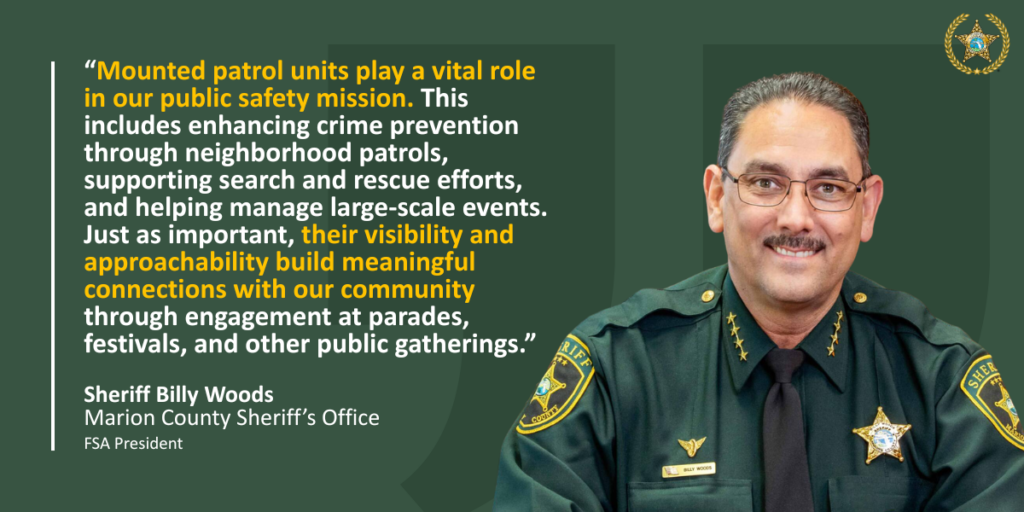
Across Florida, sheriff’s offices use mounted patrol units for search and rescue, crowd management, rural patrol, special events, and community engagement. By combining specially trained horses with experienced law enforcement professionals, these units give deputies capabilities that patrol vehicles and foot patrols cannot always provide. Mounted patrol units offer several distinct advantages:
- Access: Horses can navigate wooded, rural, and other terrain that may be difficult or inaccessible for patrol vehicles.
- Visibility: A mounted deputy’s elevated position, roughly 10 feet above the ground, provides a broader view, particularly in large crowds and busy public spaces.
- Crowd management: A horse’s size and presence can help deputies manage and redirect crowds while maintaining a visible law enforcement presence without a raised voice or a physical confrontation.
- Community connection: Mounted units are often popular attractions at community events, creating natural opportunities for deputies and residents to interact outside of an enforcement setting.
Behind those capabilities is a partnership between the deputy and the horse. A mounted patrol horse is not simply transportation; it is a working partner. Deputies and handlers spend significant time training and working with their assigned horses, learning to recognize signs of stress, fatigue, or discomfort while building communication and trust. That partnership requires skill on both fronts: deputies must understand law enforcement tactics as well as equine behavior to operate safely and effectively together.
That relationship becomes especially important in crowded or unpredictable environments. The horse must remain responsive to its rider despite unfamiliar sights, sounds, and movement, while the deputy must understand how the horse is reacting to its surroundings and know when to adjust. In practice, that partnership translates into a wide range of day-to-day assignments, including:
- Assisting with missing-person searches
- Patrolling shopping plazas and neighborhoods prone to crime
- Providing security and crowd management at concerts, festivals, and sporting events
- Representing the agency at community functions, career days, and ceremonies
The History of Mounted Patrol Units in Florida
Mounted law enforcement in the United States traces back to New York City’s first mounted police unit, formed in 1858. Boston and San Francisco followed within two decades, and by the early 20th century, mounted patrol had become a standard tool for larger law enforcement agencies. Florida sheriff’s offices adopted the model for many of the same reasons: the state’s rural expanse, agricultural land, and outdoor festivals and events made a mounted presence practical long before it became ceremonial. As Florida agencies built out that capability, two distinct models took hold, shaped by each agency’s budget and the demands of its community, and both continue across the state today. Florida’s oldest programs are deputy-staffed and date to the 1960s, giving several agencies more than half a century of experience refining how the mounted assignment fits alongside a deputy’s regular caseload.
Deputy Mounted Patrol Units
Some Florida sheriff’s offices built their mounted capability around sworn deputies, treating mounted duty as a specialized assignment layered onto a deputy’s regular law enforcement role. This approach gives sheriff’s offices direct control over the horses, training, and deployment of their mounted teams while allowing experienced deputies to bring their law enforcement skills to a specialized role. Under this model:
- The agency owns and houses the horses.
- The agency directs training and provides the necessary equipment.
- Sworn deputies are assigned to mounted duty as an additional responsibility alongside their regular law enforcement duties.
- Mounted deputies may be deployed for special details, community events, searches, crowd management, and other assignments.
Volunteer Posse Mounted Patrol Units
Other Florida sheriff’s offices rely on a volunteer posse model instead, drawing on a legal and civic tradition older than the state itself. The posse comitatus, Latin for “force of the county,” is an English common law concept that allows a sheriff to summon able-bodied citizens to help keep order. On the American frontier, this became simply “the posse.”
Florida agencies formalized that tradition into organized, trained volunteer programs. The cost-effectiveness of this approach is one reason volunteer posses remain common in counties where funding a full-time mounted unit may be more difficult to justify. In these programs:
- Volunteers typically provide and care for their own horses.
- The sheriff’s office provides training, coordination, and operational assignments.
- Mounted volunteers can assist with community events, searches, crowd management, and other assignments.
- The model allows agencies to expand their mounted presence without the cost of owning and maintaining a stable of horses.
Treatment of Mounted Patrol Unit Horses
Florida’s sheriff’s offices treat mounted patrol horses as working partners, not equipment. Routine care is an essential part of maintaining a healthy, capable patrol horse. Some units have dedicated civilian staff who assist with feeding, stable maintenance, and other daily responsibilities, while deputies or volunteer handlers may take on grooming, riding, and conditioning. Depending on the agency and structure of the unit, responsibilities may include:
- Feeding and providing fresh water
- Grooming and hoof care
- Stall and stable cleaning
- Exercise and conditioning
- Monitoring weight, behavior, and overall health
- Routine veterinary examinations
- Farrier services
Maintaining a mounted unit is a significant ongoing investment. Veterinary care, feed, equipment, and stable maintenance all contribute to the health and readiness of the horses. These expenses may be covered through operating budgets, while volunteer-based programs may rely on donations, fundraising, and community or corporate sponsorships.
The Retirement of a Unit Horse
When a mounted patrol horse reaches the end of its working life, the horse’s next chapter can take several forms. Depending on the agency and the horse, it may remain with its handler, be placed with a qualified private home, or move to a specialized equine sanctuary. The goal is to find a safe, appropriate retirement where the horse can live comfortably after years of training and service.
One example is Mill Creek Farm, a 265-acre nonprofit sanctuary in Alachua that provides permanent care for horses retired from government service, including police and park patrol work. Several Broward Sheriff’s Office horses have retired there, including Apollo, a Belgian draft horse who served 12 years, and Greystoke, a Percheron gelding who served 14 years. At Mill Creek, the horses are promised that they “will never be ridden or worked again” and are allowed to spend their retirement grazing in open pasture.
Retirement also means adapting care to the horse’s changing needs. Older horses may require more frequent veterinary and dental care, specialized nutrition, regular farrier services, and closer monitoring as they age. After years of working alongside deputies and becoming familiar faces in their communities, retirement gives these horses the opportunity to leave patrol work behind and simply enjoy the rest of their lives.
How the Unit Supports Law Enforcement
Whether assisting with a missing-person search, presenting the colors at special events, or serving as a crowd-control element, mounted units provide a versatile resource that can support their agencies in a variety of situations.
That framing matters: mounted deputies are law enforcement professionals first, and the horse is a specialized partner that enhances a deputy’s capabilities rather than a substitute for training or judgment. The horse may provide the advantage, but the deputy provides the expertise, leadership, and service.
Crowd Management and Public Events
Research on mounted law enforcement has found that mounted officers can cover a larger area and have a significant visibility advantage over officers on foot, particularly in crowded environments. The horse’s size creates a natural barrier that would otherwise require several officers standing shoulder to shoulder to replicate. Mounted deputies can:
- Create a visible presence: The height and size of a horse make mounted deputies easier to see in a crowd.
- Help direct movement: Horses can naturally encourage crowds to separate or change direction, often with minimal verbal commands.
- Provide an elevated vantage point: From horseback, deputies can see over crowds and identify developing problems that may be difficult to spot from ground level.
- Improve response and communication: The elevated position allows deputies to identify areas needing attention and communicate with other units more effectively.
- Operate where vehicles cannot: Mounted units can move through crowded areas where patrol vehicles and other equipment may have limited access.
These capabilities make mounted units particularly useful at festivals, concerts, football games, parades, and other large public gatherings. Their combination of visibility, deterrence, and crowd-management ability is one reason Florida sheriff’s offices continue to deploy mounted units for events ranging from local high school football games to major regional gatherings.
Beyond the Crowd
Mounted units also contribute to core law enforcement functions outside of large events. Whether working a crowded festival or searching a remote area for a missing person, their ability to navigate challenging terrain gives mounted deputies a combination of mobility and versatility that few other law enforcement resources can provide. These capabilities allow mounted units to support agencies in a range of assignments, including:
- Search and rescue: Assisting with missing-person searches in wooded, rural, or difficult-to-access areas.
- Patrol: Providing an elevated vantage point in high-crime areas, parks, and retail corridors where visibility can help deputies identify suspicious activity.
- Disaster response: Reaching areas affected by storms or other emergencies where traditional vehicles may have difficulty operating.
- Mutual aid: Assisting other law enforcement agencies and municipalities when additional personnel or specialized resources are needed.
- Criminal apprehension: Supporting operations that require mobility and access to areas beyond paved roads and established pathways.
Training and Requirements for the Mounted Patrol Unit
Joining a mounted patrol unit, whether as a sworn deputy or volunteer posse member, requires more than an interest in horses. Mounted patrol is a specialized assignment that combines horsemanship with law enforcement skills, ongoing training, and the ability to operate safely in unpredictable environments.
Ongoing Training
Deputies assigned to mounted duty typically continue in their primary law enforcement roles while taking on mounted patrol as an additional responsibility. This requires training beyond their standard law enforcement certification. Horses assigned to mounted patrol duty commonly complete:
- Initial training: Programs may include a 40-hour course.
- Regular refresher training: Many units train one to two days each month to maintain the skills of both horse and rider.
- Real-world scenario training: Horses are exposed to conditions they may encounter while on patrol, including sirens and emergency lights, gunfire, bicycles and other moving distractions, large or unpredictable crowds, and obstacles and challenging terrain.
Deputies also learn standardized cues and riding techniques so horses can be handled consistently by different riders. This is important because most mounted units rotate horses among multiple deputies rather than permanently pairing one horse with one rider.
Volunteer Training
Volunteer posse members often provide and maintain their own horses and have additional participation requirements. Most programs require volunteers to:
- Attend regular monthly meetings
- Participate in scheduled training sessions
- Maintain their horse’s readiness and fitness
- Remain active and in good standing with the unit
- Be prepared for deployment when needed
The goal is not simply to have a horse that can be ridden. Mounted patrol units need horses and riders who can work together reliably in challenging, unpredictable environments — and that level of readiness comes from consistent training and ongoing practice.
Spotlight on Florida Sheriffs’ Mounted Patrol Units
Florida is home to a wide range of mounted patrol programs, each shaped by its county’s geography and needs. Each of these programs, whether staffed by full-time deputies, volunteers, or a combination, reflects the same underlying commitment: extending the sheriff’s office’s reach into places and situations where a horse and a well-trained deputy can do what no other patrol method can.
The Marion County Sheriff’s Office Mounted Unit, one of the state’s longest-running programs, dates to the 1960s and maintains a team of seven horses trained for law enforcement operations. The unit trains twice a month and has supported operations ranging from crowd management at major concerts to search and rescue efforts in the Ocala National Forest.
The Orange County Sheriff’s Office Mounted Unit has served the Orlando area since 1984 and currently has nine horses. Its deputies patrol neighborhoods, high-crime areas, and shopping plazas and assist with missing-person searches and other sheriff’s office needs.
The Lake County Sheriff’s Office Mounted Patrol combines sworn mounted deputies with a volunteer mounted patrol whose members provide their own horses. The program supports high school football games, concerts, community events, and law enforcement operations, including mutual aid to other agencies. In 2024, the sheriff’s office reported adding two mounted deputies and two horses as the unit expanded its capabilities.
The Collier County Sheriff’s Office Agriculture and Mounted Patrol combines full-time deputies and trained volunteers to provide rural patrol, livestock and wildlife response, and event security across the county’s agricultural areas.
Frequently Asked Questions
Are mounted patrol horses owned by the sheriff’s office or by the deputies who ride them?
It varies by program. Some sheriff’s offices own and house their horses at a dedicated county facility. Many volunteer posse programs rely on members who own and maintain their own horses, with the agency providing training, coordination, and operational assignments.
How much training does a police horse need before going on duty?
Requirements vary by agency, but Florida units commonly start horses with an initial course, such as a 40-hour program, that exposes them to sirens, lights, gunfire, bicycles, and crowds. Ongoing training, often one to two days a month, continues throughout a horse’s career to maintain proficiency.
What breeds do Florida sheriff’s offices use for mounted patrol?
Units favor breeds known for calm, adaptable temperaments, including Quarter Horses, Percherons, Percheron crosses, and, in some programs, draft breeds such as Clydesdales.
Do mounted units only appear at parades?
No. While mounted deputies are common sights at parades and public ceremonies, their primary work includes crowd management at large events, patrol of high-crime areas and rural land, search and rescue operations, and disaster response support.
What happens to a police horse when it retires?
Many Florida agencies place retired mounted unit horses with nonprofit sanctuaries that provide lifelong care, including pasture, veterinary services, and a safe retirement from active duty.
How can someone volunteer for a mounted posse?
Requirements differ by county, but most volunteer posse programs ask interested residents to contact their local sheriff’s office directly. Volunteers typically need their own horse and must commit to regular training and monthly meetings to remain part of the unit.
Are mounted units more effective than officers on foot or in vehicles for crowd control?
Research shows that a single mounted officer can manage a larger crowd area than a foot officer because a horse’s size creates a natural barrier. Mounted officers also tend to have more positive, casual interactions with the public, supporting both crowd management and community trust.
Supporting Special Units in Florida
Today’s sheriffs’ offices continue to look for effective ways to serve growing communities, respond to emergencies, and build public trust. Mounted deputies provide a unique combination of traditional law enforcement skills and specialized training that allows them to serve in environments where other resources may be limited.
Many sheriffs’ offices in Florida operate with limited budgets, and acquiring costly equipment can be a challenge for smaller or rural agencies. To help address this, the Florida Sheriffs Association (FSA) operates a Shared Asset Program that provides funds to sheriffs’ offices to purchase equipment that can be shared regionally with neighboring agencies.
FSA strengthens every aspect of law enforcement across the state, including specialized units like marine, aviation teams, K-9 squads, mounted patrols, and SWAT. Through programs like the Shared Asset Program, FSA helps sheriffs acquire critical equipment, advanced technology, and training that smaller offices might not be able to fund on their own. These resources enhance sheriffs’ ability to respond quickly to emergencies, conduct search and rescue missions, track suspects, and protect communities in every corner of Florida.
Supporting FSA helps ensure law enforcement has the resources, training, and specialized units needed to keep you, your family, and your community safer every day. Want to learn more about the specialized units FSA helps equip and strengthen? Explore our other blogs to see these teams in action.
About the Florida Sheriffs Association
Founded in 1893, the Florida Sheriffs Association was established to unite Florida’s sheriffs in advancing public safety, shaping legislation, and fostering collaboration among law enforcement agencies. Over the decades, FSA has grown into a powerful advocate for law enforcement, providing training, resources, and support to ensure the protection and security of Florida’s communities.
The Florida Sheriffs Association will help you to stay informed on the latest law enforcement initiatives, public safety updates, and the work of Florida’s sheriffs. From in-depth blogs to legislative news and community programs, we keep you connected to the issues that matter. Explore more at flsheriffs.org and stay engaged with Florida’s law enforcement community.