





Firework Safety Tips for Floridians
Fireworks are exciting, festive, and a fun way to celebrate holidays — but they can also be dangerous if not handled properly. Following fireworks safety rules protects you, your loved ones and your property. Understanding local laws, safe handling and proper disposal is essential for a safe celebration.
Know the Law: What’s Legal in Florida
Before lighting any fireworks, it’s important to know the rules. In Florida, consumer fireworks are legal — but only on certain holidays. According to Florida Statutes 791.08, residents may use fireworks on:
- New Year’s Day (January 1)
- Independence Day (July 4)
- New Year’s Eve (December 31)
Using fireworks outside these dates can result in fines or other penalties, so always check the calendar before lighting any device.
What Are Consumer Fireworks?
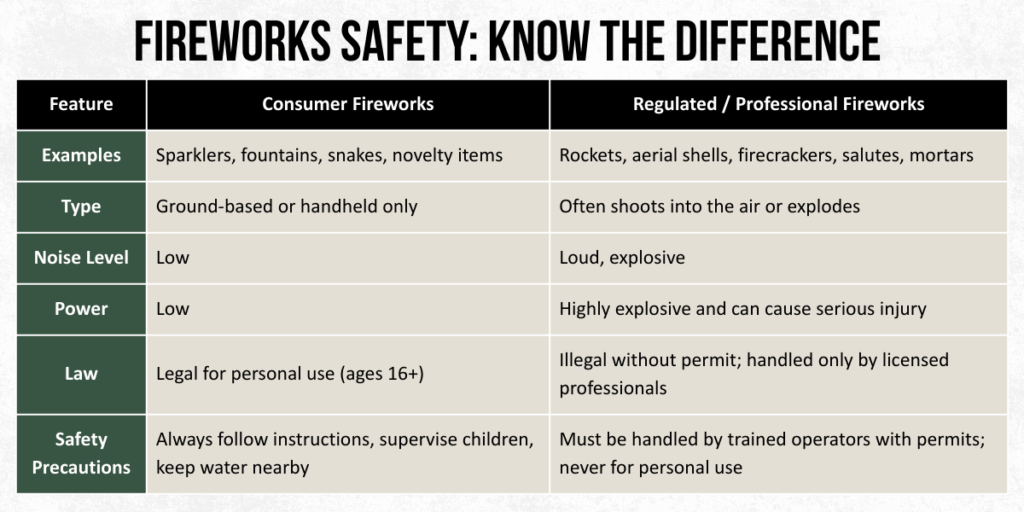
Enjoy consumer fireworks at home but leave aerial or explosive fireworks to trained professionals. Consumer fireworks are low-hazard 1.4G (Class C) devices commonly sold to the public and are safe for home use when proper precautions are followed. Popular types include:
- Sparklers: hand-held, low-hazard novelties
- Fountains and Ground Spinners: provide visual effects from the ground
- Party Poppers, Snakes, Glow Worms: small, low-risk items
Follow Local Laws
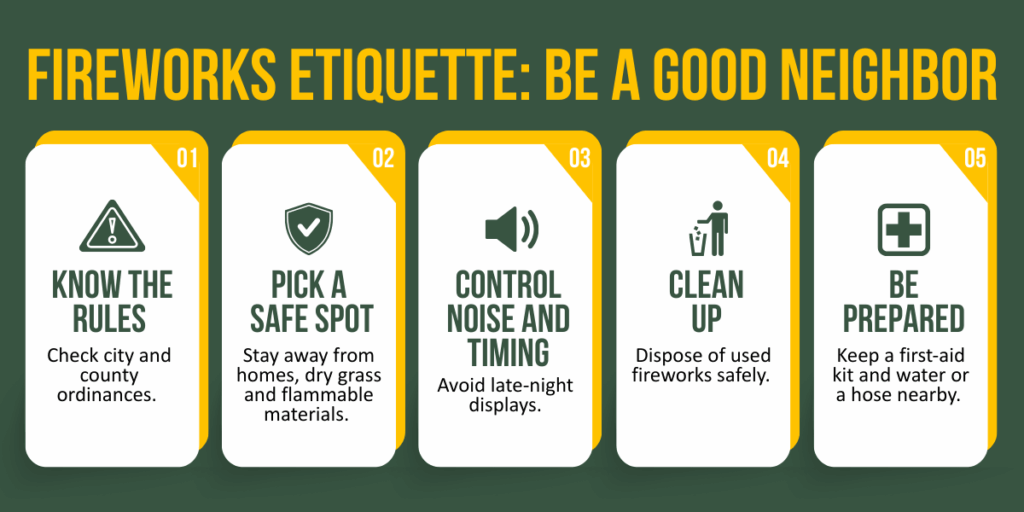
Local city or county ordinances may have stricter rules regarding times, zones or permits. Always check local ordinances — they override state allowances if stricter. Even on legal holidays, your city, county or homeowners’ association may impose additional restrictions. These can include:
- Specific times for fireworks use
- Zones where fireworks are allowed
- Permit requirements or HOA limitations
Buying Fireworks Safely and Legally
Purchasing fireworks legally is a critical part of fireworks safety. To do it safely, follow these guidelines:
- Buy from licensed sellers only. Avoid homemade or illegal fireworks.
- Check local restrictions, especially during dry weather or fire-risk conditions.
- Know the types of fireworks: simple novelties like sparklers are generally safer and widely allowed, while explosive, airborne, or loud devices are more hazardous and may be illegal for home use.
Fireworks That Require Professional Handling
Some fireworks are not safe for home use and require permits or trained professionals. These include:
- Explosive devices: Firecrackers, cherry bombs
- Airborne fireworks: Rockets, aerial shells, mortars
- Loud devices: Salutes, report shells
Fireworks Safety at Home
Even legal fireworks can be dangerous if not handled responsibly. Follow these fireworks safety rules for a fun and safe celebration.
Before opening, read all instructions from the packaging carefully. Only one person should handle lighting the fireworks. This person should be sober, responsible and knowledgeable about firework safety.
While using fireworks, keep these tips in mind.
- Place each firework on a flat, stable surface and never hold them in your hand.
- Keep a safe distance when lighting fireworks; never stand over them.
- Light only one firework at a time and move away quickly.
- Use outdoors only, away from buildings, dry grass and flammable materials.
- Avoid wooded areas, tree canopies or dense vegetation.
- Keep safety tools nearby: bucket of water, hose or fire extinguisher.
- Never relight a dud; wait 20 minutes and soak in water.
- Wear protective gear such as safety glasses and gloves.
- Avoid alcohol and drugs while using fireworks.
Fireworks Safety Tips for Kids
Children need extra supervision around fireworks. To ensure a safe celebration, follow these fireworks safety tips.
- Designate a viewing area: Keep children several yards away from the fireworks.
- No handling: Children should never ignite or hold fireworks.
- Sparklers caution: These burn at 2,000°F. Only give to older children under supervision; consider LED wands or glow sticks for younger kids.
- Supervise: Assign an adult responsible for all children.
- Protect ears and eyes: Use hearing protection and maintain distance from sparks.
- Set boundaries: Use cones or chairs to create “no-go zones.”
- Teach safety rules: Remind children not to touch used fireworks — they may still be hot or malfunction.
- Model safe behavior: Light one firework at a time, stay focused and avoid alcohol. You should always use caution when lighting fireworks.
Fireworks Safety Tips for Pets
Fireworks can be stressful and even dangerous for pets, so it’s important to take steps to keep them calm and safe during celebrations.
Keep pets indoors
- Bring dogs and cats inside before fireworks begin.
- Close windows and doors to reduce noise and prevent escape.
Create a calming space
- Set up a quiet room with their bed, favorite toys and water.
- Play soft music or use white noise to help mask loud booms.
Secure ID and microchips
- Make sure collars fit properly and ID tags are up to date.
- Confirm microchip information is current — many pets run off during fireworks.
Avoid taking pets to fireworks shows
- Even well-behaved animals can panic around loud, unpredictable noises.
Provide comfort, but don’t reinforce fear
- Stay close if they seek reassurance, but keep your tone calm and normal.
- Avoid overly excited reactions that can heighten their anxiety.
Use leashes outside
- If they need a bathroom break, keep them on a leash, even in fenced yards.
- Frightened pets can jump fences or dart out open gates.
Remove access to fireworks materials
- Keep matches, lighters and spent fireworks away from pets — they can be toxic or cause burns.
Talk to your vet if needed
- For highly anxious pets, ask your veterinarian about calming options or anxiety treatments.
Proper Disposal and Cleanup of Fireworks
Even after the fun has ended, fireworks can remain dangerous if not handled correctly. Proper disposal is a crucial part of fireworks safety.
- Soak used fireworks in water. Submerge spent fireworks completely for at least 15–20 minutes to ensure they are fully extinguished.
- Use a safe disposal container. Place soaked fireworks in a metal trash can away from homes, vehicles, or other combustible materials.
- Check for duds or unexploded fireworks. If a firework fails to ignite, soak it thoroughly before disposal. Never try to relight a dud.
- Clean up debris. Remove all firework remnants from the ground, including paper, cardboard and fuse fragments, to prevent accidental fires or injuries.
- Keep children and pets away. Ensure kids and animals do not handle or play with leftover fireworks debris.
- Report illegal or unsafe fireworks if found. If you encounter fireworks that seem hazardous or illegal, contact local authorities rather than attempting to handle them yourself.
In Case of an Emergency
Fireworks are fun, but accidents can happen. Knowing who to contact in different situations can keep you and your community safe. Act quickly — even minor burns or injuries can become serious if left untreated. Deputies and medical professionals are trained to respond promptly, keeping everyone safer when incidents are addressed early.
Call 911 for emergencies:
- Fires that are spreading or difficult to control
- Serious injuries or burns
- Firework malfunctions creating immediate hazards
Call your local sheriff’s office non-emergency line for:
- Noise or fireworks complaints outside legal dates
- Ongoing illegal fireworks use that poses a safety risk
- Questions about local fireworks ordinances
Visit an emergency room or urgent care center for:
- Serious burns, eye injuries or hand injuries
- Symptoms of hearing damage or smoke inhalation
Stay Safe and Celebrate Responsibly
As a responsible citizen, it’s important to follow local laws and regulations when using fireworks, and report suspected use of illegal ones by contacting your local sheriff’s office. Following fireworks safety guidelines helps ensure your celebrations are fun, memorable and accident-free. Always check your city’s or county’s official website for local regulations, share these tips with friends and family to keep everyone safe and explore additional public safety resources at flsheriffs.org. If an emergency occurs or if you have concerns about illegal or unsafe fireworks contact your local sheriff’s office right away. Celebrate smart, stay safe and enjoy the show!
About the Florida Sheriffs Association
Founded in 1893, the Florida Sheriffs Association was established to unite Florida’s sheriffs in advancing public safety, shaping legislation and fostering collaboration among law enforcement agencies. Over the decades, FSA has grown into a powerful advocate for law enforcement, providing training, resources and support to ensure the protection and security of Florida’s communities.
The Florida Sheriffs Association helps you stay informed on the latest law enforcement initiatives, public safety updates and the work of Florida’s sheriffs. From in-depth blogs to legislative news and community programs, we keep you connected to the issues that matter. Explore more at flsheriffs.org and stay engaged with Florida’s law enforcement community.