





Law Enforcement Aviation Unit Spotlight
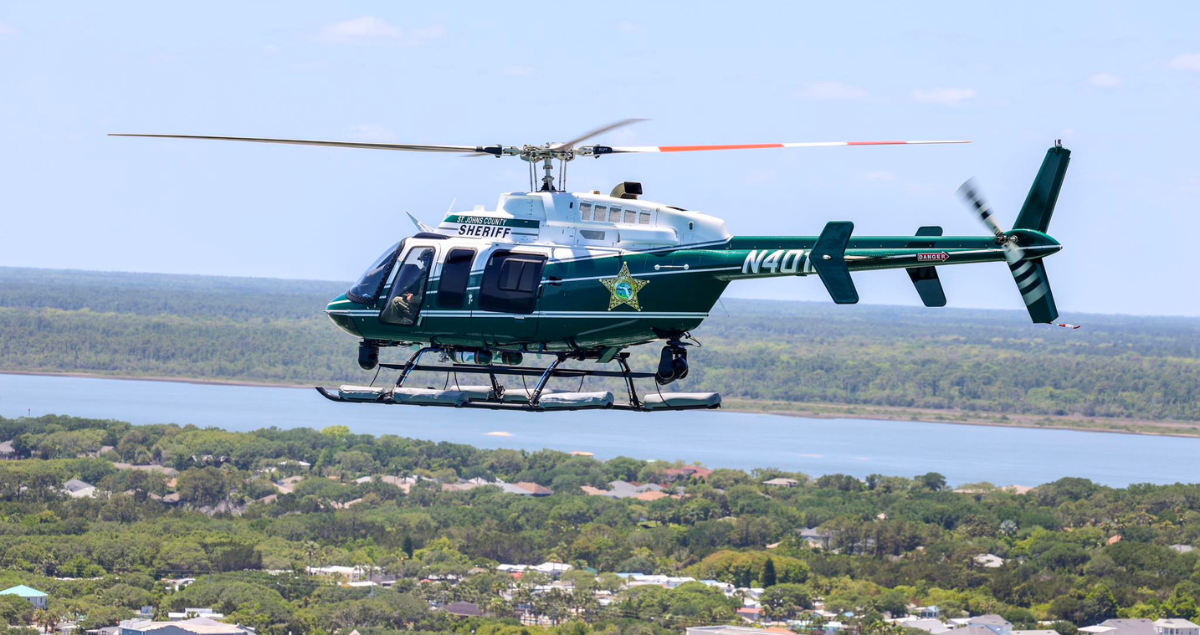
Across Florida, aviation units in law enforcement play a vital role in protecting communities by giving deputies a critical view from above when seconds matter. These aircraft help locate missing people, track suspects, support deputies during pursuits, and respond swiftly to emergencies and natural disasters. Florida’s unique terrain — dense forests, swamps, miles of coastline, open water, and fast-growing urban areas — often limits what can be reached quickly from the ground alone. By quickly covering large areas and guiding first responders to the right location, law enforcement aviation units provide the visibility, flexibility, and rapid response needed to keep residents safe across the state.
Aviation Unit Mission and Purpose
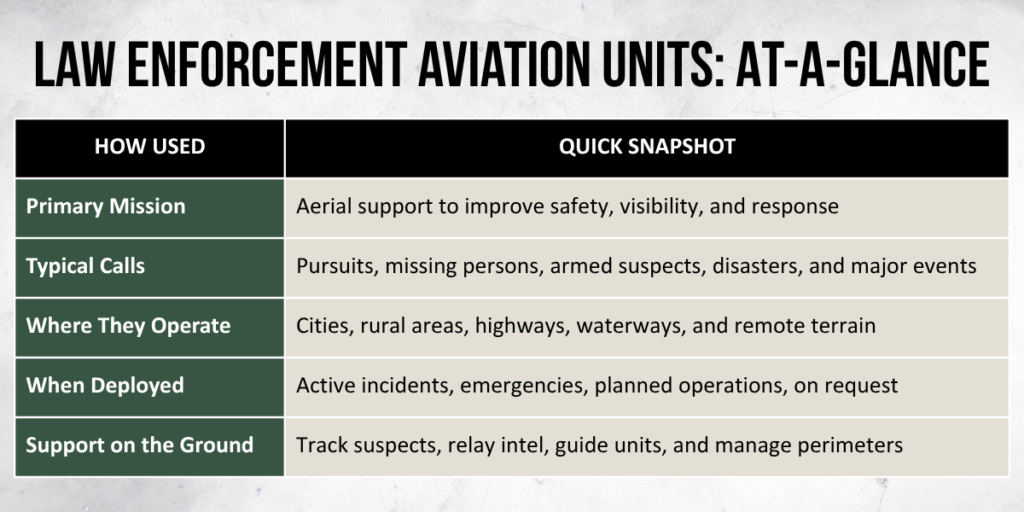
The mission of a sheriff’s aviation unit is to enhance public safety and support law enforcement operations through aerial assistance. Operating from above allows these units to help deputies respond faster, gain a broader view of evolving situations, and work more safely in areas that are difficult or dangerous to reach by vehicle or on foot.
Aviation units support a wide range of law enforcement and public safety needs, including:
- Search and rescue operations for missing or endangered persons
- Tracking and monitoring suspects from the air
- Support during vehicle pursuits
- Aerial surveillance and crime prevention
- Command and control during major incidents
- Assistance during fires, floods, hurricanes, and other disasters
- Traffic, crowd, and large event monitoring
- Night operations and tactical support
- Rapid medical transport, providing emergency airlift and onboard care
By extending the reach of deputies on the ground, aviation units provide critical advantages that improve overall effectiveness, including:
- Faster response times across large or hard-to-reach areas
- Safer operations during pursuits and search efforts
- Better coordination and direction of ground resources
- Powerful tools for locating missing or endangered individuals
- Real-time aerial views that help leaders adapt as situations change
Aviation Units and Medical Transport
In life-threatening emergencies, time is the most critical factor — and law enforcement aviation units are uniquely positioned to bridge the gap between an incident and life-saving medical care. Across Florida, sheriffs’ aviation units work closely with fire rescue and emergency medical services to provide rapid medical transport and aerial support when it matters most.
- Faster access to patients: When ground ambulances face delays due to traffic, remote terrain, or geographic barriers like waterways and wetlands, helicopters can reach patients faster and transport them directly to trauma centers and hospitals.
- Onboard medical capability: Some units carry basic medical equipment and crew trained in emergency response, allowing for initial stabilization during transport.
- Coordination support: Aviation units serve as an aerial command link — guiding ground EMS to precise locations and helping incident commanders manage complex medical scenes from above.
- Critical coverage for Florida’s unique geography: From offshore boating accidents to emergencies deep in rural counties, aerial medical transport is a vital lifeline for communities that ground units simply can’t reach in time.
Aircraft That Support Law Enforcement
Law enforcement aviation units rely on a mix of aircraft types to meet a wide range of operational and public safety needs. Each aircraft is selected for its unique capabilities, allowing agencies to choose the right tool for each mission.
Helicopters are a common and versatile aircraft because they can hover, fly at low speeds, and operate in tight or urban environments. This makes them ideal for pursuits, search and rescue, and tactical support. Modern law enforcement helicopters are equipped with advanced technology that makes them highly effective tools for public safety missions.
- Forward-looking infrared (FLIR) systems: Detect heat signatures, allowing crews to locate missing persons or suspects in darkness, heavy brush, or low-visibility conditions.
- High-powered searchlights: Provide precise aerial illumination, helping deputies on the ground maintain visual contact during pursuits or searches.
- GPS navigation and moving-map systems: Improve situational awareness by displaying real-time aircraft position, terrain, and points of interest.
- Real-time video downlink systems: Transmit live aerial footage to command staff and deputies in the field to support coordinated responses.
- Secure radio communications: Enable constant, clear coordination between air crews and ground units for safer and more efficient operations.
Fixed-wing aircraft play a key role in law enforcement by supporting long-range patrols, surveillance, transportation, and coordination. They complement helicopters by efficiently covering large geographic areas and are especially valuable for wide-area patrols, border, or coastline monitoring, and missions where endurance and efficiency are needed.
- Long range and endurance: Can remain in the air for hours, ideal for extended patrols, surveillance, and search missions.
- Speed and efficiency: Cover large distances quickly, enabling rapid response across a jurisdiction.
- Stable flight platform: Provides steady observation and supports aerial photography, sensor operations, and intelligence gathering.
- Advanced sensor integration: Equipped with FLIR, high-resolution cameras, radar, and other technology for tracking suspects, monitoring traffic, or assisting in search and rescue.
- Cost-effective operation: Lower hourly operating costs compared with helicopters for long-duration missions.
- Multi-passenger and cargo capability: Can carry personnel, specialized equipment, or additional sensors for versatile mission support.
- High-altitude operation: Offers broad aerial views and avoids ground-level obstacles, improving coordination with deputies on the ground.
Drones in Law Enforcement
Unmanned aircraft systems, commonly known as drones, are an increasingly important tool in modern law enforcement aviation. Compact, cost-effective, and highly maneuverable, drones give agencies a fast and flexible aerial option that complements traditional crewed aircraft. Law enforcement agencies in Florida are deploying drones across a growing range of public safety missions, with numerous benefits.
- Rapid deployment: Drones can be airborne in minutes, making them ideal for first-on-scene reconnaissance during active incidents, pursuits, or missing person searches.
- Confined and hazardous area access: Their small size allows drones to safely operate in areas where a helicopter cannot, including dense wooded terrain, collapsed structures, and active fire perimeters.
- High-resolution imaging and thermal sensing: Equipped with 4K cameras and FLIR technology, drones provide real-time aerial footage and heat-signature detection to locate suspects or missing persons in low-visibility conditions.
- Cost-effective operations: Drones operate at a fraction of the cost of crewed aircraft, allowing agencies with limited budgets to extend their aerial capabilities.
- Crowd and event monitoring: Drones offer a discreet and efficient way to monitor large public gatherings, traffic flow, and special events.
- Officer safety: Sending a drone ahead of deputies into unknown or dangerous situations improves situational awareness and reduces risk to personnel.
As drone technology continues to advance, law enforcement agencies are integrating drone programs alongside traditional aviation assets, creating a more layered and responsive aerial capability for the communities they serve.
Training and Requirements for Aviation Units
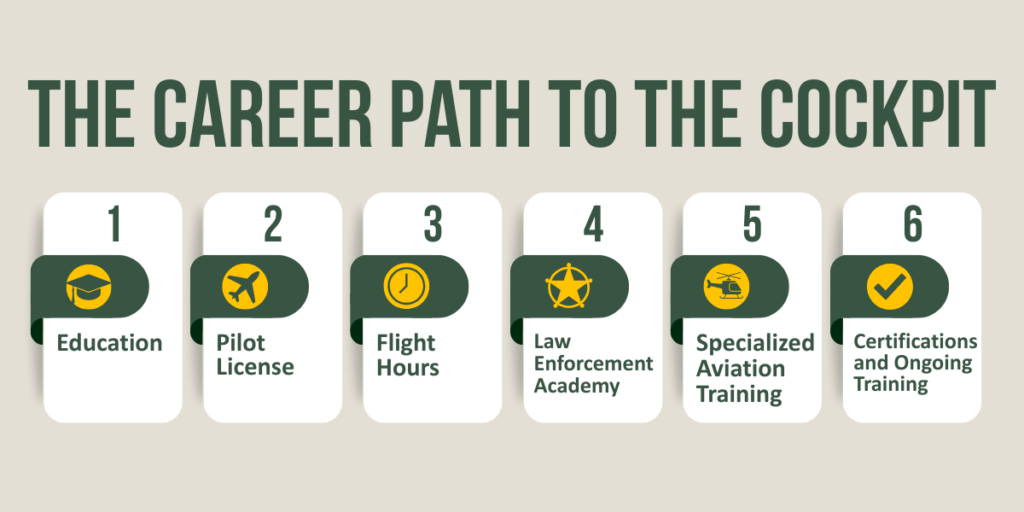
To carry out their missions safely and effectively, law enforcement aviation units rely on highly trained and experienced crews. Working in law enforcement aviation isn’t just about flying — it requires a unique combination of advanced pilot skills, law enforcement experience, and specialized training tailored to the demands of public safety operations. Aviation personnel must be both skilled aviators and fully certified law enforcement officers.
Pilots assigned to aviation units must hold a valid pilot’s license with the appropriate helicopter or fixed-wing certifications, along with hundreds — often thousands — of flight hours before joining a sheriff’s aviation team. Their training includes low-altitude flying, night operations, and instrument flying, all of which are critical for missions such as suspect tracking, search and rescue, and disaster response.
In addition to aviation credentials, personnel must meet all state law enforcement requirements, including graduating from a law enforcement academy, passing background checks, and maintaining physical fitness standards. This dual role allows aviation crews to fully understand ground operations, communicate effectively with deputies, and make informed tactical decisions from the air.
Once assigned to an aviation unit, crews undergo specialized mission training. This includes search and rescue operations, tactical flight support for pursuits and SWAT incidents, emergency response during fires, floods, and hurricanes, and surveillance using advanced cameras and thermal imaging systems. Communication training is also essential, as aviation units regularly coordinate with dispatch, ground deputies, marine units, fire rescue, and other agencies during complex incidents.
Training doesn’t stop once crews are certified. Aviation units participate in ongoing simulator sessions, in-flight training, and annual safety refreshers, along with continuous education on new technology, aircraft systems, and regulations. This commitment to training ensures aviation teams remain prepared to respond quickly, safely, and effectively — no matter the mission.
Spotlight on Florida Sheriffs’ Aviation Units
Aviation units in Florida’s sheriff’s offices play a critical role in some of the state’s most high-profile and life-saving operations. These notable operations across Florida showcase how aviation units enhance law enforcement effectiveness, protect communities, and save lives.
Marion County Sheriff’s Office
The Marion County Sheriff’s Office Aviation Unit is a vital part of public safety in North Central Florida, providing “eyes in the sky” to support deputies on the ground and respond quickly to a wide range of missions. Established in 1974, the unit now operates four helicopters equipped with infrared cameras, navigation systems, and powerful searchlights to help locate suspects, assist in search and rescue efforts, support firefighting operations, and conduct routine patrols across Marion County and neighboring areas. Based at Ocala International Airport, the crew works around the clock with local and state agencies to keep the community safe.

The TV series “Chopper Cops” gives viewers a rare, front-row look at the Marion County Sheriff’s Office aviation team as they patrol more than 1,600 square miles of Central Florida from the sky. Streaming on Paramount+, the documentary-style show follows the elite Air 1 helicopter unit 24/7 as pilots and crew respond to real-world calls — from high-speed pursuits and suspect searches to night rescues and tactical support — using state-of-the-art infrared cameras, mapping systems, and in-flight communication gear.
Through in-cockpit footage, radio traffic, and first-person interviews, “Chopper Cops” highlights the skill, technology, and split-second decision-making that goes into modern aerial law enforcement, offering an inside look at how these “chopper cops” work alongside ground units to protect the community. The official trailer offers a preview of the action and coordination featured throughout the series.
Charlotte County Sheriff’s Office
The Charlotte County Sheriff’s Office Aviation Unit plays a unique and important role in keeping the community safe from above. Based in Punta Gorda, the unit operates multiple helicopters that support a wide range of missions — from traditional law enforcement patrols and tracking fleeing suspects to search and rescue missions and aerial firefighting. The team also assists with mosquito control operations and long-line water and land rescues, helping both people and wildlife in need. With advanced equipment like infrared cameras, moving map systems, and night vision capability, this unit provides crucial support not only within Charlotte County, but also to neighboring agencies during emergencies and special events. Their versatile role makes them a key asset in response efforts across the region.
Readers can learn more about the aviation team and its accomplishments in this in-depth blog and see the unit in action in this video.
Orange County Sheriff’s Office
The Orange County Sheriff’s Office Aviation Unit provides essential aerial support to law enforcement and public safety efforts across Orange County. With a fleet that includes several helicopters and a fixed-wing aircraft, the unit covers one of the state’s most populous and dynamic counties and operates in a complex mix of dense urban areas, major tourist destinations, highways, lakes, and wetlands. In addition to traditional law enforcement duties, the unit provides aerial support to partner agencies, conducts environmental assessments, and plays a key role in search and rescue missions, making it a critical resource for public safety throughout the county.
Hear from the pilots as they share how they support Orange County and neighboring communities.
Martin County Sheriff’s Office
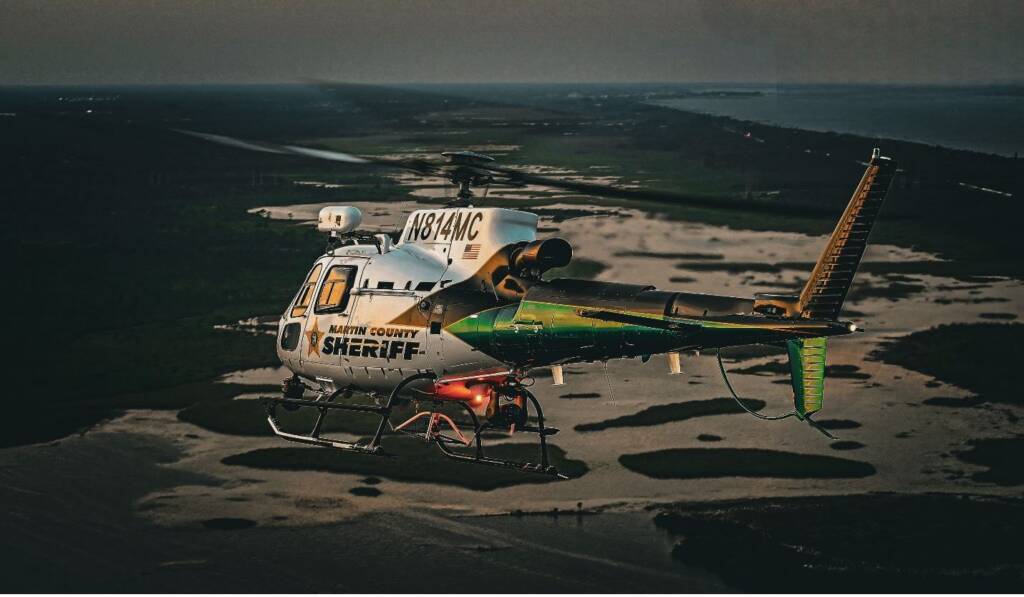
The Martin County Sheriff’s Office Aviation Unit serves as a critical aerial asset for public safety across Martin County, operating every day of the year to support deputies and enhance response capabilities. Based out of Witham Field in Stuart, the unit flies two helicopters equipped with advanced law enforcement gear — including thermal cameras, searchlights, mapping systems, and radios — to assist in missions such as tracking fleeing suspects, searching for missing persons or boaters, conducting surveillance, and providing command and control in emergencies.
The aircraft also support proactive patrols over large or hard-to-reach areas and assist other agencies when needed, helping reduce response times and improve situational awareness for operations on the ground.
Community and Public Impact
Law enforcement aviation units play a vital role in keeping communities safe across Florida by providing air support that ground deputies simply can’t match. From locating missing persons to supporting pursuits and disaster response, these units give sheriffs a critical “bird’s-eye view” that improves speed, visibility, and coordination.
Many sheriff’s offices in Florida operate with limited budgets, and acquiring costly equipment can be a challenge for smaller or rural agencies. To help address this, the Florida Sheriffs Association (FSA) operates a Shared Asset Program that provides funds to sheriffs’ offices to purchase equipment that can be shared regionally with neighboring agencies.
Supporting FSA means supporting every aspect of law enforcement across the state, including specialized units like aviation teams, K9 squads, mounted patrols, and SWAT. Through programs like the Shared Asset Program, FSA helps sheriffs acquire critical equipment, advanced technology, and training that smaller offices might not be able to fund on their own. This support strengthens sheriffs’ ability to respond quickly to emergencies, conduct search and rescue missions, track suspects, and protect communities in every corner of Florida. When you support FSA, you’re helping ensure that law enforcement has the resources, training, and specialized units they need — making you, your family, and your community safer every day.
About the Florida Sheriffs Association
Founded in 1893, the Florida Sheriffs Association was established to unite Florida’s sheriffs in advancing public safety, shaping legislation, and fostering collaboration among law enforcement agencies. Over the decades, FSA has grown into a powerful advocate for law enforcement, providing training, resources, and support to ensure the protection and security of Florida’s communities.
The Florida Sheriffs Association will help you to stay informed on the latest law enforcement initiatives, public safety updates, and the work of Florida’s sheriffs. From in-depth blogs to legislative news and community programs, we keep you connected to the issues that matter. Explore more at flsheriffs.org and stay engaged with Florida’s law enforcement community.