


Law Enforcement Marine Units Spotlight
In Florida, law enforcement’s jurisdiction doesn’t end at the shoreline. Marine units in law enforcement are among the most versatile and mission-critical specialty assignments — functioning simultaneously as patrol, tactical transport, emergency rescue, and federal enforcement, all from a single vessel. On any given shift, a marine deputy may pull a distressed boater to safety, support a Special Weapons and Tactics (SWAT) insertion, or assist federal partners on a drug interdiction operation. For the communities they serve, these units are not a specialty add-on. They are an essential extension of the sheriff’s mission.
Marine Unit Mission and Purpose
Florida is unlike any other state in the nation when it comes to water. With 8,436 miles of coastline, more than 7,700 lakes, and more than 1,700 rivers and streams, the sheer scale of Florida’s waterway jurisdiction demands a law enforcement presence that ground patrol simply cannot provide. At its foundation, the marine unit’s mission centers on public safety, law enforcement, and resource protection across these vast and varied waterways. Marine deputies provide high-visibility patrols, promote boating education and safety, and serve as a first line of defense for homeland security, environmental protection, and disaster response — roles that have grown significantly in importance as Florida’s coastal and inland communities continue to expand.
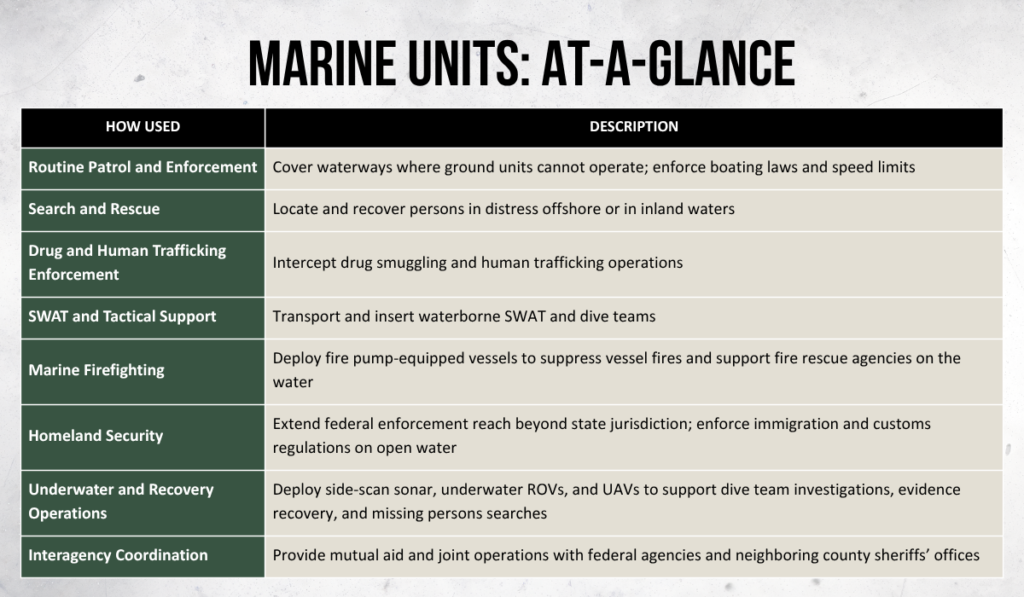
Marine units across Florida’s sheriff’s offices carry out a consistent set of core responsibilities.
Patrol and Enforcement: Deputies regularly patrol waters and sandbars, conduct boating safety inspections, enforce speed and manatee protection zones, manage derelict vessels, and assist citizens on the water. Florida sheriffs’ offices deploy a mix of marked and unmarked patrol boats, personal watercraft, and airboats to cover their waterway jurisdictions.
Search and Rescue: Watercraft serve as the primary platform for locating and recovering persons in distress. Off-shore rescues are commonplace, particularly in areas where the nearest U.S. Coast Guard station may be 45 minutes or more away.
Drug and Human Trafficking Enforcement: Marine vessels extend a sheriff’s interdiction reach beyond the shoreline into open water, where criminal activity often goes undetected. Marine units work regularly with federal partners on missions ranging from drug smuggling to human trafficking and are specifically deployed for port security and marine environmental protection.
Tactical and Specialized Support: Patrol vessels serve as transport and insertion platforms for waterborne SWAT and Dive Team missions, responding to emergencies in weather and sea conditions other vessels cannot navigate. High-performance twin-engine patrol boats also enable rapid response to medical emergencies, vessel collisions, and active pursuits — what one marine industry professional described as the difference between a standard passenger car and a purpose-built police interceptor.
Advanced Technology: Some units maintain fleets equipped with towable side-scan sonar, underwater remotely operated vehicles (ROVs), unmanned aerial vehicles (UAVs), and fire pump-equipped vessels capable of fighting marine-based fires, extending the unit’s capability well beyond standard patrol functions.
Watercraft That Supports Law Enforcement
Behind every sheriff’s office marine unit is a carefully assembled fleet — purpose-built vessels selected and configured for specific missions, matched to the conditions deputies encounter and the threats they are tasked with addressing. The diversity of Florida’s waterways, from shallow coastal flats and inland rivers to open Gulf waters miles offshore, demands a range of vessel types.
Primary Patrol Vessels
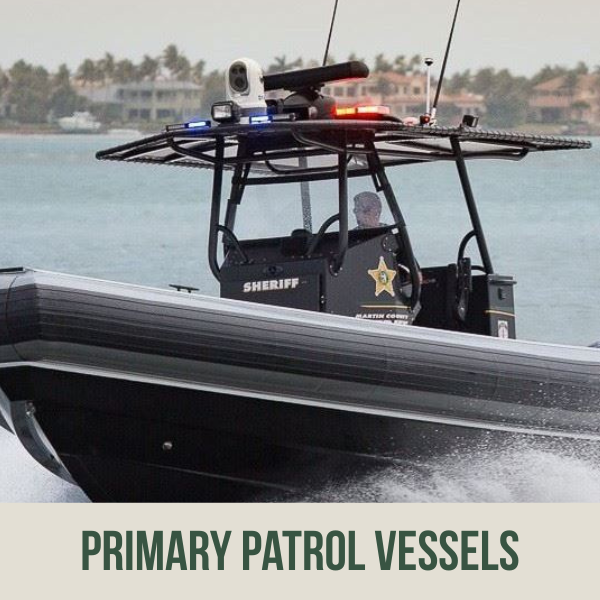
The workhorse of most marine units is a large, high-performance center-console or offshore patrol boat, typically ranging from 26 to 36 feet. Primary patrol vessels such as 32-foot Intrepid Marine Interceptors, powered by twin supercharged 250 HP Mercury Verado outboard engines, provide an operational range of over 300 nautical miles and are built to respond to emergencies in weather and sea conditions that other vessels cannot safely navigate.
Some units operate fire-equipped vessels — such as a 10-meter Brunswick with twin 350 HP engines — capable of fighting marine-based fires directly on the water.
Shallow Water Vessels
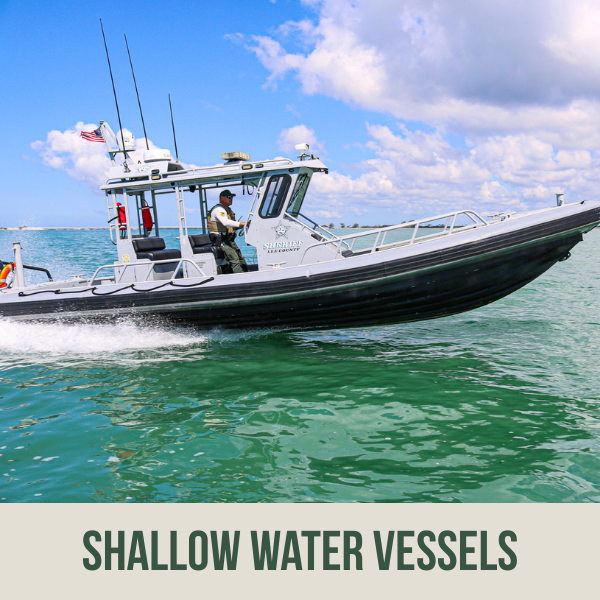
Much of Florida’s most ecologically sensitive and criminally active terrain lies in waters inaccessible to standard patrol boats. Shallow-water skiffs, such as a 19-foot Carolina Skiff, are specially rigged to operate in water as shallow as eight inches, allowing deputies to patrol mangrove channels, tidal flats, and inland waterways that larger vessels cannot reach.
Airboats
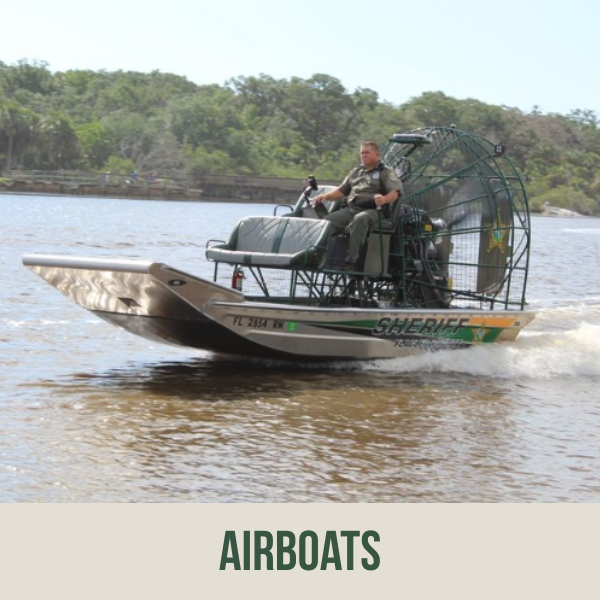
In South and Central Florida’s wetlands, marshes, and Everglades-adjacent terrain, airboats are indispensable. Units such as Brevard County’s Agriculture and Marine Unit deploy 500-horsepower Water Thunder airboats capable of traversing the shallow, vegetation-choked waters of Florida’s interior — terrain where no conventional vessel can operate.
Jon Boats
Small but indispensable, aluminum jon boats are a staple of Florida sheriffs’ marine unit fleets and for good reason. Their flat-bottomed, minimal-draft design allows deputies to patrol environments that no other vessel in the fleet can access: shallow freshwater lakes, narrow river channels, backwater creeks, and even residential retention ponds. Lightweight and easily trailered, they can be staged and deployed rapidly, putting a deputy on the water in a landlocked or inland location within minutes of a call.
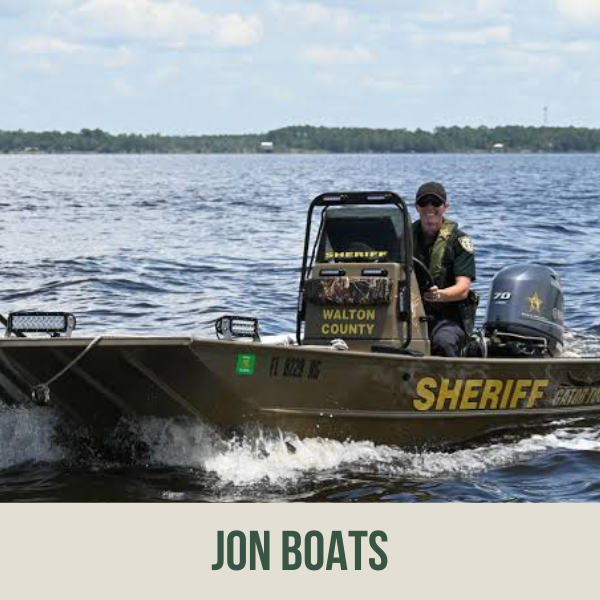
That agility makes them particularly valuable in search and recovery operations, where locating a missing person or submerged vehicle in a shallow freshwater environment requires a vessel that can navigate quietly and precisely in tight quarters.
Training and Requirements for Marine Units
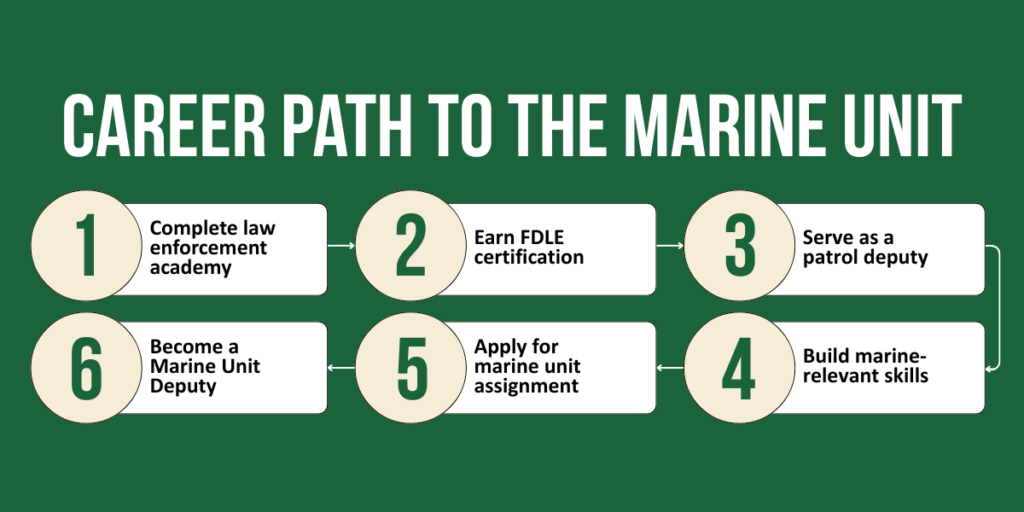
Serving on a marine unit begins with the same foundation required of every Florida sheriff’s deputy — and builds from there.
Foundation: Florida Law Enforcement Certification
Before any specialized assignment, all sheriffs’ deputies — including those assigned to marine units — must hold a valid Florida law enforcement certification issued by the Florida Department of Law Enforcement (FDLE) through the Criminal Justice Standards and Training Commission (CJSTC). This requires completing a Commission-approved Basic Recruit Training Program at a certified training school, passing a full background investigation including drug testing, and passing the State Officer Certification Examination (SOCE).
There is no separate statewide marine-specific certification issued by CJSTC for sheriff’s deputies — the standard law enforcement credential is the required baseline.
Marine-Specific Training: Agency-Level Requirements
Beyond the base certification, marine unit assignments are governed at the agency level. Requirements vary by county, but commonly include:
- Boating proficiency: Deputies must demonstrate competency operating patrol vessels in varied conditions. Training typically includes loading and unloading boats with a trailer, operating boats in multiple weather conditions, and detecting boating under the influence.
- Boating safety knowledge: While the public boating safety card requirement applies to civilians, deputies must be well-versed in Florida’s boating regulations, including those enforced in coordination with the Florida Fish and Wildlife Conservation Commission (FWC).
- Inter-agency protocols: Marine units routinely coordinate with the FWC, U.S. Coast Guard, Drug Enforcement Administration (DEA), and Homeland Security. Duties include regularly patrolling waterways, conducting enforcement, search and rescue, citizen assists, derelict vessel management, and assisting partner agencies.
Federal Supplemental Training
Deputies assigned to marine units may also pursue additional credentials through the Federal Law Enforcement Training Centers (FLETC). The Marine Law Enforcement Training Program (MLETP) provides basic marine law enforcement training for officers involved in marine regulation, protection, and law enforcement responsibilities, with major emphasis on safe and proper operation of marine patrol vessels and law enforcement operations. Applicants must be currently assigned to a marine law enforcement unit.
Florida does not have a single, uniform statewide training standard specifically for sheriff’s deputy marine assignments. The FDLE/CJSTC certification is the required foundation, and marine-specific competencies, including vessel operation, waterway enforcement, rescue protocols, are determined and administered at the individual sheriff’s office level.
Spotlight on Florida Sheriffs’ Marine Units
Florida sheriffs lead the way in providing a safe environment on the water — and the proof is in the communities they serve. Whether responding to boating accidents, drownings, aircraft crashes, or criminal activity, marine unit deputies show up in places a patrol car simply cannot reach. Their presence is both a practical necessity and a public reassurance, giving residents and visitors the confidence to enjoy Florida’s beaches, bays, rivers, and lakes knowing that law enforcement is on the water alongside them. The following agencies represent the geographic and operational diversity of that commitment, from the Panhandle to the Florida Keys.
Walton County Sheriff’s Office
Walton County’s coastline is defined by contrast — sugar-white sand beaches and emerald Gulf waters to the south, and the broad, brackish expanse of Choctawhatchee Bay stretching to the north. The Walton County Sheriff’s Office Marine Unit patrols both environments, responding to missing boaters on the bay and coordinating multi-agency search operations alongside the U.S. Coast Guard, FWC, and neighboring county sheriffs’ offices. The unit also supports SCUBA and dive rescue operations, making it a full-spectrum waterway response force for one of Florida’s most visited coastal counties.
Nassau County Sheriff’s Office
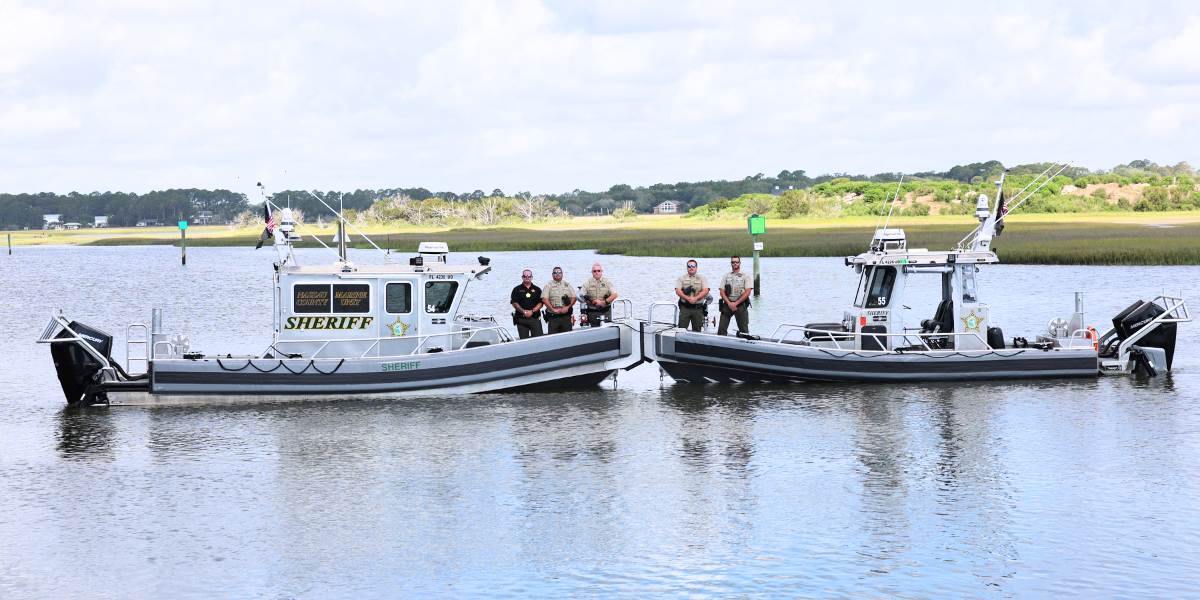
Nassau County is framed on the north and west by the St. Marys River and on the east by the Atlantic Ocean, with Amelia Island serving as the northernmost port of call along Florida’s Intracoastal Waterway. That geography demands a capable, versatile marine force, and the Nassau County Sheriff’s Office has invested accordingly. The unit recently expanded its fleet with two purpose-built patrol vessels — a 31-foot and a 35-foot Silver Ships Ambar — equipped with bow-mounted hose guns for marine firefighting and reinforced hulls for vessel-assist operations. The new boats were put to immediate use, rescuing two boaters from a sinking ship near Fort Clinch during rough weather, responding to a mayday call and reaching the vessel within 15 minutes.
Seminole County Sheriff’s Office
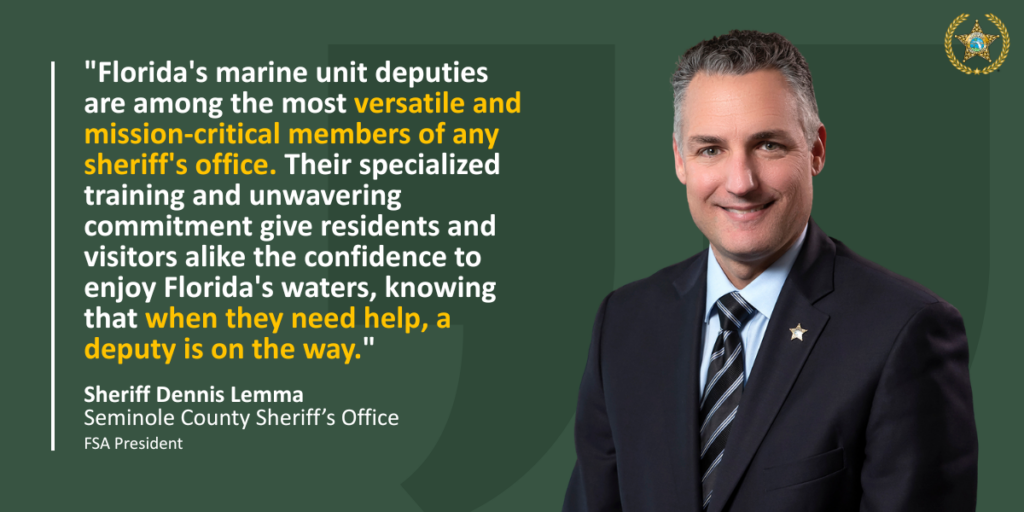
Situated in the heart of Central Florida, Seminole County is home to a network of freshwater lakes, rivers, and connected waterways — including Lake Monroe and access to the St. Johns River, one of the longest rivers in the United States. The Seminole County Sheriff’s Office Marine Unit patrols these inland waters year-round, enforcing boating regulations, responding to emergencies, and providing law enforcement presence across a county where water recreation draws thousands of residents and visitors throughout the year. The unit operates as part of the sheriff’s office broader patrol operations, ensuring that public safety extends well beyond the shoreline.
Lee County Sheriff’s Office
Lee County’s water geography is among the most complex in the state, encompassing the Caloosahatchee River, Pine Island Sound, San Carlos Bay, and nearly 600 miles of shoreline. The Lee County Sheriff’s Office Marine Unit meets that challenge with one of the largest and most technologically advanced fleets in Florida. The unit operates 19 vessels ranging from small rescue inflatables and personal watercraft to a triple-engine patrol boat, with state-of-the-art equipment including towable side-scan sonar, underwater ROVs, and UAVs. Deputies are staged at five strategic water entry points — Cape Harbour, Tarpon Point, Bonita Springs, Captiva, and Boca Grande — and patrol 24 hours a day, 365 days a year, reaching up to nine miles offshore into the Gulf of America. The unit’s value was on full display following Hurricane Ian, when marine deputies provided critical transport between Sanibel and mainland communities cut off by storm damage.
Monroe County Sheriff’s Office
No sheriff’s office in Florida faces a more water-dependent jurisdiction than Monroe County. The Monroe County Sheriff’s Office provides law enforcement service to all of the Florida Keys — approximately 112 miles of islands branching off the southern tip of Florida. The Marine Patrol Division is responsible for patrolling the waters of Monroe County, a jurisdiction that includes the Atlantic Ocean to the east, the Gulf of America to the west, and the ecologically sensitive waters of the Florida Keys National Marine Sanctuary in between. Marine unit deputies operate with a philosophy that promoting compliance and boating safety through education takes priority, while still maintaining strong enforcement authority across miles of shoreline and inland canals. For a county where the water is both the highway and the backyard, the marine unit is not a specialty assignment — it is the frontline of public safety.
Community and Public Impact
Marine units play a vital role in supporting law enforcement by providing specialized waterborne response capabilities that ground deputies simply cannot match. From boating safety enforcement and search and rescue to criminal interdiction and disaster response, these units give agencies a critical operational reach that extends public safety beyond the shoreline — improving response times, community trust, and law enforcement coordination across some of Florida’s most challenging and dynamic terrain.
Boating Safety Education
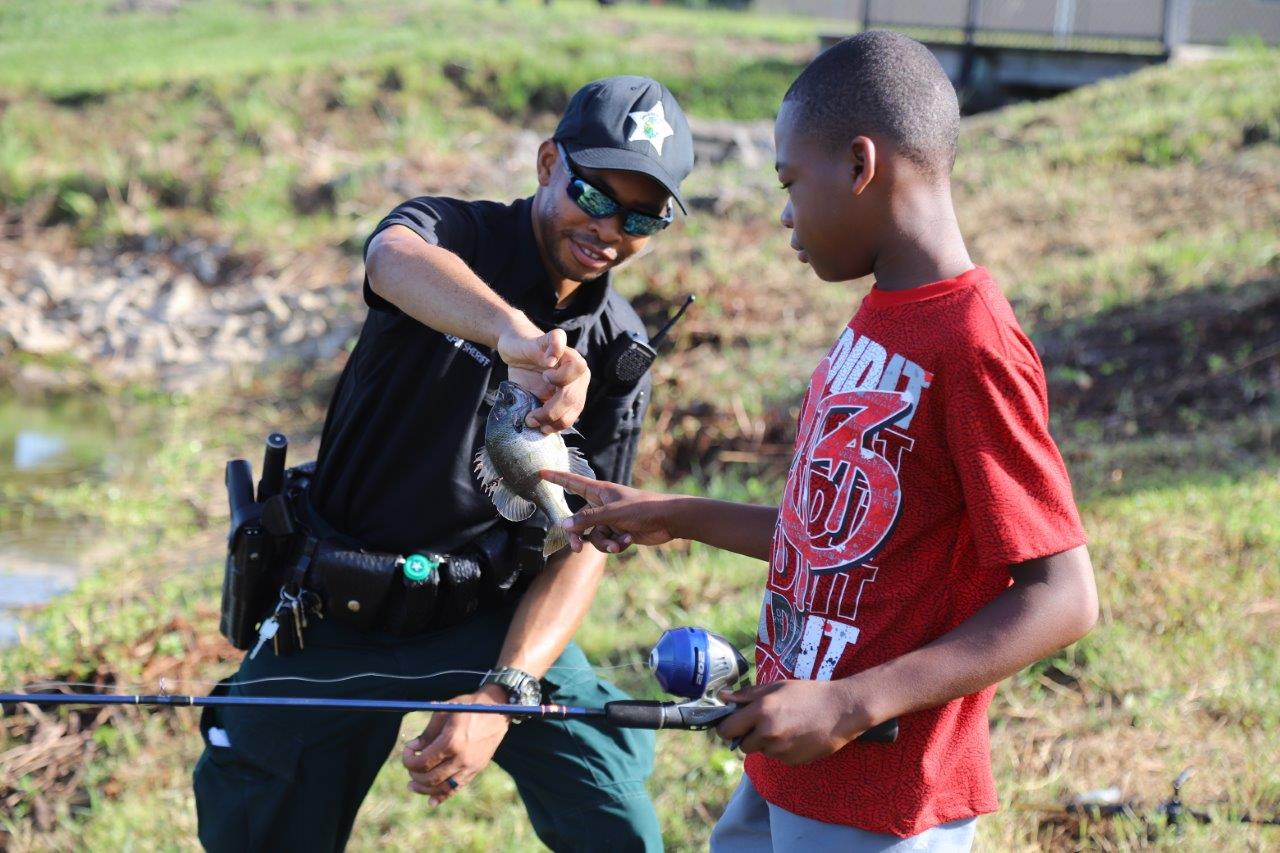
Marine deputies are active public educators long before enforcement ever enters the picture. Units across the state conduct boating safety inspections, host community safety courses, and engage directly with boaters on the water — explaining speed zones, manatee protection requirements, and life jacket regulations in real time. The goal is straightforward: an informed boater is a safer boater, and a safer boater is less likely to become a statistic.
Search and Rescue
When someone is in distress on the water, marine deputies are often the first — and only — responders close enough to make a difference. Florida’s offshore geography means that the nearest Coast Guard station can be 45 minutes or more away from an incident. In those situations, a sheriff’s marine unit is not a supplement to the response — it is the response. These rescues happen year-round, including nights, weekends and holidays, in conditions that ground units are simply not equipped to handle. Every one of them represents the direct, life-saving impact of a well-staffed, well-equipped marine unit.
Derelict Vessel Removal
Abandoned and deteriorating vessels are more than an eyesore — they are a genuine public safety and environmental hazard. As derelict boats break apart on state waters, fiberglass, metal, and wood disperse through the environment, damaging shorelines, grass beds, and oyster habitat. Marine unit deputies are frontline participants in identifying, tagging, and initiating the removal process for these vessels, protecting both the navigational safety of Florida’s waterways and the natural ecosystems that define them.
Manatee and Wildlife Protection
Vessel strikes remain the leading known cause of manatee deaths in Florida, making speed zone enforcement by marine deputies a direct act of wildlife conservation. By patrolling manatee protection zones, issuing citations for speed violations, and educating boaters about the consequences of non-compliance, marine deputies serve as the primary line of defense for one of Florida’s most iconic and federally protected species. That enforcement work, conducted day after day across hundreds of miles of coastline, has a measurable impact on manatee survival rates and the long-term health of Florida’s coastal ecosystems.
Disaster Response and Community Resilience
When hurricanes make landfall and roads become impassable, marine units become lifelines. Following Hurricane Ian, the Lee County Sheriff’s Office Marine Unit provided critical vessel transport between Sanibel Island and the mainland after causeways were destroyed — serving as the primary connection between an isolated community and the emergency services, supplies, and evacuations it desperately needed. It is in those moments that the full value of a funded, fully equipped marine unit becomes undeniable.
Environmental and Water Quality Monitoring
Marine deputies operate as eyes and ears for environmental conditions that go undetected without an active waterborne presence. Units across the state work directly with county health departments and the Florida Department of Environmental Protection to address water quality concerns, and provide real-time, on-the-water intelligence that no land-based agency can replicate.
The Value of Presence
Perhaps the most enduring public impact of a marine unit is simply being there. A marked patrol vessel on the water signals to every boater, coastal resident, and visitor that their safety matters and that the sheriff’s commitment to protecting the community does not stop at the shoreline. That visibility builds the kind of public trust that is difficult to quantify but impossible to replace.
Florida’s waterways are not a backdrop to public life — they are central to it. The deputies who patrol them are not a specialty add-on to the sheriff’s office mission. They are an essential part of how Florida sheriffs keep their communities safe on the water, offshore, and everywhere in between.
Equipping Florida’s Marine Units
Many sheriffs’ offices in Florida operate with limited budgets, and acquiring costly equipment can be a challenge for smaller or rural agencies. To help address this, the Florida Sheriffs Association (FSA) operates a Shared Asset Program that provides funds to sheriffs’ offices to purchase equipment that can be shared regionally with neighboring agencies.
Supporting FSA means supporting every aspect of law enforcement across the state, including specialized units like marine, aviation teams, K-9 squads, mounted patrols, and SWAT. Through programs like the Shared Asset Program, FSA helps sheriffs acquire critical equipment, advanced technology, and training that smaller offices might not be able to fund on their own. This support strengthens sheriffs’ ability to respond quickly to emergencies, conduct search and rescue missions, track suspects, and protect communities in every corner of Florida. Supporting FSA helps ensure that law enforcement has the resources, training, and specialized units they need — making you, your family, and your community safer every day.
About the Florida Sheriffs Association
Founded in 1893, the Florida Sheriffs Association was established to unite Florida’s sheriffs in advancing public safety, shaping legislation, and fostering collaboration among law enforcement agencies. Over the decades, FSA has grown into a powerful advocate for law enforcement, providing training, resources, and support to ensure the protection and security of Florida’s communities.
The Florida Sheriffs Association will help you to stay informed on the latest law enforcement initiatives, public safety updates, and the work of Florida’s sheriffs. From in-depth blogs to legislative news and community programs, we keep you connected to the issues that matter. Explore more at flsheriffs.org and stay engaged with Florida’s law enforcement community.