

Cold Case Files: Unsolved Serial Killer Cases in Florida
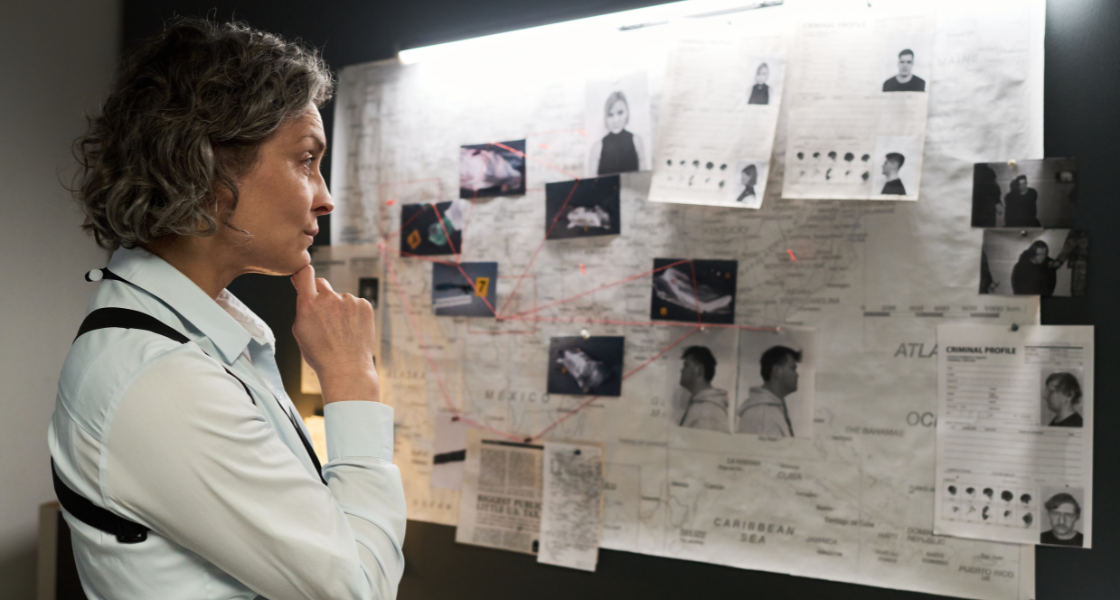
Some of the most haunting serial killer cases in Florida have never been solved. Since the 1970s, investigators have documented clusters of murders across the state with troubling similarities: the same victim profiles, the same methods, and the same remote roadsides and canals. In several cases, detectives suspected a serial offender. In none of these cases was anyone ever charged.
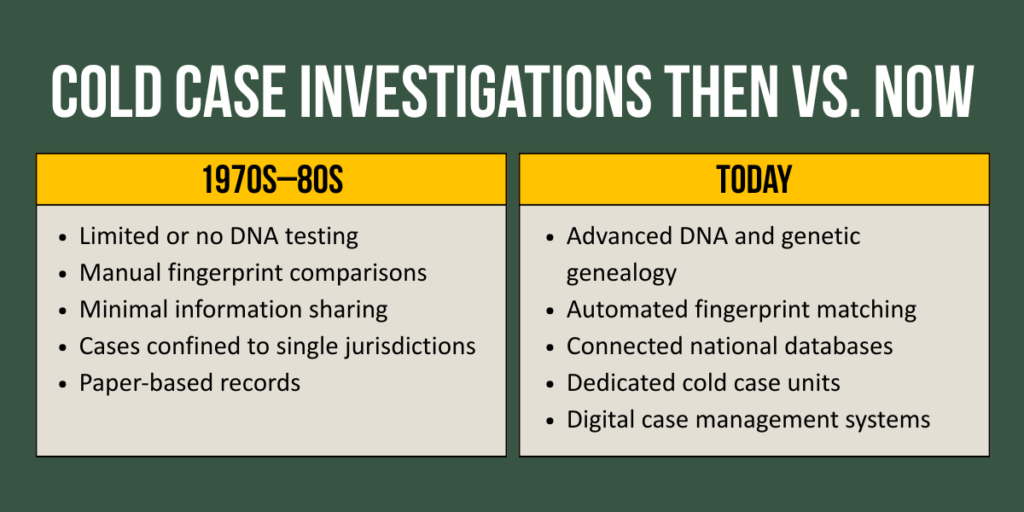
Limited forensic technology, fragmented communication between agencies, and Florida’s transient population all made these investigations extraordinarily difficult. Today, cold case units across the state are revisiting the evidence with modern tools — DNA analysis, genetic genealogy, and digital databases — in hopes of finally finding answers and providing families with the closure they deserve.
Notable Unsolved Serial Killer Cases in Florida
Over the years, investigators have identified several murders with troubling similarities that may represent unsolved serial killer cases in Florida. The cases below highlight some of the most notable mysteries that have challenged investigators for decades and continue to be revisited by cold case detectives searching for answers.
The Flat Tire Murders
One of the most disturbing clusters of unsolved serial killer cases in Florida is known as the Flat Tire Murders. Investigators linked a series of killings between February 1975 and January 1976 involving young women whose bodies were discovered in canals and remote areas across South Florida, primarily Broward County and Miami-Dade County.
Victim Profile
Most victims were young women or teenage girls. Many were traveling, working temporary jobs, or otherwise living somewhat transient lifestyles, which made it difficult for investigators to quickly connect disappearances. Authorities suspected that as many as a dozen women may have been victims connected to the same offender or offenders. The 12 victims include:
- Ronnie Gorlin
- Elyse Rapp
- Judith Ann Oesterling
- Arietta Tinker
- Barbara Davis Stephens
- Nancy Lee Fox
- Barbara Susan Schreiber
- Belinda Darlene Zetterower
- Robin Leslie Losch
- Mary Coppolla
- Marlene Annabelli
- Michelle Winters
Crime Pattern
The nickname came from the belief that the offender sometimes deflated victims’ car tires to create a situation where he could approach them and offer assistance. Once he gained their trust, investigators believed he lured them into his vehicle. Victims were often beaten and sexually assaulted before their bodies were discarded in canals or remote roadside areas.
What Investigators Believe
Detectives believed the killer may have been charismatic and well-dressed, allowing him to quickly gain victims’ trust. Some investigators also suspected that the offender could have been operating across multiple states.
Current Status
The case has remained unsolved for decades. In recent years, DNA analysis has helped investigators identify potential suspects who were already deceased, suggesting that more than one offender may have been involved. However, no one was ever prosecuted, leaving the case classified as unsolved.
The Gold Sock Killer
During the summer of 1973, a brief but terrifying series of attacks in Broward County led investigators to suspect a serial offender operating in the Fort Lauderdale area. The killer became known as the “Gold Sock Killer,” a nickname derived from the unusual and disturbing method used in the crimes.
Victim Profile
The victims were female and ranged in age from teenagers to an adult woman. Known victims included two teenage girls, ages 16 and 17, and a 42-year-old woman. This range suggested the offender was not targeting a specific age group, but rather opportunistically targeting women he encountered.
Crime Pattern
- Investigators linked the crimes through a distinctive method of strangulation, with victims killed using socks tied tightly around their necks.
- In some cases, the socks were described as gold or tan in color, which led to the nickname Gold Sock Killer.
- Victims were abducted and later discovered in remote areas, including waterways and marshy locations around Broward County.
- The unusual method of strangulation and the close timing of the murders strongly suggested the work of a single offender.
What Investigators Believe
Detectives believed the killer likely encountered the victims in public settings before abducting them. Because the attacks occurred within a short timeframe and in a relatively small geographic area, investigators suspected the offender may have lived or worked nearby. Despite intensive investigation at the time, including interviews and the gathering of physical and forensic evidence, authorities were unable to identify a suspect who could be definitively linked to the crimes.
Current Status
The murders attributed to the Gold Sock Killer remain unsolved. Although investigators have periodically revisited the case over the decades, the identity of the offender has never been confirmed. The case continues to stand as one of Broward County’s most disturbing unsolved murder investigations from the 1970s.
The Redhead Murders
The Redhead Murders refer to a series of killings of unidentified women whose remains were discovered along highways across several states during the late 1970s and 1980s. Several of the victims discovered in Florida have led investigators to consider the case part of a broader pattern of unsolved serial killer cases in Florida and across the Southeast.
Victim Profile
Many victims were young women with reddish or auburn hair, which gave the case its nickname. Investigators believed several were hitchhikers or transient travelers moving along interstate corridors. A key element of the mystery is that many victims were never identified, leaving investigators with limited information about their backgrounds or movements before their deaths.
Crime Pattern
Victims were frequently discovered near major highways, suggesting the offender may have been a long-haul truck driver or someone who traveled extensively. The killings often involved strangulation, and the bodies were abandoned in rural or wooded areas.
What Investigators Believe
Law enforcement agencies across several states suspected the murders could be the work of one traveling serial offender, though it is also possible multiple killers were responsible.
Current Status
Despite decades of investigation, the identity of the perpetrator remains unknown. Advances in genetic genealogy and DNA analysis have helped identify some previously unidentified victims in recent years, which may eventually provide new leads.
The Daytona Beach Area Killings
The Daytona Beach region, long associated with tourism, was also the site of several unsolved murders that investigators once considered potentially connected from the 1970s through the early 1980s.
Victim Profile
Victims were primarily young women visiting the area, including tourists or seasonal visitors. The transient nature of the population made it difficult for investigators to establish timelines and connections between victims. The victims include:
- Donna Gail Kammerer
- Diane Ann Tinsley
- Ellen Rae Knowles
- Sherri Lynn McCoy
- Patricia Ann Dockery
- Elizabeth Ann Johnson
Crime Pattern
Several victims disappeared or were killed within relatively short periods of time, raising suspicions that a serial offender could have been targeting vulnerable women in the area. In some cases, victims were abducted from hotels, nightlife districts, or roadside areas before their bodies were discovered elsewhere in Florida.
What Investigators Believe
Some investigators believed the crimes might have involved a mobile offender taking advantage of tourist crowds, particularly during busy seasons like spring break. However, not all cases shared identical patterns, making it difficult to conclusively link them.
Current Status
Many of these cases remain open. Over the years, detectives have revisited evidence to determine whether advances in forensic technology might connect them to known offenders or identify previously unknown suspects.
The I-95 Corridor Murders
Another pattern investigators have examined involves a series of killings that occurred in the 1970s and 1980s along major transportation routes such as Interstate 95, which runs the length of Florida’s east coast. Some investigators believe these crimes may represent one of the most geographically widespread unsolved serial killer cases in Florida.
Victim Profile
Many victims were women traveling alone, hitchhiking, or working in environments that required frequent movement between cities.
Crime Pattern
The murders appeared to occur near major highway exits, rest stops, or rural roadside areas. This pattern suggested the possibility of a mobile offender moving between jurisdictions. Because the crimes occurred in different counties and sometimes in different states, it was often difficult for investigators to connect the cases quickly.
What Investigators Believe
Detectives have long suspected that some serial offenders use interstate systems to avoid detection. By committing crimes in multiple jurisdictions, a killer can make it harder for investigators to recognize patterns early.
Current Status
Some killings once thought to be linked have later been solved or attributed to individual offenders, while others remain unexplained. Investigators continue to review cold cases along major travel corridors in hopes of identifying connections that may have been missed decades ago.
The Fort Myers Hitchhiker Killings
During the 1990s, investigators began noticing disturbing patterns involving the disappearance and murders of men believed to be hitchhikers or transient travelers in southwest Florida. The cases were spread across rural areas near Fort Myers and neighboring counties, leading authorities to suspect that a serial offender may have been targeting vulnerable individuals moving through the region.
Victim Profile
Many victims were transient men, drifters, or hitchhikers who were traveling through Florida in search of work or temporary housing. Because many of them had limited family connections in the area or were passing through, their disappearances were sometimes not immediately reported or investigated.
Crime Pattern
Investigators believed the victims were often approached along roadways or offered rides by someone posing as a helpful driver. Some victims were later found in wooded areas or remote locations, suggesting the offender transported them away from public view before killing them.
What Investigators Believe
Authorities have long suspected that the killings may be connected to a serial offender operating in southwest Florida during the 1990s. Investigators have examined potential links between the victims and offenders known to target transient populations. One individual frequently discussed in connection with these crimes is Daniel Owen Conahan Jr., a convicted murderer associated with a series of killings known as the Hog Trail murders in nearby counties. While he was convicted of one murder and suspected in several others, he has never been formally charged in the Fort Myers cases.
Current Status
The identities of several victims discovered in the Fort Myers area have been confirmed over the years through forensic testing, while others remain unidentified. Despite ongoing investigation, the full circumstances surrounding the killings and whether a single offender was responsible remain unresolved. Cold case investigators continue to review evidence and use modern forensic methods in hopes of bringing answers to the decades-old mystery.
A Turning Point for Serial Crime Investigations
The 1970s marked a pivotal era in the history of violent crime investigations across the United States, including Florida. Law enforcement agencies were confronting a new and troubling pattern — offenders who committed multiple murders over time, often across different jurisdictions. At the time, the term “serial killer” was only beginning to enter the public vocabulary, and investigators had limited tools to identify patterns between seemingly unrelated crimes.
During this decade, several high-profile offenders either operated in Florida or were eventually captured there. Their crimes drew national attention and forced law enforcement agencies to rethink how violent crimes were investigated and shared between jurisdictions.
While some notorious serial killers were eventually identified and prosecuted, many homicide cases from the 1970s remain unsolved. Limited forensic technology, fewer investigative resources, and the lack of national crime databases meant that many cases stalled or went cold. Today, law enforcement agencies across Florida continue to revisit these cases using modern DNA testing and digital investigative tools.
Cold Case Units Keeping Investigations Alive
While many unsolved serial killer cases in Florida remain mysteries, law enforcement agencies across the state continue working to bring answers to families and justice to victims. In recent years, several sheriff’s offices have created dedicated cold case units focused specifically on reviewing older homicide and missing-person investigations. These specialized teams re-examine evidence, follow up on new leads, and apply modern forensic technology to cases that may have stalled decades earlier. Cold case investigations in Florida have expanded significantly in recent years, with several sheriffs’ offices establishing dedicated units to revisit unsolved homicides.
- The Broward Sheriff’s Office established a Cold Case Investigations Unit in 2019 to review hundreds of unsolved homicides and missing-person cases dating back decades.
- The Hillsborough County Sheriff’s Office launched a Cold Case Unit in 2021 to review roughly 240 unsolved cases.
- Within its Criminal Investigations Section, the Sarasota County Sheriff’s Office
- maintains a Cold Case Unit dedicated to revisiting unsolved homicides and missing-person investigations.
- The Flagler County Sheriff’s Office created a dedicated Cold Case Unit to reevaluate unsolved crimes using modern forensic methods.
- The Polk County Sheriff’s Office houses a Cold Case Unit within the Bureau of Criminal Investigations dedicated to bringing justice to victims’ families.
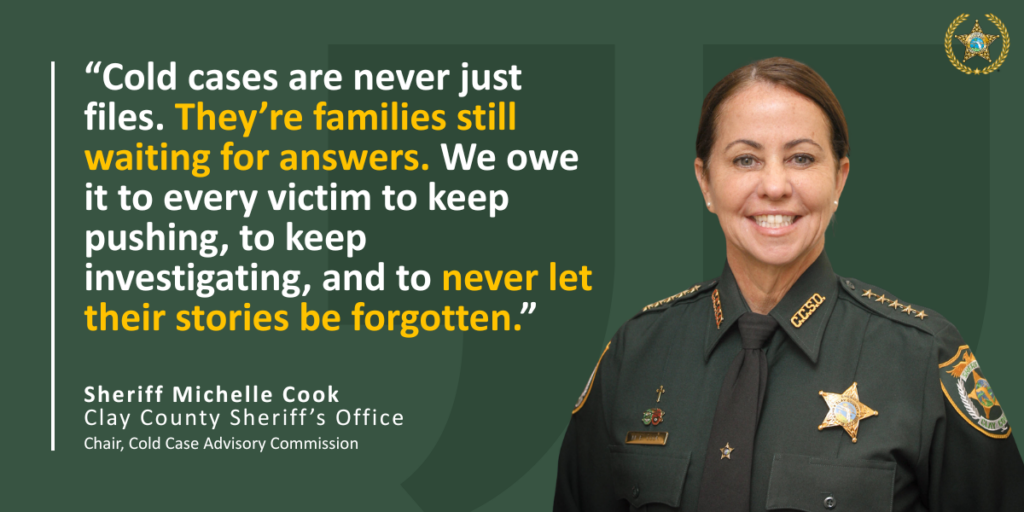
Not every county in Florida has the resources to maintain a standalone cold case unit. In smaller jurisdictions, older investigations are often assigned to homicide detectives as time and resources allow. Agencies may also partner with the Florida Department of Law Enforcement for forensic assistance or investigative support. In some cases, unsolved crimes are presented to the Cold Case Advisory Commission — a statewide panel that helps review unsolved homicide cases and recommends strategies and resources for moving these investigations forward.
The “Cold Case Florida” podcast from the Florida Sheriffs Association spotlights cold case investigations across the state and the ongoing efforts to bring justice to victims and their families. Each episode features a specific case and often includes insights from detectives and local sheriffs’ offices still working the investigation. The podcast was created to raise public awareness of cold cases and encourage listeners who may have information to come forward, helping law enforcement pursue new leads and potentially solve crimes that have remained unsolved for years.
Together, these efforts demonstrate that even decades-old crimes are not forgotten. Investigators continue revisiting unsolved serial killer cases in Florida with the hope that new evidence, new technology, or new information will finally bring long-awaited answers.
How the Public Can Help Solve Cold Cases
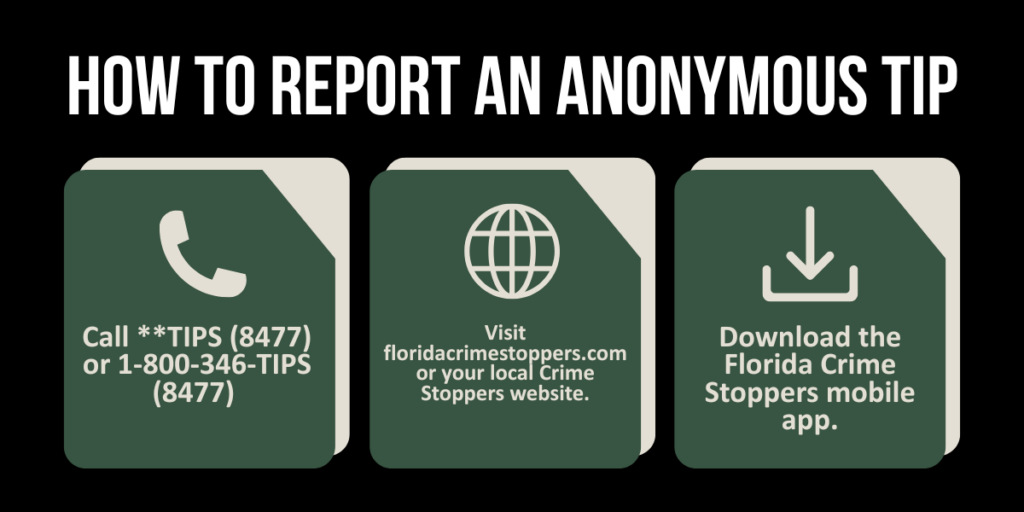
Even decades later, public tips remain one of the most valuable tools in solving cold cases, including many unsolved serial killer cases in Florida. Investigators continue to rely on information from the public to uncover new leads and connections. Ways the public can help include:
- Sharing tips or observations: Even small details that once seemed insignificant may now be critical.
- Submitting anonymous information: Crime Stoppers allows individuals to provide tips without revealing their identity.
- Using online tip platforms: Digital tools make it easier than ever to submit information quickly and securely.
- Revisiting past knowledge: Friends, acquaintances, or witnesses may remember new details over time.
- Connecting cases across jurisdictions: Public information can help investigators link crimes that span multiple areas.
In many cases, a single tip has been the missing piece that reopens an investigation or leads to a breakthrough — underscoring the vital role the public plays in helping bring long-awaited answers to victims’ families.
About the Florida Sheriffs Association
Founded in 1893, the Florida Sheriffs Association was established to unite Florida’s sheriffs in advancing public safety, shaping legislation, and fostering collaboration among law enforcement agencies. Over the decades, FSA has grown into a powerful advocate for law enforcement, providing training, resources, and support to ensure the protection and security of Florida’s communities.
The “Cold Case Florida” podcast from the Florida Sheriffs Association shines a light on unsolved cases and the ongoing work to bring justice to victims and their families. Each episode dives into a real investigation with insights from the detectives and agencies still pursuing answers. Listen now to get an inside look at ongoing investigations and why your tip could matter.
The Florida Sheriffs Association keeps the public informed on law enforcement initiatives, public safety updates, and the work of Florida’s sheriffs. From in-depth blogs to legislative news and community programs, we keep you connected to the issues that matter. Explore more at flsheriffs.org and stay engaged with Florida’s law enforcement community.