












Victims’ Rights in Florida: Legal Protections and Resources

In Florida, supporting crime victims is about more than policy, it’s about recognizing the real pain and disruption crime can cause. Victims’ rights exist to ensure individuals are treated with dignity, kept informed, and supported as they begin to heal.
Through protections and continued investment in advocacy, services, and compensation, Florida strives to ensure that no one has to navigate the aftermath of crime alone.
The Importance of Victims’ Rights in Florida
When someone becomes a victim of crime, the impact can be deeply personal and long-lasting. In those moments, it’s essential that they are met with compassion, understanding, and meaningful support. Victims’ rights in Florida help ensure that individuals and families are not left to navigate the aftermath alone but are treated with dignity and care throughout the process. Here’s why these rights matter.
Acknowledgment of Harm
Crime can bring physical, emotional, and financial challenges. Recognizing victims’ rights affirms their experiences and helps ensure their pain is seen and taken seriously.
Participation in the Justice Process
Being informed about what is happening — whether it’s court proceedings or case updates — can help victims feel more included and less uncertain during an already difficult time.
Protection and Safety
For many victims, concerns about safety don’t end after a crime occurs. Legal protections, such as restraining orders or notifications, can provide an added sense of security and peace of mind.
Access to Support Services
Healing often requires support. Victims’ rights help connect individuals to resources like counseling, medical care, and compensation programs that can ease some of the burdens they may face.
Balance in the Legal System
While the justice system focuses on holding offenders accountable, victims’ rights help ensure that care and consideration are also given to those who have been harmed.
Empowerment and Dignity
At their core, these rights reinforce a simple but powerful truth: victims are not alone, and their voices, experiences, and well-being matter.
How the Florida Constitution Protects Victims
Florida’s Constitution (Article I, Section 16) protects crime victims through Marsy’s Law, which guarantees:
- The right to be treated with fairness, dignity, and respect
- Protection from intimidation, harassment, or harm
- Timely updates about court proceedings and case status
- The ability to be heard at key stages (plea, sentencing, parole)
- Consideration of victim safety in bail and release decisions
- Safeguarding of personal and confidential information
How Law Enforcement Supports and Protects Victims
When a crime occurs, the experience can feel overwhelming and uncertain. During those moments, there is a coordinated process in place to help support victims, offer guidance, and walk alongside them as they begin to navigate both recovery and the justice system.
This process brings together law enforcement, victim advocates, prosecutors, and statewide programs — all working to provide care, information, and support at each step along the way. This coordinated system works to support victims from the first response through long-term recovery.
1. Immediate Response
When a crime is reported, law enforcement responds as quickly as possible. Their first priority is to help ensure everyone’s safety and begin understanding what has happened.
In many cases, victim advocates are also called to the scene to provide support right away. During this initial stage, victims may receive:
- Emergency medical care if needed
- Immediate emotional support and crisis intervention
- Assistance contacting loved ones or finding a safe place to stay
2. Early Support from Advocates
Many agencies across Florida have victim advocate units available around the clock. These professionals are there to help individuals feel supported and informed in the moments following a traumatic event. They can assist with:
- Providing calm, trauma-informed emotional support
- Talking through safety planning, especially in situations like domestic violence
- Gently explaining what to expect next
- Connecting victims with shelters, counseling, or legal resources
3. Understanding Your Rights
In Florida, victims have constitutional rights designed to help them stay informed and involved, if they choose. It’s important to know that some of these rights may need to be formally requested, and advocates are often there to help guide victims through that process. These rights include:
- The ability to be informed, present, and heard in court proceedings
- Protection from intimidation or harassment
- Notifications about court dates and the status of the accused
- The opportunity to share how the crime has impacted them
4. Access to Services
Support doesn’t end at the scene. Victim advocates and community organizations help connect individuals to both immediate and longer-term resources, such as:
- Counseling or mental health services
- Domestic violence shelters or safe housing
- Legal assistance
- Help with basic needs like food or transportation
- Accompaniment to court, if needed
5. Financial Assistance
For many, the financial impact of a crime can add additional stress. Florida offers a Crime Victim Compensation Program that may help ease some of that burden by covering costs such as:
- Medical expenses
- Counseling services
- Lost wages
- Funeral expenses in the most tragic cases
6. Ongoing Case Involvement
As the case moves forward, the State Attorney’s Office prosecutes the case while victims receive updates on hearings, plea agreements, and sentencing. Victims have the option to:
- Attend hearings
- Speak at sentencing
- Confer with prosecutors
7. Notifications and Safety Protections
Victims have access to important tools and protections designed to help them feel informed and secure as a case moves forward. These measures provide peace of mind and help reduce uncertainty during an already difficult time. Victims can request:
- Status notifications: Alerts if the offender is released, transferred, escapes, or experiences a change in custody status, allowing victims to stay aware and make informed decisions about their safety.
- Protective orders (injunctions): Court-issued orders that can prohibit an offender from contacting or approaching the victim, their home, workplace, or family members, helping create a layer of legal protection.
- Confidentiality of personal information: In certain cases, victims may request that sensitive personal details such as addresses, phone numbers, or other identifying information be kept confidential to help prevent harassment or unwanted contact.
8. Long-term Recovery Support
Healing doesn’t end when a case is closed. For many victims, recovery is an ongoing process that may take time, support, and access to the right resources. Florida offers continued services to help individuals and families rebuild stability and move forward. Even after the case ends, services may include:
- Ongoing counseling: Continued access to mental health services can help victims process trauma, manage stress, and support emotional healing over time.
- Support groups: Connecting with others who have experienced similar situations can provide a sense of community, understanding, and shared strength during recovery.
- Community-based assistance programs: Local organizations may offer additional support such as housing assistance, financial guidance, legal aid, and other resources tailored to long-term needs.
What Is a Victim Advocate?
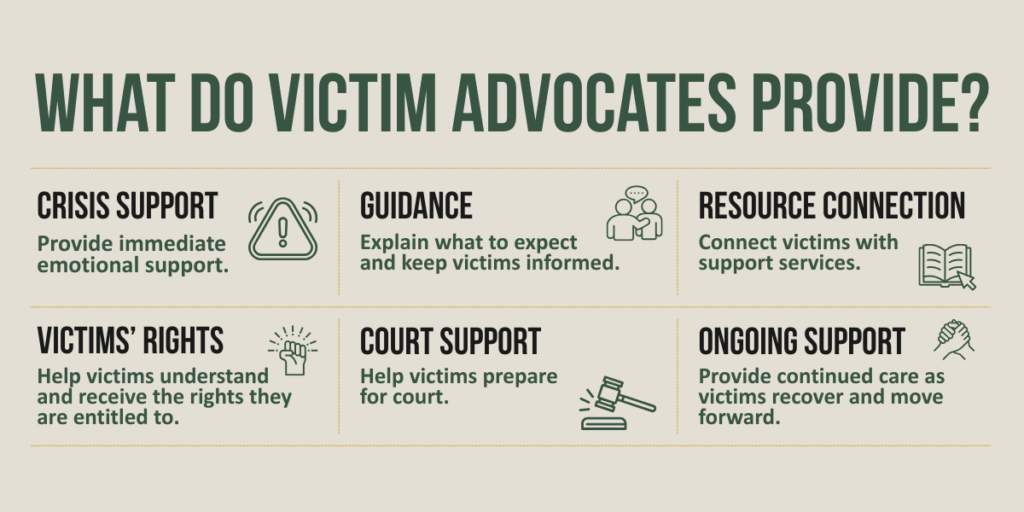
A victim advocate is a trained professional who supports victims and their families throughout the aftermath of a crime and the justice process. Victim advocates play a vital role in bridging the gap between the justice system and the personal needs of victims. Their work helps reduce confusion and trauma, empowers individuals with knowledge about their rights and options, improves access to critical services, and ensures that no one has to navigate the process alone.
They often work within sheriff’s offices and partner with law enforcement, prosecutors, and community organizations. The core roles of victim advocates include:
Immediate Support
- Crisis intervention at crime scenes, hospitals, or homes
- Emotional stabilization and safety planning
Guidance Through the Justice Process
- Explain victims’ rights and legal procedures
- Prepare victims for court
- Provide updates and attend hearings for support
Connection to Resources
- Help access counseling, shelters, and legal aid
- Assist with protective orders
- Guide victims through compensation applications
Ongoing Support
- Follow-up care and emotional support
- Help with paperwork and logistics
- Ensure victims are treated with dignity and respect
Across Florida, victim advocates are a consistent and vital presence within sheriff’s offices, ensuring that individuals affected by crime receive compassionate, informed support from the very beginning. These trained professionals — often available 24/7 — work alongside deputies and investigators to help individuals navigate what can feel like an overwhelming process.
Victim advocates complete a 40-hour training program offered by the Florida Office of the Attorney General to earn the designation of Victim Services Practitioner. Participants receive foundational instruction on key topics in victimology, victims’ rights, and the role of the victim advocate, including ethical considerations.
The training emphasizes legislative mandates, community resources, and available services to support victims of crime. Additional topics include the impact of crime, crisis intervention strategies, cultural and ethnic considerations, and mandated services. Specialized sessions address issues such as child abuse, homicide, domestic violence, sexual assault, identity theft, crimes involving individuals with disabilities and older adults, cybercrime involving children, and global victimization trends. To maintain this designation, Victim Services Practitioners are required to complete 24 hours of continuing education every three years.
No matter the county, victim advocates serve as a steady point of contact, and their presence helps ensure that victims are not only protected, but also supported with dignity, care, and guidance every step of the way.
What To Do If You’re a Victim of a Crime
While every situation is different and this guidance may not apply in all circumstances, if you are experiencing an emergency or are in immediate danger, call 911 right away. If you are a victim of a crime, these steps can help protect your safety and connect you with support:
- Prioritize your safety: Move to a safe location and call 911 if in danger
- Report the crime: Provide as much detail as possible to law enforcement
- Seek medical attention: Even if injuries are not visible
- Preserve evidence: Avoid disturbing clothing, items, or the scene
- Request a victim advocate: They can guide and support you through the next steps
- Understand your rights: Stay informed and involved in the process
- Access support services: Counseling, housing, and financial help are available
- Stay informed and follow up: Maintain communication with law enforcement or advocates
Resources for Victims and Families
If you or someone you love has been impacted by a crime, it’s important to know that support is available. Reaching out can feel difficult, but these resources are here to provide guidance, assistance, and a sense of stability during an uncertain time.
Florida Attorney General
The Office of the Attorney General serves as one of the main entry points for help in Florida. They can assist with victim compensation, provide updates about cases, and help connect you with advocacy and support services. This brochure can easily be shared with friends and family.
Florida Victim Compensation Program
The Florida Victim Compensation Program can help ease some of the financial burden that may follow a crime. It may cover expenses such as medical care, mental health counseling, lost income, and funeral costs in tragic circumstances.
Florida Department of Corrections
The Florida Department of Corrections helps victims stay informed after a case moves through the court system. It provides notifications about an offender’s status through the Victim Information and Notification Everyday (VINE) system and offers support services even after a conviction.
Helping Victims Move Forward
Being the victim of a crime can have lasting effects, but support is available every step of the way. Through strong legal protections, dedicated advocates, and accessible resources, sheriff’s offices across the state work to ensure victims are not alone in their recovery. While no law can undo what has happened, upholding victims’ rights in Florida can help individuals regain stability, feel supported, and begin to heal.
The Florida Sheriffs Association (FSA) helps ensure that sheriff’s offices across Florida are equipped to support victims effectively by:
- Providing training, resources, and technical assistance
- Promoting victim-centered approaches that prioritize safety, dignity, and trauma-informed care
- Encouraging collaboration between law enforcement, advocates, and community organizations
This support strengthens the ability of local agencies to respond compassionately and consistently to victims’ needs, reinforcing the importance of victims’ rights in Florida at every level of the justice system.
The Florida Sheriffs Association advocates for victims’ rights legislation by working with lawmakers and public safety partners to support and advance policies that strengthen protections and services for victims. By providing input grounded in real-world law enforcement experience, FSA helps ensure these laws are both effective and practical, keeping victims’ needs and safety at the forefront of public policy.
About the Florida Sheriffs Association
Founded in 1893, the Florida Sheriffs Association was established to unite Florida’s sheriffs in advancing public safety, shaping legislation, and fostering collaboration among law enforcement agencies. Over the decades, FSA has grown into a powerful advocate for law enforcement, providing training, resources, and support to ensure the protection and security of Florida’s communities.
The Florida Sheriffs Association keeps the public informed on law enforcement initiatives, public safety updates, and the work of Florida’s sheriffs. From in-depth blogs to legislative news and community programs, we keep you connected to the issues that matter. Explore more at flsheriffs.org and stay engaged with Florida’s law enforcement community.