

How Women in Law Enforcement Shaped Florida Sheriff’s Offices
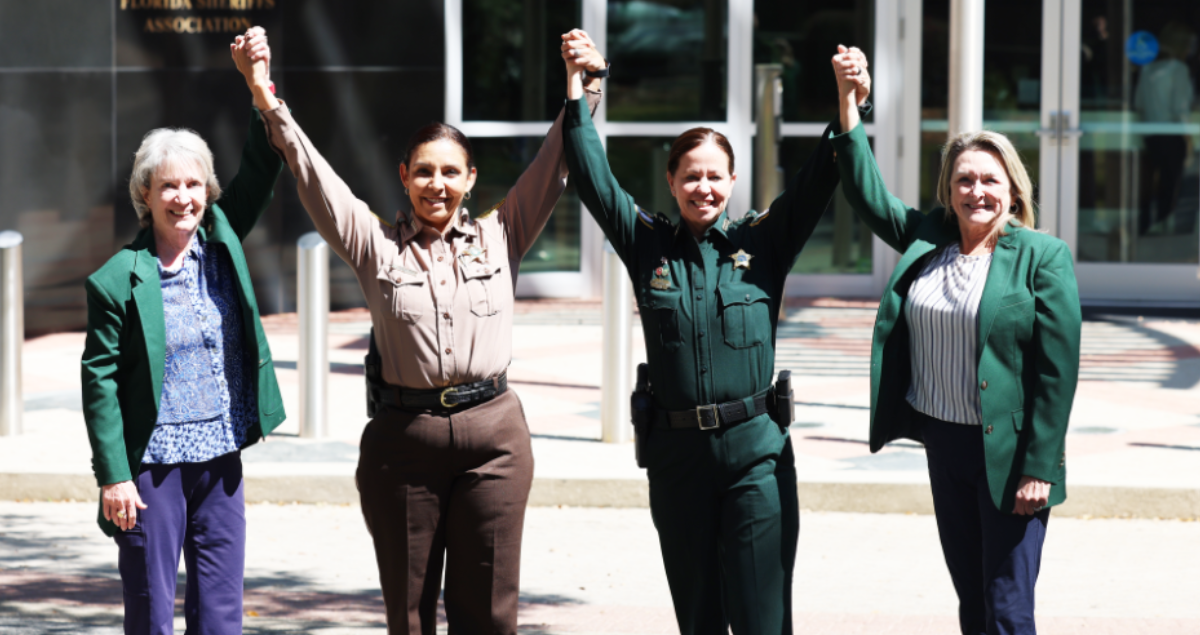
Florida’s approach to community engagement and victim-centered law enforcement didn’t happen by accident — women helped build it. It was shaped over decades by dedicated professionals, and women in law enforcement played a critical role in that evolution. From advocating for more compassionate treatment of victims to helping develop policies that emphasize trust, communication, and collaboration, women in law enforcement helped redefine what effective policing looks like. Their leadership and innovation not only changed individual cases and departments, but also helped create sheriff’s offices that became national models for service-driven, community-focused policing.
Leadership That Changed the Profession
Several trailblazing women in Florida law enforcement illustrate just how transformative this leadership has been, including four elected sheriffs whose careers helped reshape the profession.
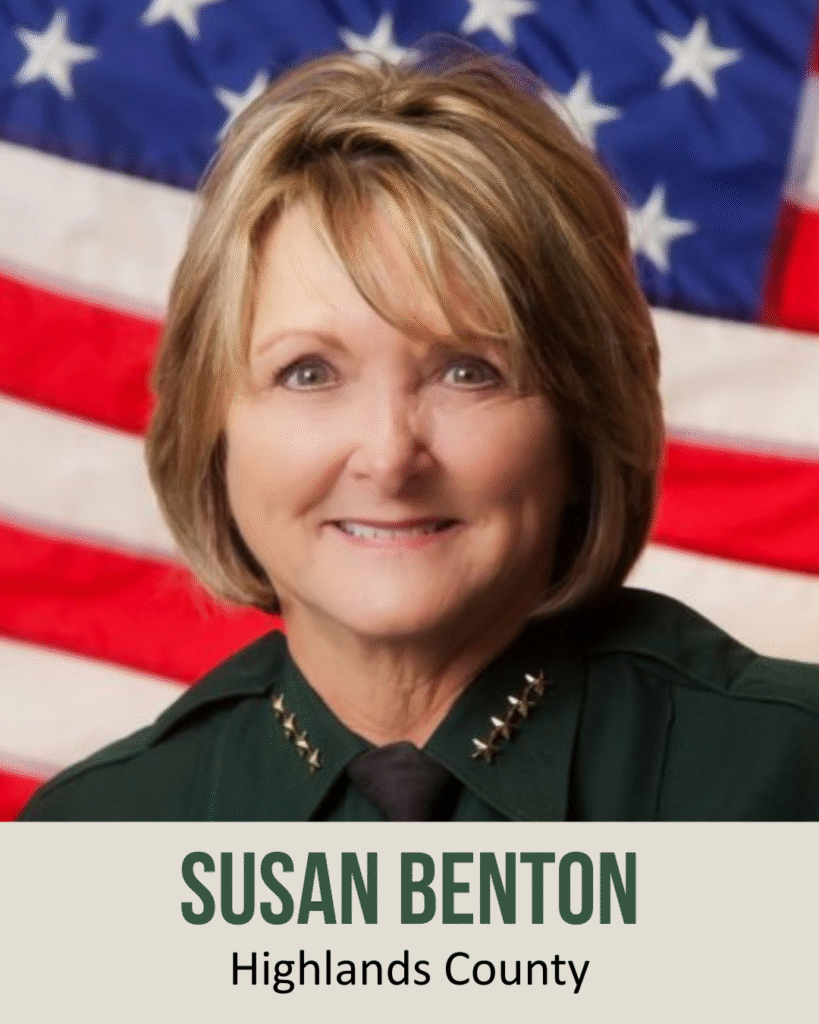
Susan Benton: Florida’s First Female Elected Sheriff
Elected in 2005, Susan Benton made history as Florida’s first female elected sheriff, serving Highlands County for three terms through 2017. A career deputy who rose through the ranks, Benton focused on community outreach, crime prevention, and agency efficiency. She was a strong advocate for women in law enforcement and served as president of the Florida Sheriffs Association from 2012 to 2013, leaving a legacy of leadership and mentorship. Sheriff Benton was inducted into the Florida Women’s Hall of Fame in 2014.
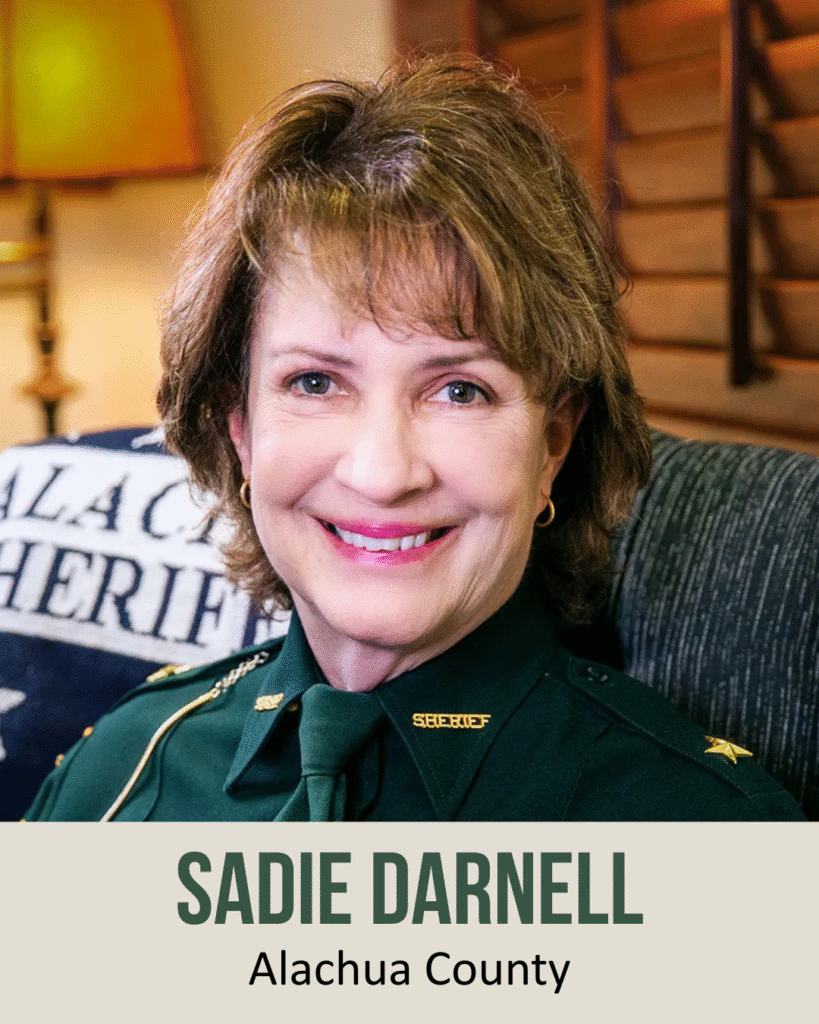
Sadie Darnell: 14 Years of Leadership in Alachua County
Sadie Darnell became Alachua County’s first female sheriff in 2006 and served until 2020. With more than 30 years at the Gainesville Police Department, she emphasized community policing, transparency, and modernization. Her leadership expanded mental health and crisis intervention efforts and strengthened public trust. Darnell also served as president of the Florida Sheriffs Association from 2015 to 2016.
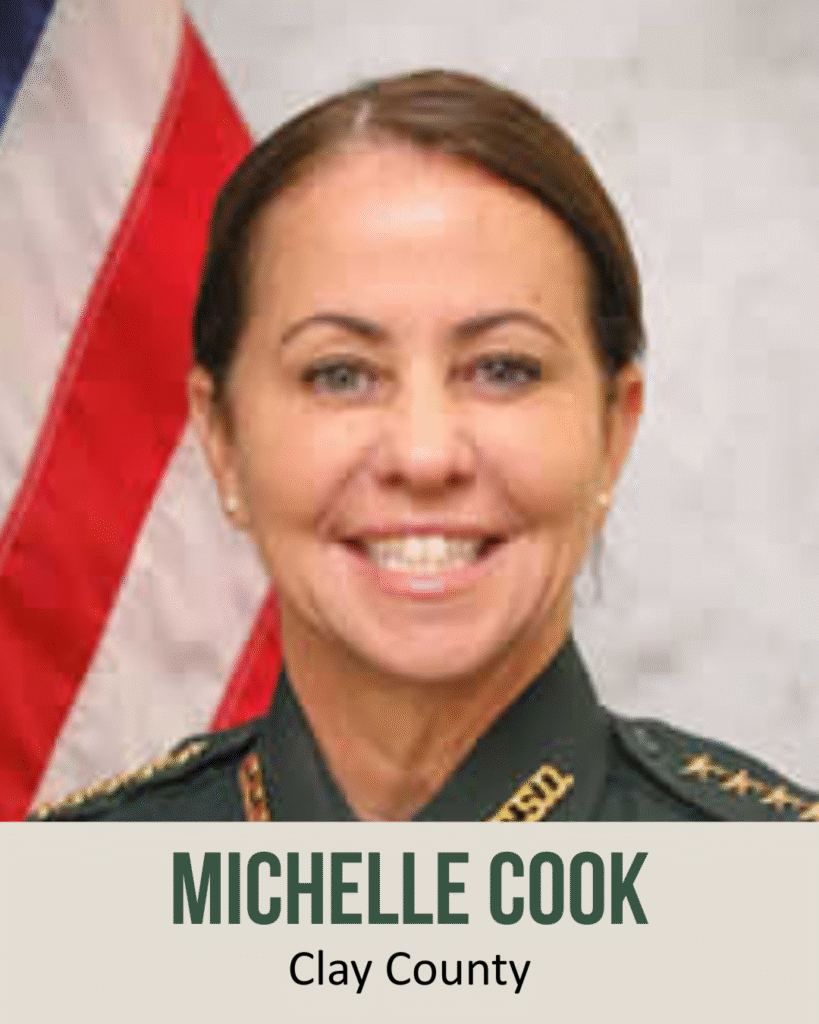
Michelle Cook: A First in Clay County
Elected in 2020, Michelle Cook became the first woman to serve as sheriff of Clay County. A former 3-star director with the Jacksonville Sheriff’s Office and former chief of police in Atlantic Beach, Cook brought extensive leadership experience to the role. As sheriff, she has prioritized public safety, transparency, and strong community partnerships. Sheriff Cook is a recipient of the 6 Pillars of Character Award, honoring her demonstrated commitment to the core ethical values of the CHARACTER COUNTS! initiative. The award reflects her leadership rooted in integrity, respect, and service to the Clay County community.
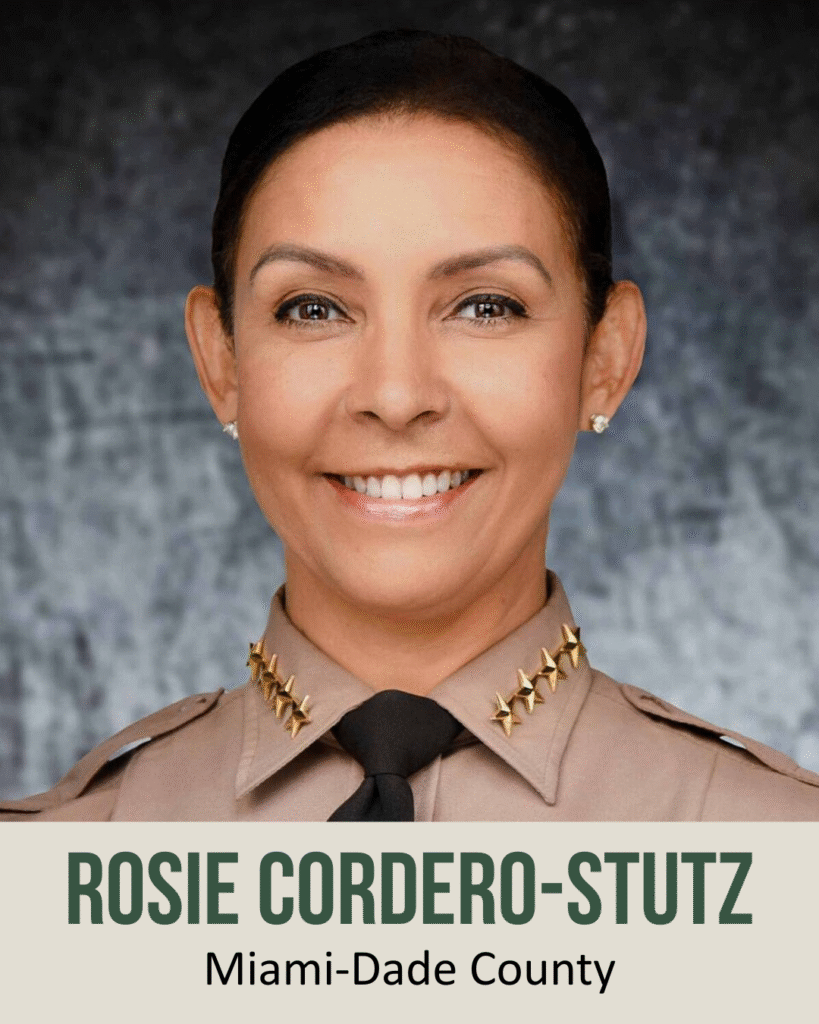
Rosie Cordero-Stutz: History in Miami-Dade County
In 2024, Rosie Cordero-Stutz was elected Miami-Dade County’s first female sheriff and the first Hispanic female sheriff in Florida. A 28-year veteran of the Miami-Dade Police Department, she rose from street officer to chief and assistant director. She also became the first Hispanic woman elected president of the FBI National Academy Association and is leading the historic transition of Miami-Dade’s police department into a sheriff’s office, with a strong emphasis on community trust and transparency.
Women as Trailblazers in Florida Corrections
For much of the 20th century, corrections in Florida was considered men’s work. Women were largely limited to clerical roles or the supervision of female inmates. That began to change in the 1960s and 1970s, as broader civil rights and workplace equity movements reached Florida’s correctional system.
Florida women were among the early adopters of gender-neutral correctional officer roles, which allowed them to supervise male inmate populations. They also helped professionalize training standards, shifting the focus in corrections from merely “guarding” to emphasizing rehabilitation and safety. Many broke barriers by moving into leadership positions, including roles as lieutenants, captains, wardens, and department administrators. These trailblazing women often faced skepticism about their physical ability or authority, limited facilities and equipment designed only for men, and a lack of mentorship or representation. Despite that, women in Florida corrections helped reshape the profession by emphasizing:
- Communication and de-escalation
- Inmate management through consistency and professionalism
- Staff wellness and accountability
Today, Florida has women serving at every level of corrections — from front-line officers to executive leadership — building on the foundation laid by those early pioneers who proved the job required judgment, resilience, and leadership, not just physical strength.
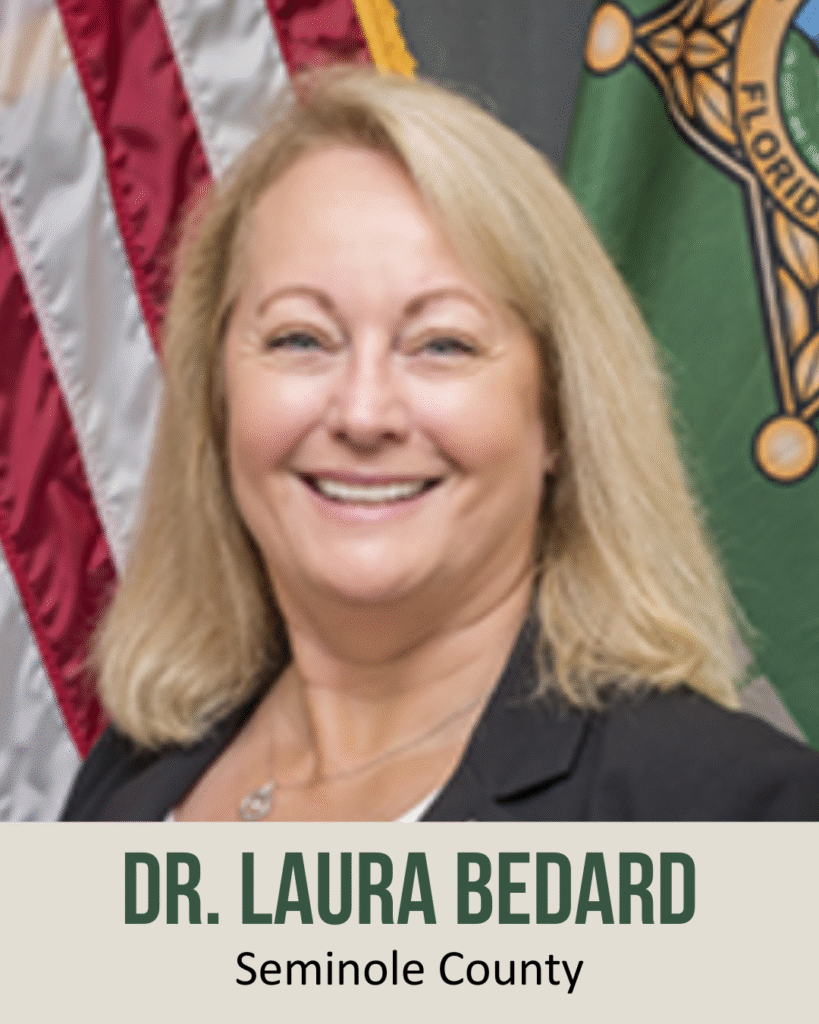
One such example is Dr. Laura Bedard, chief of corrections for the Seminole County Sheriff’s Office, who has brought decades of experience in correctional leadership, public administration, and criminal justice education. A nationally respected leader in her field, she previously served as the first female deputy secretary of the Florida Department of Corrections, and has held warden and executive roles across state, federal, and private correctional systems.
Dr. Bedard also spent 17 years on the administrative faculty at Florida State University’s College of Criminology and Criminal Justice, where she helped shape future leaders through teaching and international study programs. Her work emphasizes trauma-informed care, organizational leadership, and advancing professionalism within corrections, making her a recognized voice on leadership, particularly for women in law enforcement and corrections.
Women Pioneering 911 Dispatch in Florida
Women were also trailblazers in 911 and emergency communications, and Florida played a key role as the system expanded statewide in the late 1960s and 1970s. When 911 services were first introduced, agencies needed individuals who could remain calm under pressure, multitask rapidly, and communicate clearly with both the public and first responders.
Many women, coming from switchboard, radio, or clerical backgrounds, quickly became the backbone of Florida’s emergency communications centers. They helped shape modern dispatch by standardizing call-handling procedures, developing prioritization and triage practices, and serving as the calm, authoritative voice during life-or-death situations.
Thanks to these trailblazing women, Florida’s corrections and 911 systems are stronger, more professional, and more inclusive today. Their leadership and perseverance continue to inspire new generations entering these critical fields.
The Florida Sheriffs Association Dispatcher of the Year Award recognizes the vital contributions of 911 and communications professionals who provide critical support to law enforcement and the communities they serve. This award honors dispatchers who demonstrate exceptional skill, dedication, and professionalism in handling emergency calls, coordinating responses, and ensuring public safety. By highlighting these often-unsung heroes, the award underscores the importance of communication professionals in effective policing and celebrates the individuals whose calm, quick thinking, and commitment save lives every day.
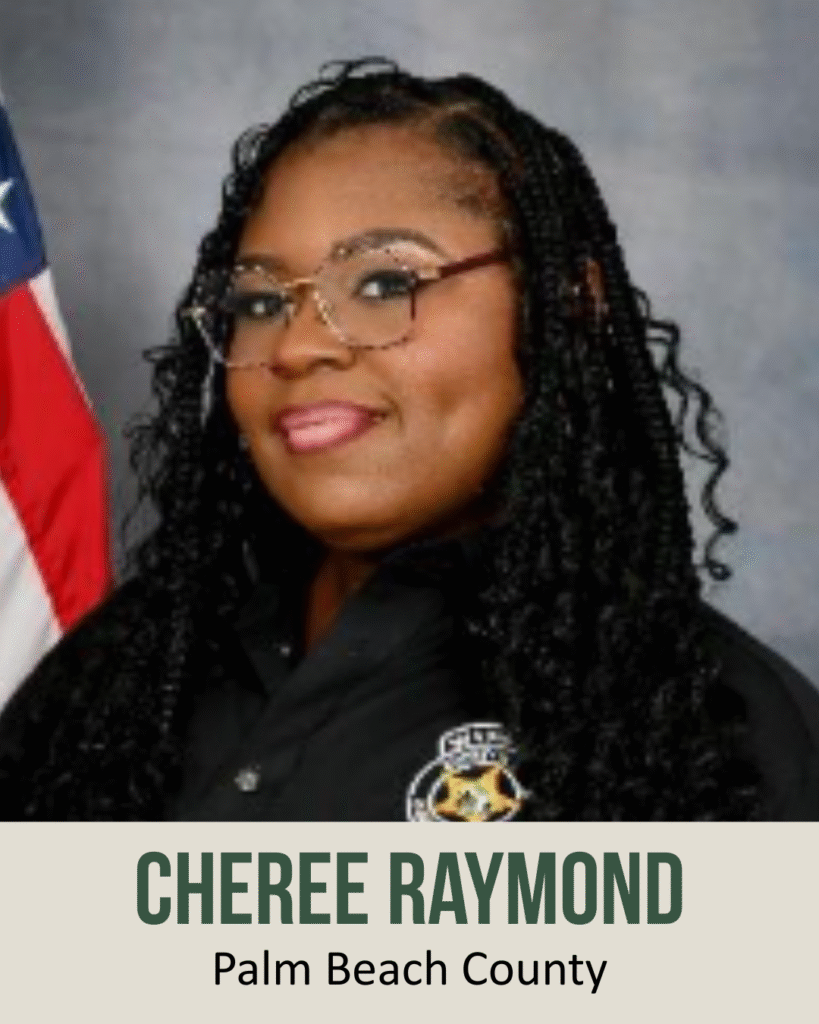
FSA named Communications Officer Cheree Raymond of the Palm Beach County Sheriff’s Office as the 2026 Dispatcher of the Year, an honor presented annually at the Sheriffs Winter Conference. Since joining the agency in 2017, Raymond has exemplified professionalism and dedication. She was recognized for her calm, empathetic response to a June 2025 911 call from a suicidal veteran in crisis, ultimately helping him safely surrender his loaded firearm. FSA President Dennis Lemma praised her extraordinary humanity, care, and steady decision-making.
Women-Focused Initiatives in Sheriffs Offices
According to the Bureau of Justice Statistics, women currently represent less than 14% of sworn officers and 20% of recruits in state and local law enforcement agencies. The 30×30 Initiative is a national effort to increase the representation of women in law enforcement, with the goal of having women make up at least 30% of sworn officers by the year 2030. Launched by a coalition of law enforcement leaders, researchers, and advocacy organizations, the initiative recognizes that women remain significantly underrepresented in policing roles. The 30×30 Initiative is grounded in research showing that more gender-diverse agencies are often more effective, trusted by communities, and supportive of officer well-being.
Across Florida, several Sheriffs’ offices have publicly engaged in the 30×30 Initiative or related efforts to increase gender diversity in law enforcement. Below are examples of counties that have implemented women-focused initiatives.
Hillsborough County Sheriff’s Office
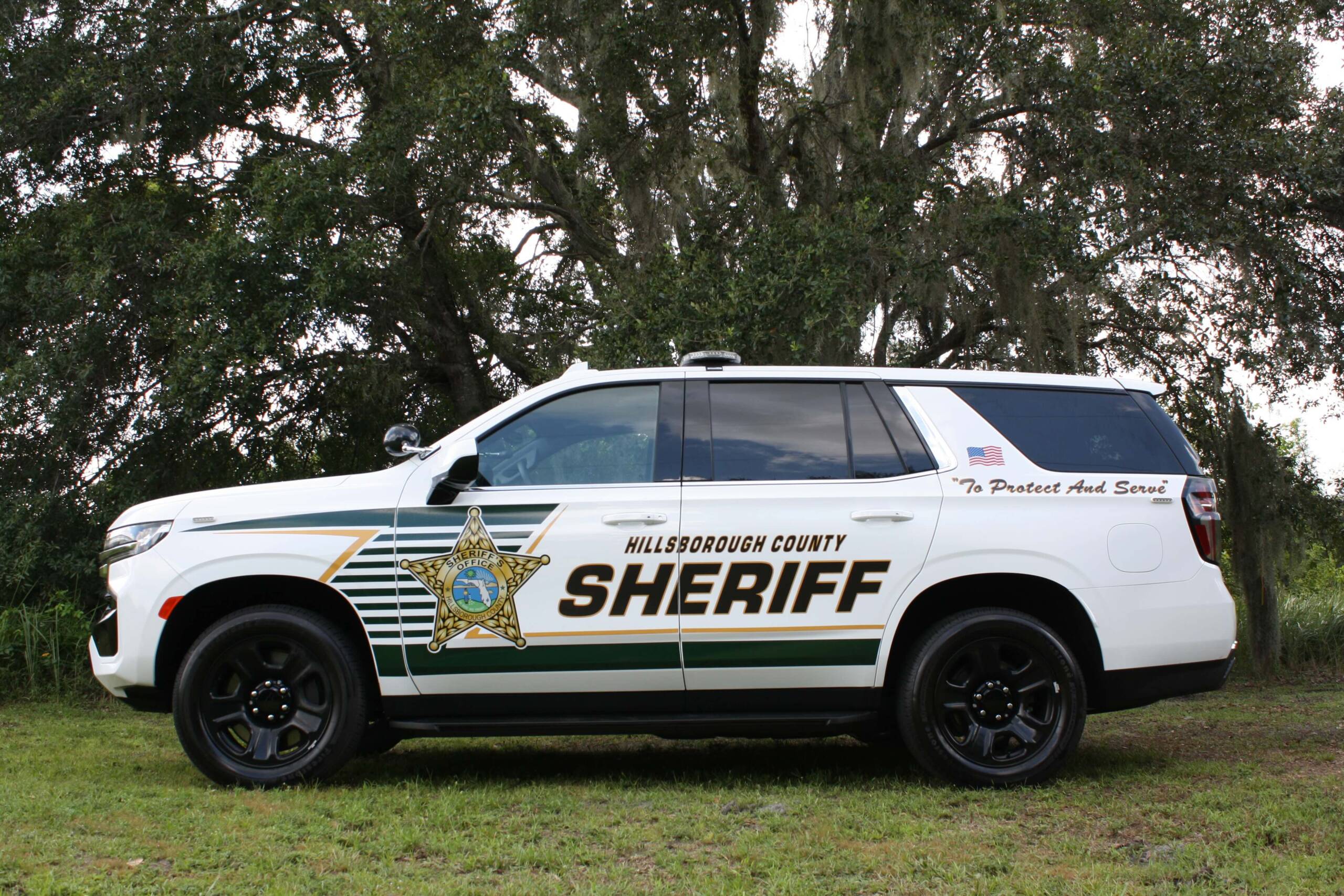
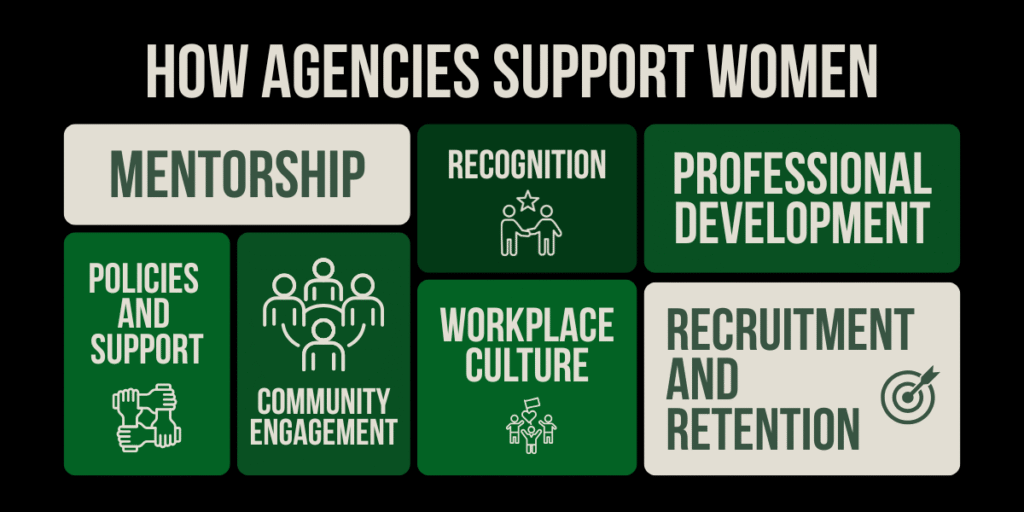
The Hillsborough County Sheriff’s Office (HCSO) has made recruiting and supporting women a priority as part of a broader diversity effort. The agency has hosted women-in-policing hiring forums aimed at encouraging women of all ages and backgrounds to consider careers in law enforcement, reflecting a commitment to ensuring the force reflects the community it serves. This seminar is led by women in uniform who provide insight into the roles of women in law enforcement and detention. The sheriff’s office also emphasizes professional development for female employees through mentoring, leadership programs, and networking opportunities, helping women advance in rank and take on visible leadership roles. Recognition programs celebrate the achievements of women across the agency, reinforcing a culture of inclusion and empowerment.
Orange County Sheriff’s Office
The Orange County Sheriff’s Office (OCSO) is committed to advancing women in law enforcement through intentional recruitment, mentorship, and visibility at every level of the agency. As a participant in the national 30×30 Initiative, OCSO strives to ensure women are represented across all ranks and in highly visible leadership positions, reinforcing a culture where women are empowered to lead and succeed.
Central to this effort is the Women of OCSO Mentoring & Enrichment Network (WOMEN), a structured program that brings together both sworn and civilian employees. The group meets monthly to foster professional development, career growth, and peer support. Through open dialogue, networking, and mentorship, WOMEN provides a space where female employees can learn from one another and be guided by experienced leaders who are invested in their success. OCSO also uses social media to highlight women’s achievements across the agency, ensuring their contributions are recognized and celebrated.
Osceola County Sheriff’s Office
The Osceola County Sheriff’s Office (OCSO) is taking intentional steps to recruit and support women in law enforcement, recognizing the value of diverse perspectives across the agency.
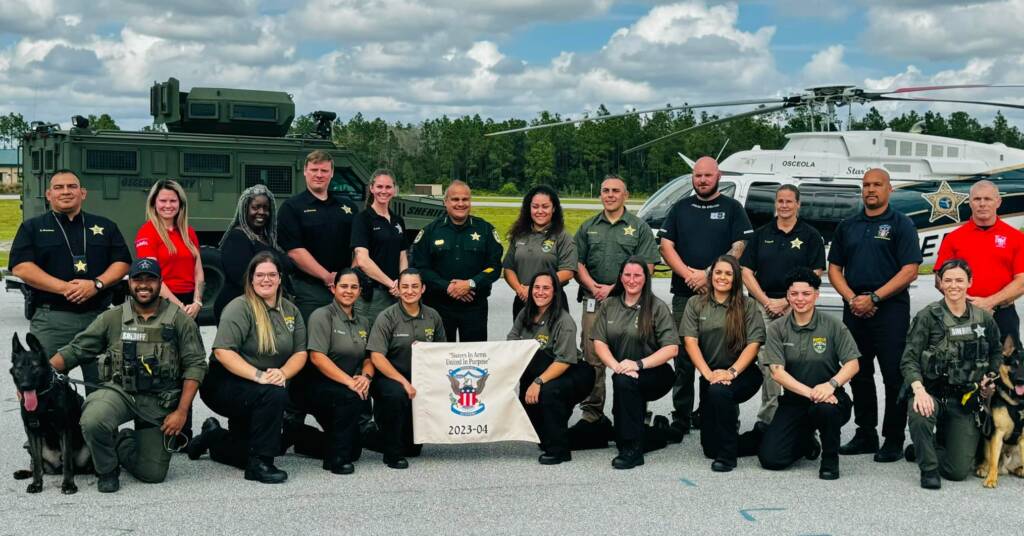
A key part of this effort is the Women on Watch initiative, a women-only pre-academy program designed to introduce participants to the realities of law enforcement and prepare them for academy success. The program provides hands-on exposure to physical readiness, firearms familiarization, defensive tactics, and core law enforcement concepts, while offering mentorship from women currently serving in the agency.
OCSO has also joined the national 30×30 Initiative, committing to increasing female representation in recruit classes and strengthening recruitment practices focused on women. Together, these efforts reflect OCSO’s commitment to building a workforce that reflects the community it serves and supports women throughout their law enforcement careers.
Leadership Training for Law Enforcement Leaders
Launched in 2025, the Florida Sheriffs Women’s Leadership Academy is a groundbreaking program designed to empower and elevate women in leadership roles within Florida’s Sheriffs’ Offices. The academy provides a 20-hour immersive experience focused on career development, leadership, and mentorship. Last year’s program featured industry-leading experts, including Florida’s four elected female sheriffs:
- Retired Sheriff Susan Benton (Highlands County)
- Retired Sheriff Sadie Darnell (Alachua County)
- Sheriff Michelle Cook (Clay County)
- Sheriff Rosie Cordero-Stutz (Miami-Dade County)
These trailblazing leaders shared their experiences, challenges, and leadership strategies to inspire the next generation of women in law enforcement.
The program’s curriculum covers essential leadership topics, including:
- The History of Women in Florida Law Enforcement
- Mentorship and Career Advancement
- Resiliency in Law Enforcement
- Recruitment and Retention Strategies
- Effective Communication and Emotional Intelligence
- Mental Health and Self-Awareness
The Florida Sheriffs Women’s Leadership Academy is not only a milestone for the state, but also a trailblazing initiative in breaking down barriers and overcoming negative stigmas faced by women in law enforcement. The Florida Sheriffs Association remains committed to fostering leadership and professional growth within the law enforcement community, ensuring that the next generation of women leaders are well-equipped to serve and protect Florida’s communities.
About the Florida Sheriffs Association
Founded in 1893, the Florida Sheriffs Association was established to unite Florida’s sheriffs in advancing public safety, shaping legislation, and fostering collaboration among law enforcement agencies. Over the decades, FSA has grown into a powerful advocate for law enforcement, providing training, resources, and support to ensure the protection and security of Florida’s communities.
The Florida Sheriffs Association will help you to stay informed on the latest law enforcement initiatives, public safety updates, and the work of Florida’s sheriffs. From in-depth blogs to legislative news and community programs, we keep you connected to the issues that matter. Explore more at flsheriffs.org and stay engaged with Florida’s law enforcement community.