



How Florida School Safety Laws Were Transformed After Parkland
In the wake of the 2018 tragedy at Marjory Stoneman Douglas High School in Parkland, Florida leaders faced urgent questions: How could this happen and how do we prevent it from happening again? What followed was one of the most comprehensive overhauls of Florida school safety laws in the country, driven by collaboration between lawmakers, law enforcement, and educators.
The Tragedy That Changed School Safety in Florida
On February 14, 2018, a gunman opened fire at Marjory Stoneman Douglas High School in Parkland, Florida, killing 17 students and staff members and injuring 17 others in one of the deadliest school shootings in U.S. history. The attacker, a former student, entered the campus during the school day and carried out the attack in a classroom building before fleeing the scene. Law enforcement later apprehended him in a nearby community. The tragedy exposed critical failures in communication, threat response, and school security, and prompted sweeping changes to school safety laws and practices across Florida.
Across Florida and the nation, the shooting sparked an intense public outcry, led in part by students and families from Marjory Stoneman Douglas High School who demanded action to prevent future tragedies. At the same time, reviews by law enforcement and state leaders revealed breakdowns in communication, missed warning signs, and gaps in campus security — findings that would directly shape the sweeping reforms that followed.
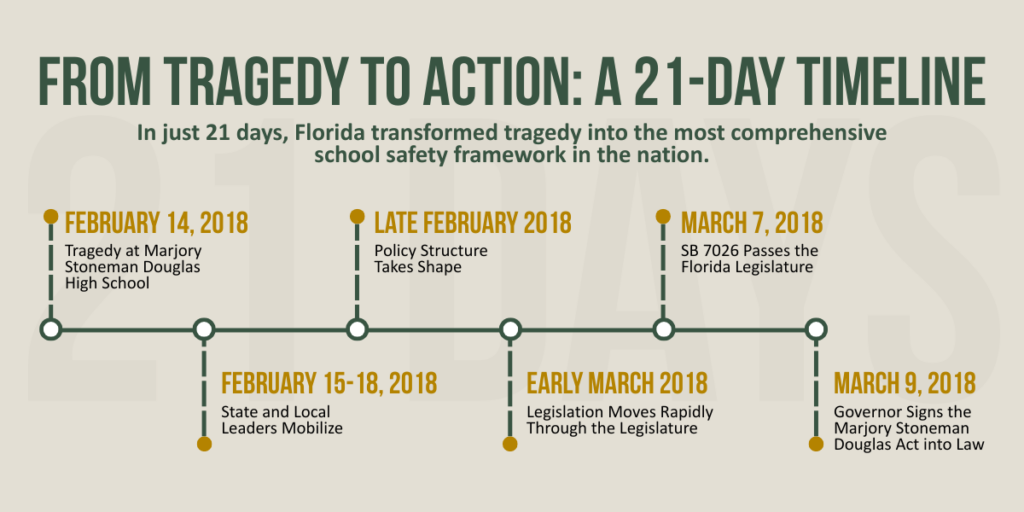
How Leaders Addressed Florida School Safety Laws: The “21 Days of Action”
In the immediate aftermath of the Parkland shooting, Florida’s response was fast and unified. Within just three weeks, state leaders moved from shock and grief to decisive action. Lawmakers worked closely with law enforcement leaders, educators, and policy experts to identify what went wrong and what needed to change. The result was a sweeping package of reforms introduced just 11 days after the shooting and signed into law only 21 days later — a timeline that set Florida apart from most other states.
During this time of intensity and focus, legislative committees held hours of testimony from:
- Law enforcement officials who responded to the shooting
- School administrators and district leaders
- Mental health professionals
- Students and families directly impacted by the shooting
These conversations revealed critical breakdowns that demanded immediate attention. The resulting response was the Marjory Stoneman Douglas High School Public Safety Act, a comprehensive law that reshaped how school safety is approached across the state. The law emphasized accountability, requiring schools and districts to comply with these measures and subjecting them to ongoing oversight.
The legislation addressed school safety from multiple angles, creating a layered system of protection and prevention, including:
- Mandatory armed security on every public school campus
- Creation of a statewide guardian program to expand trained personnel
- Establishment of threat assessment teams in every district
- Significant investment in mental health services for students
- Funding for school hardening and security upgrades
- Standardized training and safety protocols across all districts
The speed of Florida’s response reflected the urgency of the moment, but the impact has been long-term. The policies enacted during those 21 days continue to guide school safety efforts today, with additional refinements built on that original framework. It wasn’t just a legislative response; it was a reset that redefined how Florida prepares for, prevents, and responds to threats in its schools.
Florida School Safety Laws to Prevent Another Tragedy
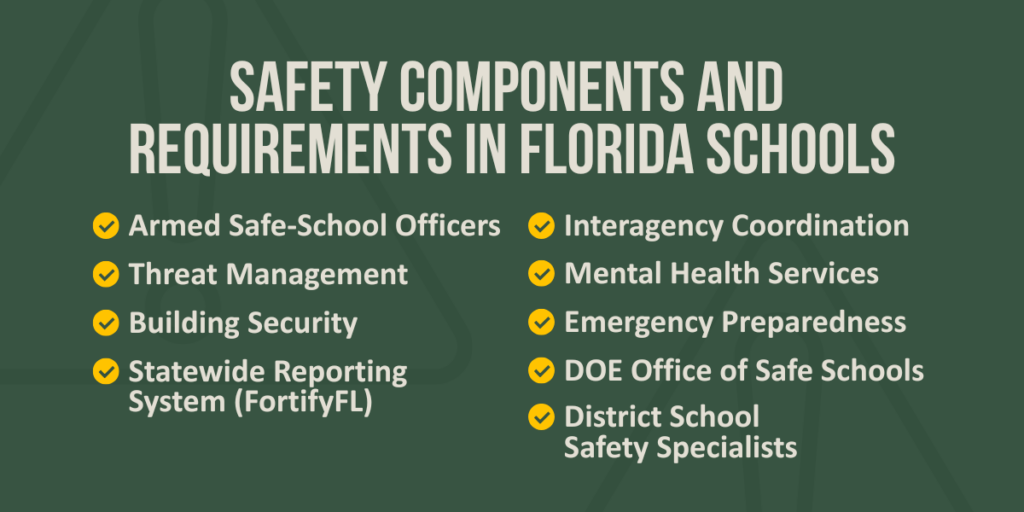
Florida’s school safety strategy is built on a layered approach combining visible security, trained personnel, and early intervention systems designed to stop threats before they escalate. Rather than relying on a single solution, the state has implemented multiple overlapping safeguards.
1. Armed Protection on Every Campus
Florida law requires that every public school has a trained, armed safety officer on site during school hours. This may be a school resource officer (typically a sworn deputy), a school safety officer, or a trained guardian under the state’s guardian program.
These individuals are not only a visible deterrent, but are also trained to respond immediately in an emergency, eliminating delays that can occur when outside law enforcement must arrive on scene. Many receive specialized instruction in active assailant response, crisis management, and specific protocols.
2. Hardened Campuses and Controlled Access
Physical security has been significantly upgraded across Florida schools. The goal is simple: slow down or prevent unauthorized access and give law enforcement time to respond if a threat emerges. Districts have invested in what is often referred to as “hardening” campuses, which includes:
- Secured, locked classroom doors that can be engaged from the inside
- Single points of entry during the school day
- Visitor management systems with ID verification
- Perimeter fencing and monitored gates
- Surveillance cameras with real-time monitoring
3. Regular Drills and Coordinated Response Training
Schools are now required to conduct frequent active assailant drills, many of which involve local law enforcement agencies. Florida has also worked to standardize these drills to reduce confusion and improve consistency statewide. These drills are designed to ensure that:
- Students and staff understand how to respond in an emergency
- Law enforcement is familiar with campus layouts and procedures
- Communication between schools and first responders is seamless
4. Advanced Emergency Communication Systems
Communication failures were a major issue identified after Parkland. These systems allow staff to instantly alert law enforcement during an emergency, transmitting critical information such as the location of the threat in real time. In response, schools have expanded their use of:
- Mass notification systems for staff and parents
- Two-way radios and interoperable communication tools
- Integrated alert systems that connect directly with law enforcement
5. Threat Assessment and Prevention Teams
One of the most significant shifts in Florida’s approach is the emphasis on prevention. Every school district is required to maintain threat assessment teams that identify and evaluate concerning behavior before it becomes dangerous. These multidisciplinary teams assess reports of threatening or unusual behavior, determine the level of risk, and intervene whether through counseling, monitoring, or law enforcement action when necessary. These prevention teams typically include:
- School administrators
- Law enforcement officers
- Mental health professionals
6. Mental Health Resources and Intervention
Recognizing that many threats stem from underlying issues, Florida has expanded access to school-based mental health services. The focus is on addressing problems early before a student reaches a crisis point. This includes:
- Increased funding for counselors and mental health professionals
- Mandatory training for educators to recognize warning signs
- Partnerships with community mental health providers
In addition, Florida’s red flag law, officially known as a Risk Protection Order (RPO), was enacted in 2018 to help prevent acts of violence and self-harm before they occur. The law allows law enforcement officers to petition a court to temporarily remove firearms and ammunition from individuals who are deemed a significant danger to themselves or others. Judges may consider evidence such as threats of violence, reckless firearm behavior, domestic violence incidents, substance abuse, or mental health crises when determining whether to issue an order. In Florida, an RPO can remain in place for up to one year and may be renewed if concerns continue.
7. Statewide Standards and Accountability
Florida didn’t just implement new measures — it also created systems to ensure they are followed. Schools must comply with statewide safety standards, and districts are subject to regular reviews and audits. The state also established oversight bodies to monitor implementation, identify gaps, and recommend improvements. This level of accountability is a key part of the strategy, ensuring that safety measures are not just adopted but consistently maintained.
The Role of Florida Sheriffs in School Safety
In Florida, sheriffs are not on the sidelines of school safety — they are at the center of it. Florida’s school safety framework depends heavily on strong local leadership and sheriffs provide it. They bring together enforcement, prevention and community connection in a way few others can, ensuring that school safety is not just a mandate, but a coordinated, lived reality across their counties.
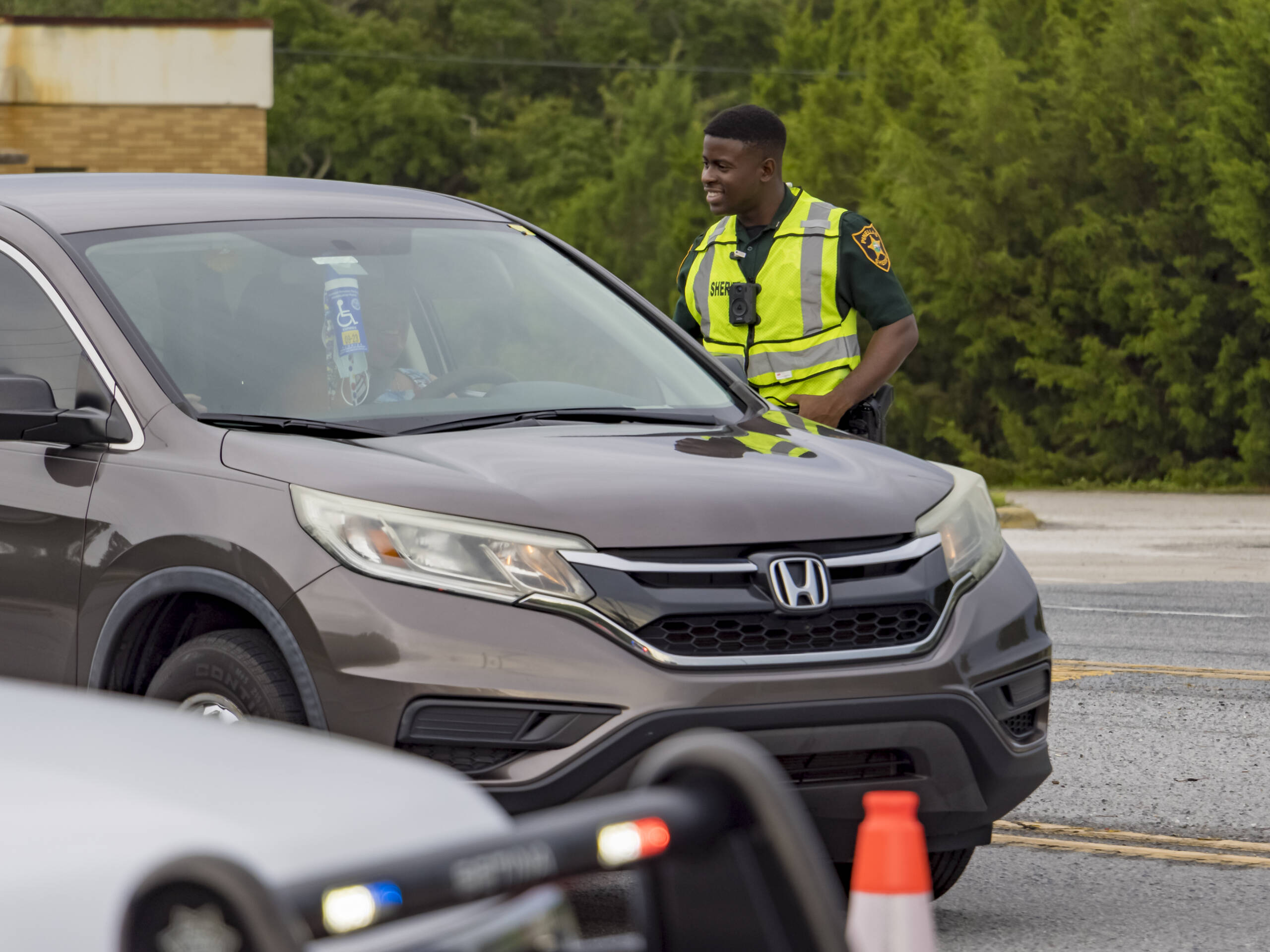
As the chief law enforcement officers in their counties, sheriffs are uniquely positioned to translate statewide policy into real, day-to-day protection for students and staff. In many communities, the sheriff’s office is the primary law enforcement partner for school districts, creating a direct line between classrooms, command staff, and emergency response.
Leadership and Oversight of School Resource Officers
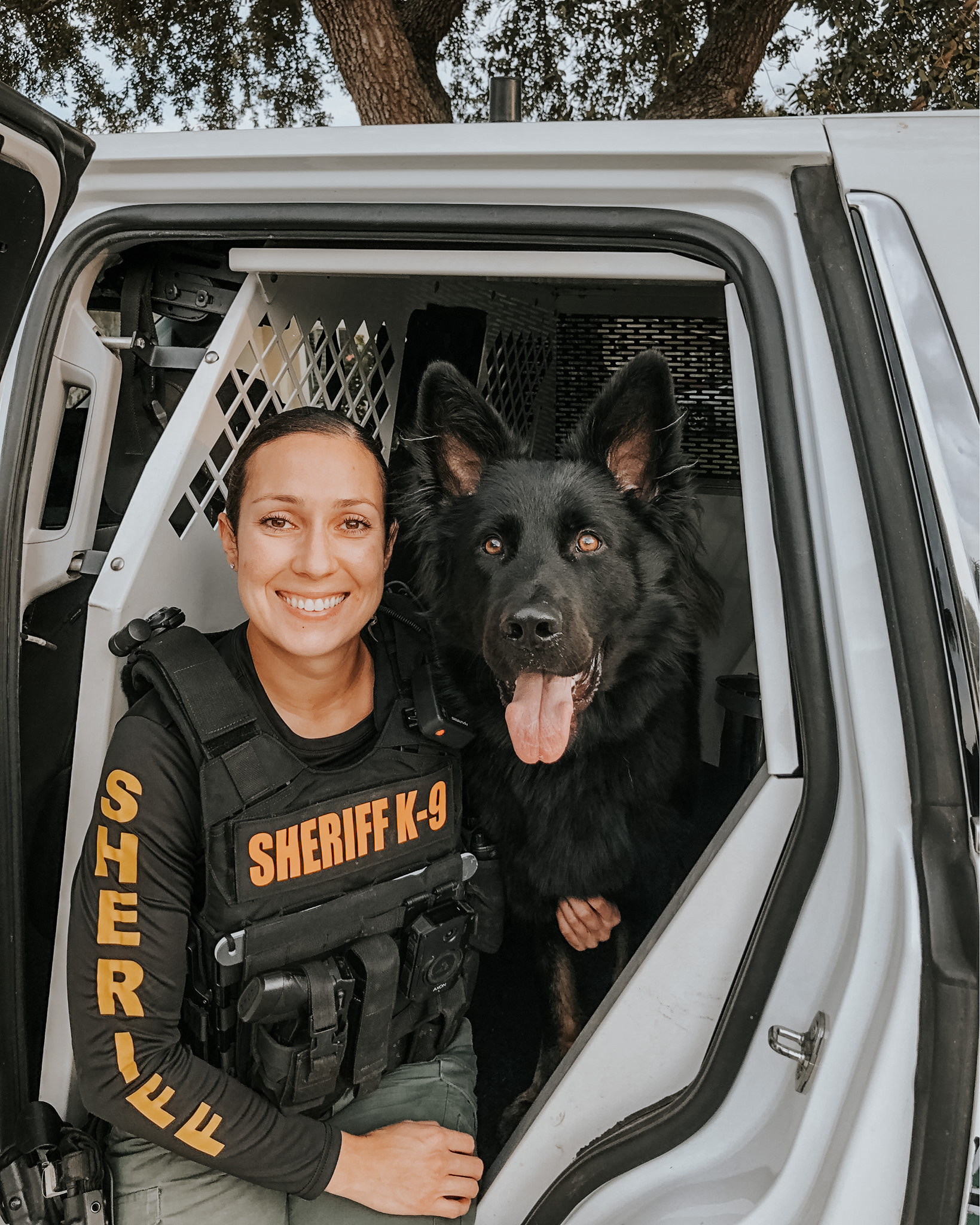
Sheriffs are responsible for recruiting, training, and supervising school resource officers (SROs) — the deputies assigned to campuses. These are not just armed personnel; they are highly trained professionals who serve as protectors, mentors, and problem-solvers. Because they are part of the sheriff’s office, SROs are backed by the full resources of a law enforcement agency, allowing for rapid support if a situation escalates. Sheriffs ensure SROs receive specialized training in:
- Active assailant response
- De-escalation and crisis intervention
- Youth engagement and relationship-building
- School-specific safety protocols
School resource officers are required to complete the five-day SRO Basic Training course offered by Florida Attorney General’s Office. First developed in 1985, the course provides participants with the history, philosophy, and foundational skills needed to serve effectively as an SRO. Training includes instruction in juvenile law, counseling skills, development of referral networks, identification and support of exceptional students, and classroom teaching techniques. Participants also learn about current trends in SRO programs, law-related education, and adolescent suicide prevention.
Front-Line Involvement in Training and Preparedness
Sheriffs’ offices play a leading role in planning and executing active assailant drills and other emergency exercises. Deputies work alongside school administrators to design realistic scenarios, identify vulnerabilities, and refine response strategies. This hands-on involvement and coordinated action ensures that:
- Law enforcement is familiar with each campus
- School staff understand how deputies will respond in a crisis
- Communication systems are tested and improved
Driving Threat Assessment and Prevention
Perhaps one of the most critical roles sheriffs play is in preventing incidents before they happen. Deputies often serve on district threat assessment teams, bringing investigative expertise and real-time intelligence into the process. They help evaluate reports of concerning behavior, determine credibility, and decide when intervention is necessary.
This can include:
- Coordinating with families and school officials
- Connecting individuals to mental health resources
- Initiating criminal investigations when warranted
Coordinating Response Across Agencies
In an emergency, seconds matter — and so does coordination. Because sheriffs operate at the county level, they are well-positioned to unify these efforts, establish clear command structures, and eliminate confusion during high-stress situations.
Sheriffs are responsible for ensuring that multiple agencies can work together seamlessly, including:
- Local police departments
- Fire and EMS
- School district personnel
- Emergency management agencies
Florida’s Continued Commitment to School Safety
Florida has backed its school safety policies with substantial and sustained funding since the passage of the Marjory Stoneman Douglas High School Public Safety Act in 2018.
- Just weeks after the Parkland tragedy, the Florida Sheriffs Association led efforts to secure adequate funding for school resource officers, and that commitment to sustaining these critical safety professionals continues today.
- In the first year alone following the Act, Florida allocated $97 million specifically for school hardening — covering secured entry points, surveillance systems, perimeter fencing, and controlled access upgrades. By 2023, cumulative investment in physical security improvements had grown to over $200 million statewide. (Source: Florida Department of Education, School Safety Annual Reports)
- Florida committed $69 million in the first year to expand school-based mental health services, funding additional counselors, psychologists, and community mental health partnerships. By the 2022–23 budget cycle, that figure had grown to over $140 million annually. (Source: Florida Office of Economic and Demographic Research; FLDOE Mental Health in Schools reports)
- The state has allocated dedicated funding to ensure every campus has a trained, armed presence. Grants have supported sheriff’s offices and school districts in hiring and training SROs, with the guardian program receiving separate per-participant training funding administered through the Florida Department of Law Enforcement (FDLE). (Source: FDLE Guardian Program annual reports)
Since 2018, Florida has invested an estimated $800 million+ in cumulative school safety spending across hardening, mental health, personnel, and training — making it one of the largest state-level school safety investments in the country. (Source: Florida Senate Appropriations Committee records)
Before Parkland, school safety efforts across the country were fragmented and inconsistent. The 21 days of action changed that, marking a decisive shift toward a coordinated, statewide strategy that brings together law enforcement, education, and mental health into a single, unified framework.
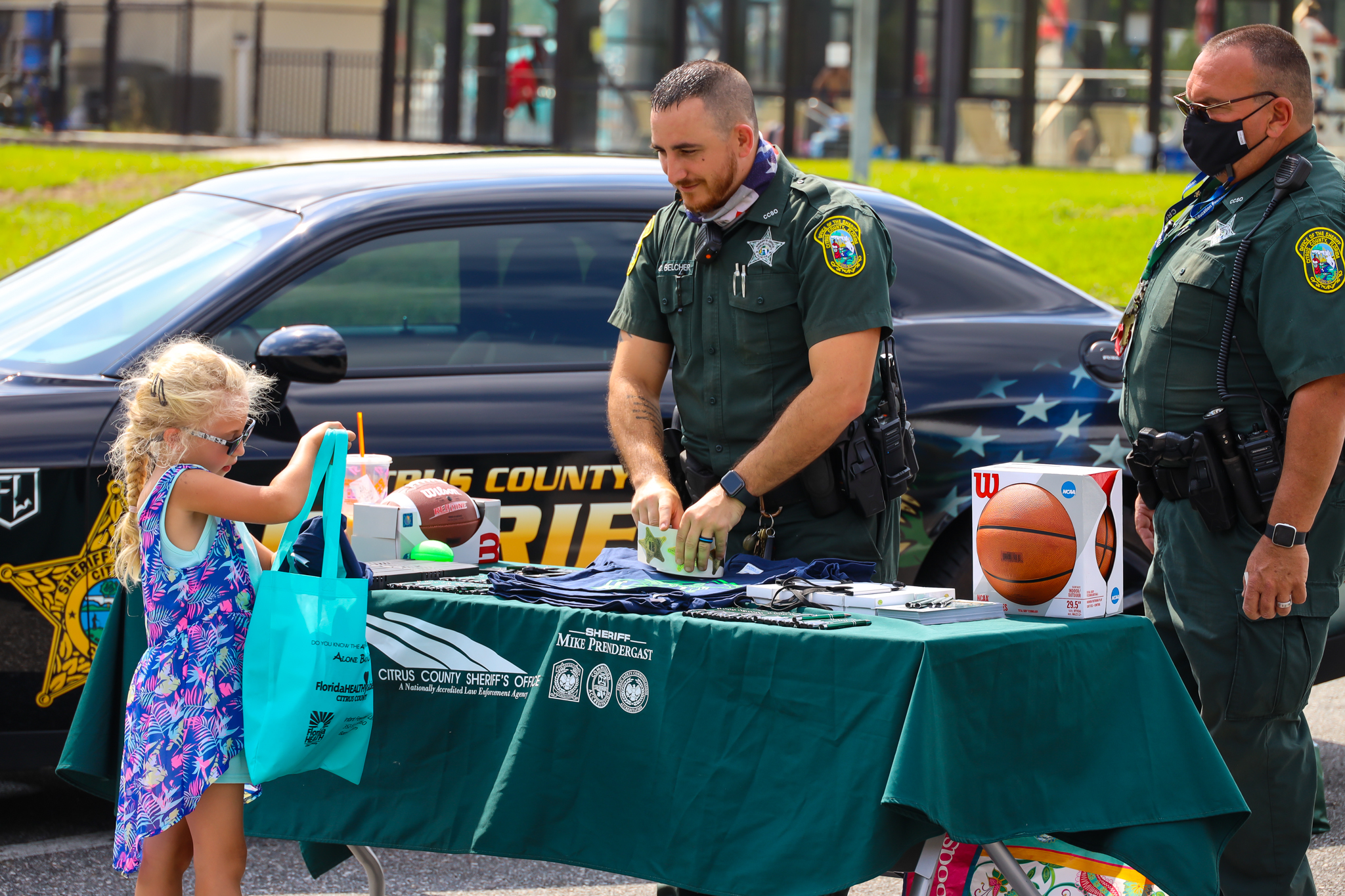
Sheriffs and local law enforcement leaders were instrumental in shaping and implementing these reforms, ensuring that policies passed in Tallahassee could be carried out effectively in communities across Florida. What sets Florida sheriffs apart is that their role in school safety is continuous, not reactive — woven into daily campus life through SROs, long-term planning, and real-time decision-making. That constant presence builds trust with students, educators, and families, and creates an environment where concerns are more likely to be raised early, before they ever become a crisis.
A Turning Point in Approach
Before Parkland, school safety efforts in many places were fragmented and inconsistent. The “21 days of action” marked a shift toward a coordinated, statewide strategy — one that integrates law enforcement, education, and mental health into a single framework.
A Constant Presence in Our Schools
Sheriffs and local law enforcement leaders were instrumental in shaping and implementing these reforms, ensuring that policies passed in Tallahassee could be carried out effectively in communities across Florida.
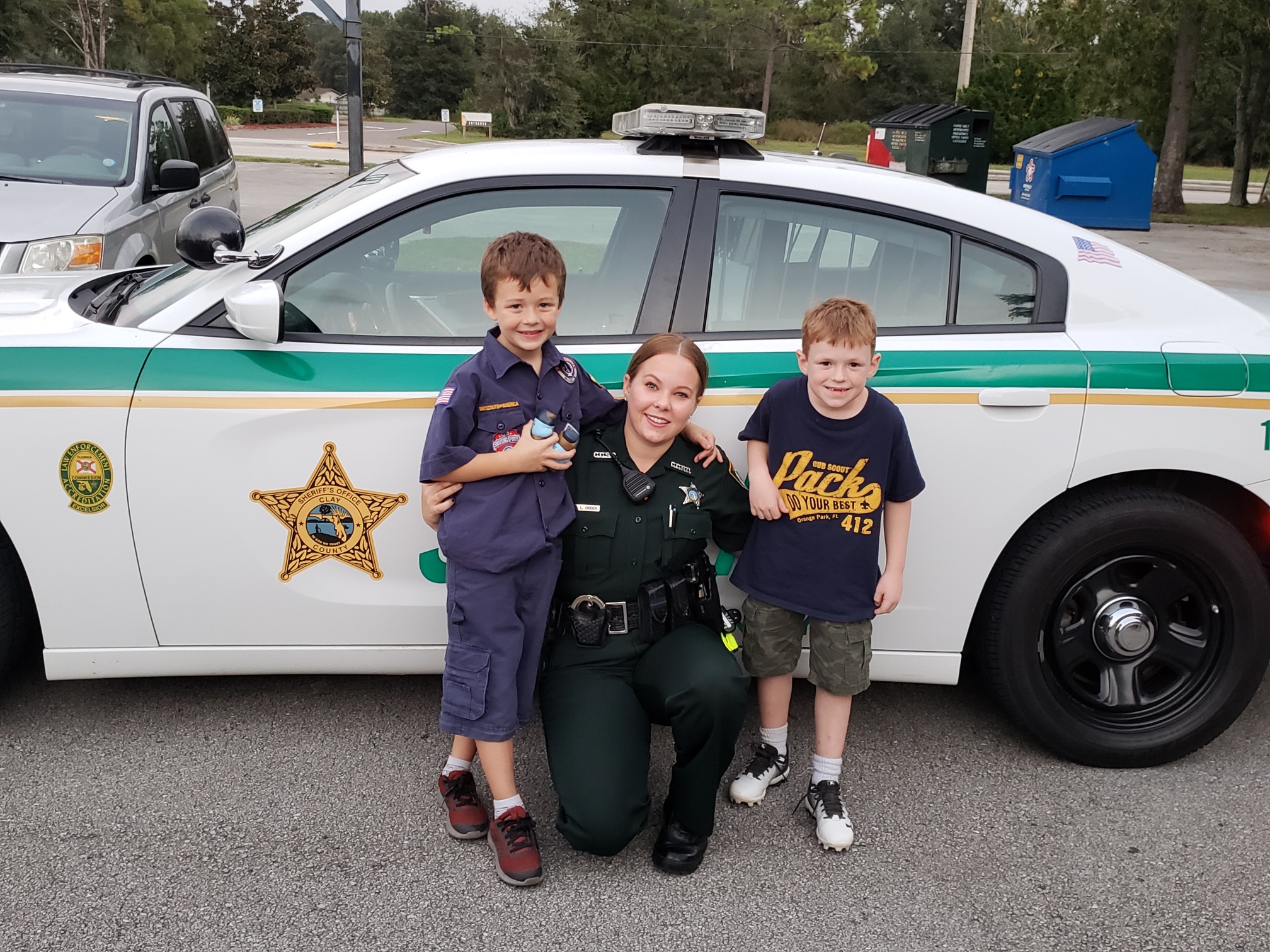
What sets Florida sheriffs apart is that their role in school safety is continuous, not reactive. They are involved in daily campus life through SROs, long-term planning through training and policy development, and real-time decision-making when concerns arise. That consistency builds trust — with students, educators, and families — and creates an environment where issues are more likely to be reported early.
About the Florida Sheriffs Association
Founded in 1893, the Florida Sheriffs Association was established to unite Florida’s sheriffs in advancing public safety, shaping legislation, and fostering collaboration among law enforcement agencies. Over the decades, FSA has grown into a powerful advocate for law enforcement, providing training, resources, and support to ensure the protection and security of Florida’s communities.
The Florida Sheriffs Association keeps the public informed on law enforcement initiatives, public safety updates, and the work of Florida’s sheriffs. From in-depth blogs to legislative news and community programs, we keep you connected to the issues that matter. Explore more at flsheriffs.org and stay engaged with Florida’s law enforcement community.