



How First Responders Secure a Crime Scene
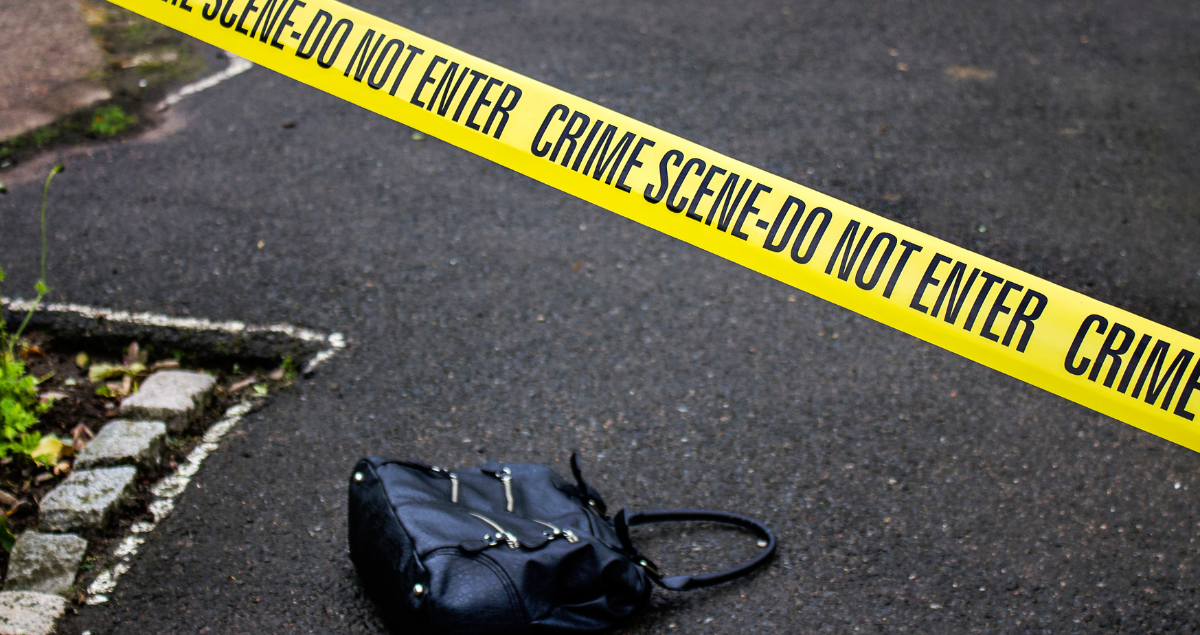
When first responders arrive at a crime scene, their actions set the stage for the entire investigation. A crime scene is defined as any location where evidence of an alleged crime may be found. It isn’t limited to the spot where the crime physically occurred, but can also include surrounding areas, routes taken by suspects or victims and any place where related evidence might be located. A crime scene is treated as a controlled environment where trained personnel work to identify, collect and preserve evidence in a way that maintains its integrity for investigation and potential courtroom use. First responders play a vital role when they secure a crime scene and their work is important in preserving justice and public safety.
The Importance of Securing a Crime Scene
The first moments after a first responder arrives to a crime scene are often the most critical in an investigation because evidence is at its most vulnerable. Here’s why:
- Footprints can be trampled, fingerprints can be smudged and witnesses’ memories can fade or be influenced within minutes.
- Environmental factors such as rain, wind or heat can quickly destroy physical clues.
- The presence of bystanders or suspects can introduce contamination or alter the scene.
Swift, decisive action in those initial minutes helps lock down the scene, preserve evidence in its original state and capture accurate observations that form the backbone of the investigation.
The Role of First Responders in Securing a Crime Scene
When a crime occurs, first responders are the first trained professionals on scene—often law enforcement officers, EMS personnel or firefighters. While their primary duties may differ, they share a common responsibility: ensure safety, stabilize the situation and protect evidence until investigators take over.
To fulfill this role, first responders follow a series of steps.
1. Assess the Scene
First responders quickly evaluate the situation to identify hazards, assist victims and define the boundaries.
- Ensure the area is safe for responders, victims and bystanders.
- Identify threats such as armed suspects, fires and unstable structures.
- Establish the scope of the crime scene.
2. Preserve the Scene
The area is immediately secured, with access limited to authorized personnel.
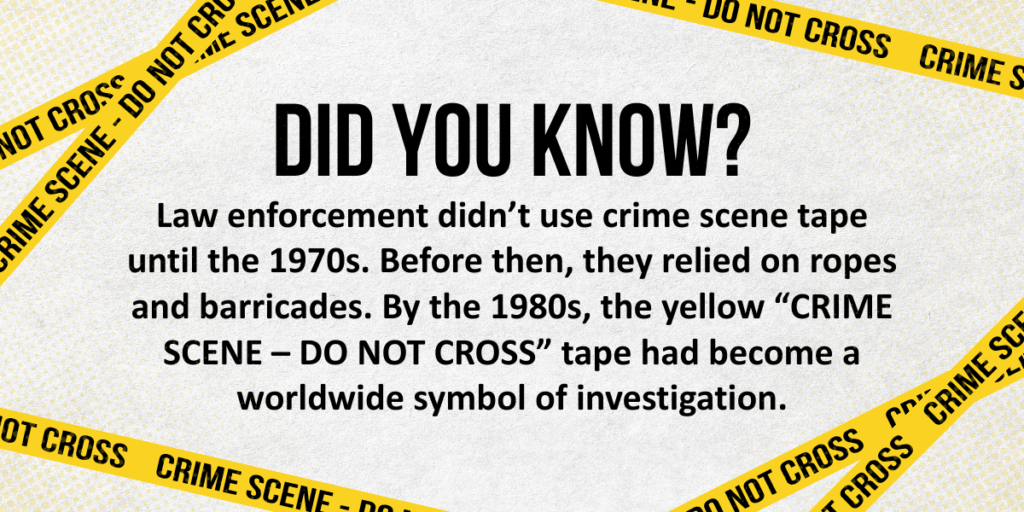
- Establish physical boundaries with tape, vehicles or personnel.
- Control entry and keep a log of who comes and goes.
3. Protect the Evidence
Potential evidence is recognized, documented and safeguarded until investigators can properly collect it.
- Avoid unnecessary handling or movement of objects.
- Protect fragile evidence from weather, crowds or decay.
- Mark and flag items of interest for investigators.
4. Maintain Chain of Custody
All evidence is carefully tracked from collection through storage. Records show who handled each item, ensuring accountability and admissibility in court.
5. Communicate and Coordinate
First responders share information clearly and efficiently with investigators and partner agencies.
- Provide timely updates to arriving personnel.
- Work with fire, EMS and other agencies.
- Stay alert to changing conditions or new threats.
6. Document Initial Observations
First responders record notes, times and observations of the scene before evidence is collected. These early records often serve as vital reference points for investigators and in court.
Your Role at a Crime Scene
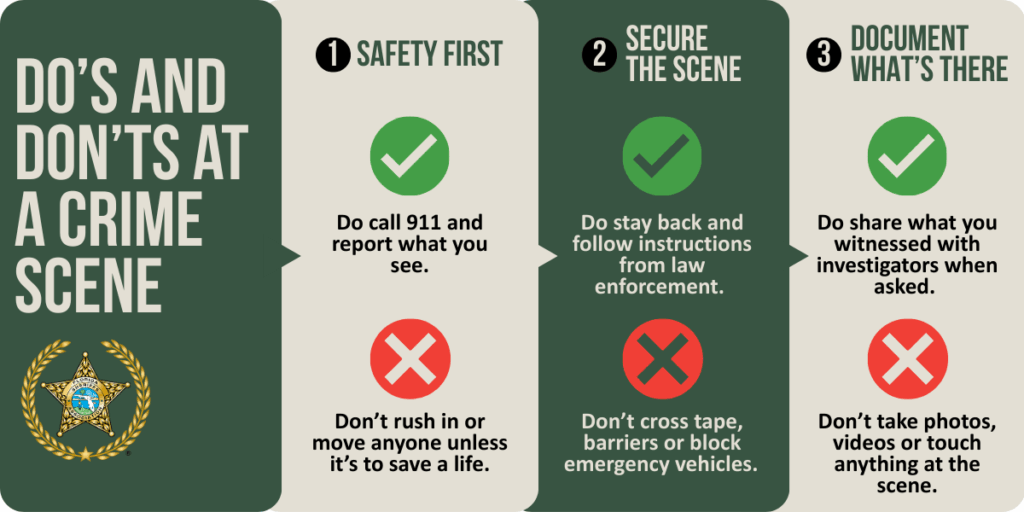
If you encounter a crime scene, your actions can directly affect the investigation. The most important thing you can do is step back and let law enforcement work. Call 911 immediately if officers are not yet on the scene, and then follow these guidelines.
- Keep your distance. Do not cross barriers, enter restricted areas or get too close.
- Do not touch anything. Avoid moving objects or disturbing the scene in any way.
- Follow instructions. Listen carefully to police and first responders.
- Limit photos or videos. Recording the scene can interfere with the investigation.
- Control pets and children. Make sure they stay clear of the area.
- Report, don’t investigate. Share what you saw with authorities, but never try to collect evidence yourself.
Even small, well-meaning actions can destroy critical evidence. By staying alert, keeping your distance and following directions, you help first responders protect lives, preserve evidence and ensure justice is served.
About the Florida Sheriffs Association
Founded in 1893, the Florida Sheriffs Association was established to unite Florida’s sheriffs in advancing public safety, shaping legislation and fostering collaboration among law enforcement agencies. Over the decades, FSA has grown into a powerful advocate for law enforcement, providing training, resources and support to ensure the protection and security of Florida’s communities.
The Florida Sheriffs Association’s job site—flsheriffsjobs.org—serves as a central hub where job seekers can browse and apply for a wide range of law enforcement and support roles with sheriff’s offices across Florida. Through its Career Planning Portal, the site also offers resources to help candidates prepare for success, including expert advice, coaching, resume tools, customizable job alerts and an employer directory. Together, these features give job seekers the guidance and opportunities they need to build a rewarding career in law enforcement.
The Florida Sheriffs Association helps you stay informed on the latest law enforcement initiatives, public safety updates and the work of Florida’s sheriffs. From in-depth blogs to legislative news and community programs, we keep you connected to the issues that matter. Explore more at flsheriffs.org and stay engaged with Florida’s law enforcement community.