



Law Enforcement’s Role in Hurricane Response: A Commitment to Serve
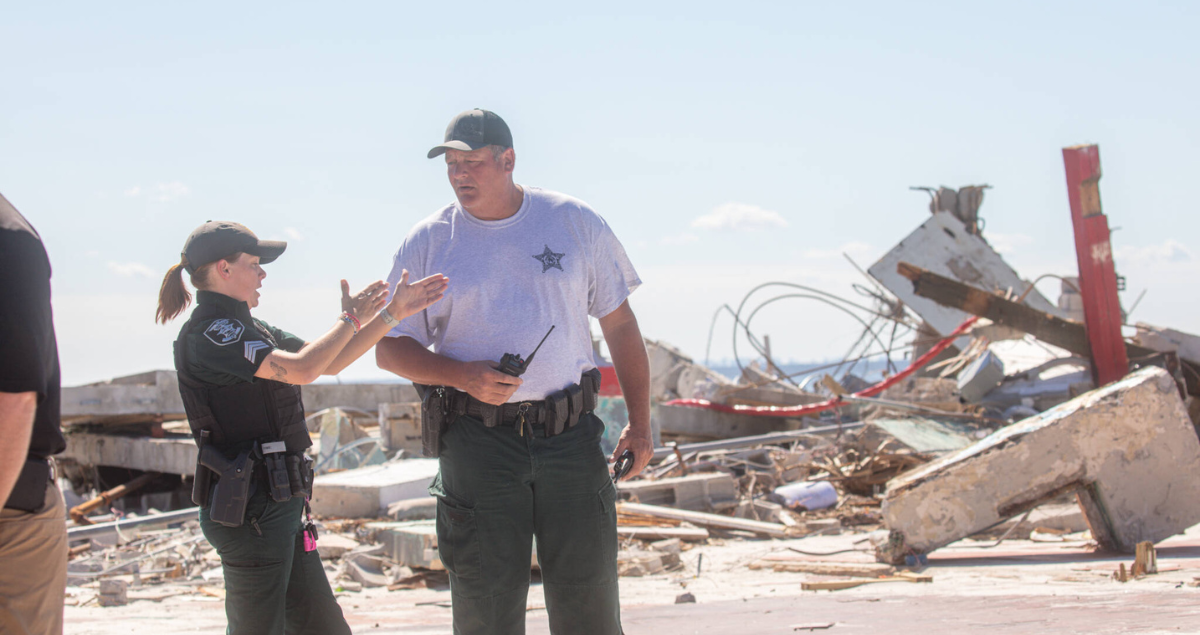
Florida’s law enforcement community plays a vital, multifaceted role in the response before, during and after hurricanes by maintaining order and protecting the safety of their communities. Sheriff’s deputies assist with evacuations, perform rescues, prevent looting and help ensure essential services such as communication remain operational. They also coordinate with other agencies and first responders. Learn how these dedicated men and women work tirelessly to safeguard Floridians from the devastating impact and aftermath of hurricanes.
Before the Storm: Preparedness and Public Safety
Before a hurricane makes landfall, preparation and public safety are the focus of local law enforcement. This is just the beginning of the role of law enforcement in hurricane response.
- Emergency Management: Sheriffs coordinate closely with county emergency management, state officials and first responders to develop response plans.
- Evacuation Orders: While evacuation orders are typically issued by county or state officials, sheriffs play a critical role in enforcing those orders and ensuring public compliance.
- Public Communication: Sheriffs inform the public through press briefings, social media and community outreach which includes sharing evacuation routes, shelter locations and storm updates.
- Resource Deployment: Deputies help with traffic management, evacuation assistance, securing vulnerable areas and staging rescue equipment.
- Protecting Critical Infrastructure: Law enforcement helps safeguard utilities, hospitals, shelters and emergency operation centers.
During the Storm: Emergency Response
As a hurricane makes landfall, Florida’s sheriffs and deputies shift into emergency response mode, balancing rescue efforts with public safety under rapidly deteriorating conditions.
- Life-Safety Operations: Deputies conduct rescue operations when safe, respond to emergency calls and assist stranded residents when conditions allow.
- Maintaining Order: Law enforcement remains on patrol to deter looting and other crimes, often under extremely dangerous conditions.
- Shelter Security: Sheriffs’ offices provide security at designated shelters, especially special needs and pet-friendly shelters.
After the Storm: Recovery and Community Support
When the storm ends, the real work begins. In the aftermath of a hurricane, Florida’s sheriffs and deputies remain deeply involved in recovery efforts, providing critical support, restoring order and helping communities begin the long process of rebuilding.
- Search and Rescue: Deputies assist in locating missing persons, conducting welfare checks and responding to medical emergencies.
- Damage Assessment: Law enforcement partners with other agencies to assess damage and prioritize areas in need of urgent assistance.
- Restoring Order: They enforce curfews, prevent looting and support recovery efforts.
- Community Reassurance: Sheriffs’ presence provides critical stability during chaotic times, helping restore confidence as communities rebuild.
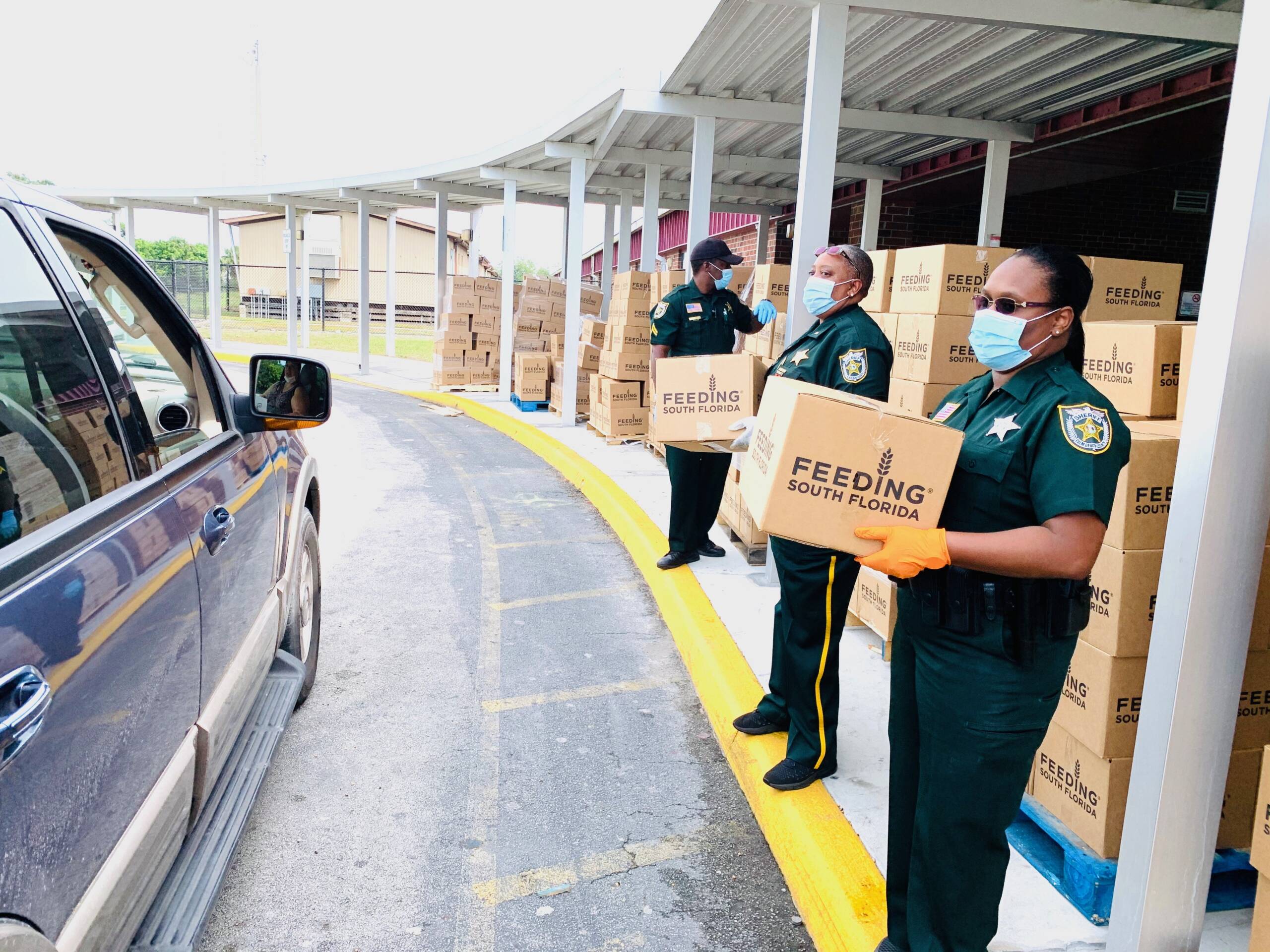
- Support Distribution: Deputies may assist with distributing supplies, coordinating relief efforts and escorting utility crews.
- Provide Humanitarian Support: Providing food and water to residents who may be stranded or in areas that may be unreachable, tarping homes to prevent further damage and clearing roadways to assist first responders gain access to unpassable areas.
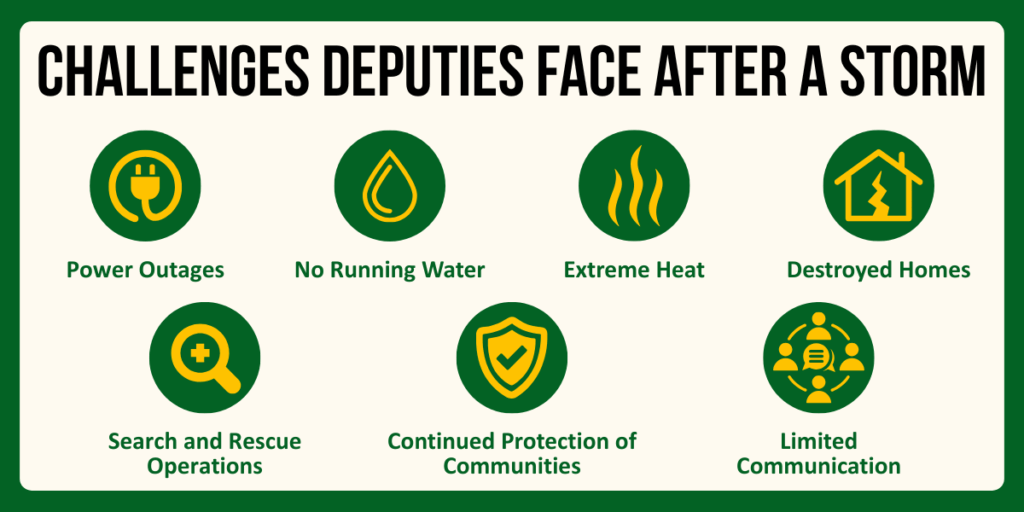
Impact on Law Enforcement
Major storms like hurricanes place immense personal and professional strain on law enforcement officials, who are often helping others rebuild their lives while managing their own losses. Florida sheriffs lead efforts in hurricane preparedness, response and recovery by ensuring public safety, enforcing the law and providing critical leadership. At the same time, these storms take a heavy toll on deputies, disrupting their families, damaging their homes and demanding unwavering service in the face of personal hardship.
Despite personal loss, their sense of duty—and the vital role of law enforcement in hurricane response—compels them to serve while facing these challenges.
- Separation from Family: Officers often work long shifts for days or weeks, unable to protect or assist their own families. Many sleep at command posts or in patrol vehicles.
- Personal Property Loss: Similar to other residents, deputies may suffer damage to or loss of their homes, vehicles and personal belongings.
- Mental and Emotional Strain: Officers face the trauma of witnessing widespread destruction, injuries, fatalities and human suffering, all while balancing their duty to serve with concern for loved ones.
- Physical Exhaustion: Hurricane response requires long hours in dangerous conditions such as extreme weather, flooded areas, debris-filled streets and unstable infrastructure.
- Community Expectations: During disasters, public reliance on law enforcement spikes, putting immense pressure on deputies to perform under stress while coping with personal losses.
In a partnership with the Florida Deputy Sheriffs’ Association, the Lend a Hand Fund provides immediate monetary resources to deputies and their families experiencing a crisis. To support law enforcement personnel in their greatest time of need, donate today.
A History of Exemplary Leadership
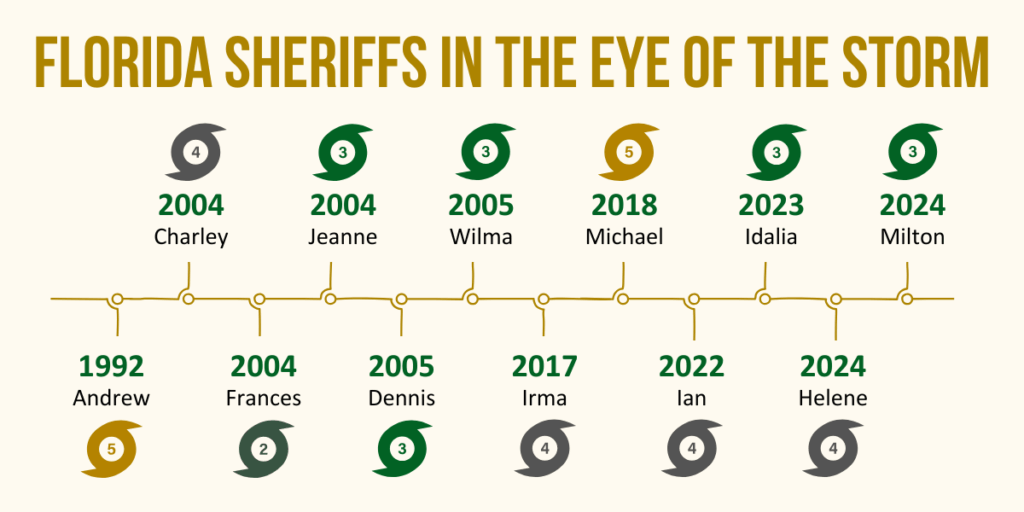
From Hurricane Andrew to Michael, Florida sheriffs and deputies have consistently stepped up and shown leadership by:
- Staying behind to protect communities during landfall
- Risking their lives to conduct rescues
- Working exhausting shifts despite personal loss
- Providing steady leadership amid chaos
- Reassuring residents and restoring order in the aftermath of disaster
- Serving in a critical role of law enforcement in hurricanes that supports long-term recovery efforts
Hurricane Andrew
Hurricane Andrew was a defining moment in Florida’s disaster history, offering one of the earliest and clearest examples of sheriffs’ deputies going above and beyond under catastrophic conditions. When the category 5 storm struck South Florida on August 24, 1992, with sustained winds of 165 mph, it left behind a trail of destruction. Entire neighborhoods were leveled, infrastructure was shattered and communication systems were unusable. Deputies immediately shifted into search and rescue mode, pulling survivors from collapsed homes while enduring oppressive heat, no power or running water, and in many cases, the loss of their own homes.
For the first time on such a large scale, sheriff’s deputies from across the state were mobilized to assist in a disaster zone. Counties including Broward, Palm Beach, Hillsborough and Orange sent deputies, equipment and supplies to Dade County. This large-scale mutual aid effort marked a turning point in how Florida’s sheriffs coordinate during disasters. Deputies worked long hours enforcing curfews, protecting property and restoring order amid concerns of looting and civil unrest. Many slept in squad cars or makeshift camps, pressing on despite immense personal hardship.
The psychological toll was immense, as deputies confronted death, destruction and human suffering on an unprecedented scale. Ultimately, Hurricane Andrew set the expectation that Florida’s sheriffs and deputies would be “first in, last out” during catastrophic events. That commitment continues to define their response to natural disasters more than three decades later.
Hurricane Michael
When Hurricane Michael struck Florida’s Panhandle in October 2018, it became one of only four category 5 hurricanes to make landfall in the continental United States—and the strongest to ever hit the region. Once again, Florida’s sheriffs played a critical role before, during and after the storm.
In the days leading up to landfall, sheriffs’ offices across the region coordinated large-scale evacuation efforts, especially in vulnerable coastal communities including Mexico Beach and Panama City. Deputies helped evacuate hospitals, nursing homes and correctional facilities under extreme time pressure. As the storm made landfall with winds exceeding 160 mph, many deputies remained in hardened facilities to maintain communication and ensure they could respond as soon as it was safe.
After the storm, with communications infrastructure collapsed in several counties, sheriffs relied on satellite phones and radios to coordinate operations. Deputies conducted house-to-house searches in devastated neighborhoods, provided aid to the injured and maintained round-the-clock patrols to prevent looting and enforce curfews. Sheriffs also played a key role in keeping the public informed, sharing updates on shelter availability, recovery resources and safety measures. Many deputies worked back-to-back shifts despite having lost their own homes, continuing to serve their communities when they were needed most.
Hurricane Idalia
In August 2023, Hurricane Idalia tore through several north Florida counties, including Taylor, Suwannee, Lafeyette, Dixie, Columbia and Madison, leaving a path of chaos and devastation in these rural areas. The storm caused significant damage to homes, infrastructure and critical services, leaving many communities in crisis. Sheriffs and officers from various counties worked together seamlessly, providing support to the hardest-hit regions. Through coordinated efforts, mutual aid and the steadfast commitment of law enforcement, the Florida Sheriffs Association Task Force mounted a unified and effective response to overcome the storm’s challenges.
Hurricane Preparedness in Florida
When a hurricane is approaching, having reliable, Florida-specific resources at your fingertips can make all the difference. From real-time storm updates to evacuation routes and shelter locations, Florida residents have access to trusted tools that help them stay informed and safe.
The Florida Division of Emergency Management provides weather alerts, preparedness guides and an interactive evacuation zone map. You can also sign up for emergency alerts through your county’s sheriff’s office, check the Florida 511 for live traffic conditions, and download the FEMA app for disaster resources and assistance information. For a listing of sheriffs offices in Florida, visit our sheriff directory.
Don’t wait until a storm is on the horizon. Now is the time to review your local sheriff’s resources, create a family emergency plan and stay connected to official channels. Visit FloridaDisaster.org today and make sure you’re ready before the next storm hits.
Download our hurricane preparation checklist today and begin getting ready now.
About the Florida Sheriffs Association
Founded in 1893, the Florida Sheriffs Association was established to unite Florida’s sheriffs in advancing public safety, shaping legislation and fostering collaboration among law enforcement agencies. Over the decades, FSA has grown into a powerful advocate for law enforcement, providing training, resources and support to ensure the protection and security of Florida’s communities.
The Florida Sheriffs Association Task Force plays a vital role in coordinating and mobilizing law enforcement agencies during crises. In response to past hurricanes, the Task Force organized hundreds of deputy sheriffs to meet the urgent needs of affected communities. Sheriffs from across the state united to share personnel, equipment, and resources, highlighting the power of collaboration in times of disaster. These coordinated efforts underscore the importance of preparedness and demonstrate the ability of Florida’s sheriffs to adapt, respond, and serve their communities even under the most challenging conditions. The Florida Sheriffs Association helps you stay informed on the latest law enforcement initiatives, public safety updates and the work of Florida’s sheriffs. From in-depth blogs to legislative news and community programs, we keep you connected to the issues that matter. Explore more at flsheriffs.org and stay engaged with Florida’s law enforcement community.