










Self-Defense Tips to Keep You Safe
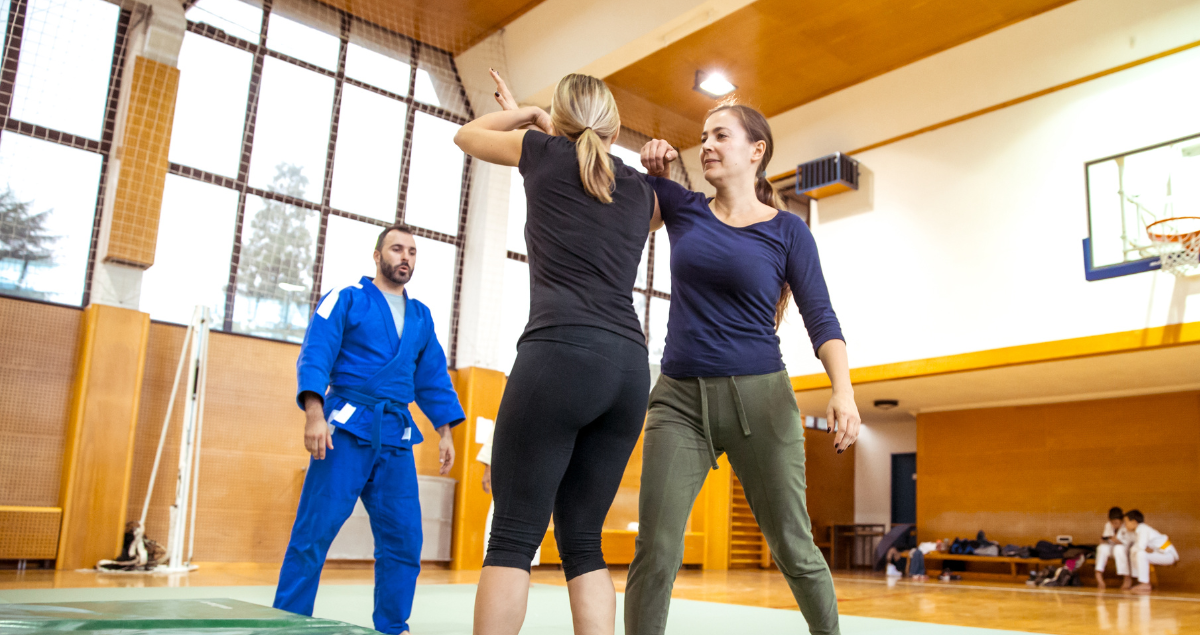
Self-defense equips individuals with the skills and confidence to protect themselves in dangerous situations. Beyond physical safety, it also builds confidence, sharpens awareness and helps you feel more secure whether you’re walking alone, traveling or in unfamiliar places. When you learn to protect yourself, you take charge of your own safety. Self-defense teaches you how to avoid risky situations, stay calm under pressure and respond in smart, effective ways. The National Institute of Justice reports that people who can physically defend themselves will often stop or escape an attacker.
These self-defense tips are designed for those focused on personal safety and situational awareness and will help you build the skills and confidence to stay prepared.
How to Improve Your Situational Awareness
Situational awareness plays a key role in personal safety by helping us spot potential threats before they escalate. Staying alert to our surroundings allows us to make smarter decisions, avoid danger and respond quickly when something doesn’t feel right. Criminals often look for easy, unaware targets. Practicing situational awareness and confident body language can deter threats before self-defense tools are even needed.
The following tips can help you strengthen your situational awareness and stay safer in everyday situations. Here are tips to project confidence.
- Stay alert by keeping your head up and eyes scanning your surroundings. Avoid looking down at your phone or wearing earbuds in both ears.
- Trust your instincts and if something feels off, change direction, cross the street or enter a public space. Your intuition is an early warning system.
- Identify nearby exits and safe zones such as businesses or crowded areas you can move toward if needed.
- Observe people around you and watch for individuals loitering, following your movements or behaving suspiciously.
- Walk with confidence by maintaining good posture, taking purposeful strides and making brief eye contact with others. Attackers often avoid those who appear aware and confident.
- If you’re unsure of your location, stop in a safe place to reorient yourself rather than pausing in open spaces. Avoid appearing distracted or lost.
- Keep your hands free and visible. Holding your keys, alarm or pepper spray in advance shows preparedness.

Self-Defense Classes
Self-defense classes are a smart investment in your personal safety, helping you build the confidence and skills needed to protect yourself in dangerous situations. Beyond physical techniques, these classes also improve your awareness and preparedness, empowering you to stay safe and respond effectively.
To find the right self-defense class for you, check community and government programs as many counties, cities and law enforcement agencies in Florida offer free or low-cost programs.
- The Rape Aggression Defense (R.A.D.) program offers classes for women and teens.
- Community centers or municipal parks and recreation departments often host intro-level self-defense classes.
- Campus safety departments at universities frequently offer classes to students and the public.
- Firearms and pepper-spray training is offered by certified instructors across Florida.
- Many fitness professionals now offer self-defense sessions, especially for women or teens.
- Churches or nonprofit organizations often host safety workshops as part of community outreach.
Self-Defense Tools
Self-defense tools enhance your ability to protect yourself, regardless of your size or strength. They offer peace of mind and can serve as a strong deterrent to potential threats, giving you greater confidence and control in uncertain situations.
Pepper Spray
Pepper spray is a popular and widely used self-defense tool designed to temporarily incapacitate an attacker by causing intense irritation to the eyes, respiratory system and skin. When used correctly, it can provide critical seconds to escape a dangerous situation.
Research supports its effectiveness. A study published in Criminology and Public Policy found that 68% of civilians who used pepper spray during an assault attempt were able to successfully escape. The study also showed that using pepper spray early in an encounter significantly increased the likelihood of avoiding injury.
In addition to its physical effects, pepper spray also offers psychological benefits. According to a 2020 report by the non-profit Public Safety Strategies Group, over 80% of users reported feeling safer and more confident carrying pepper spray, and most said they would recommend it to others as a non-lethal self-defense option.
How to Use Pepper Spray
To use pepper spray effectively, it’s important to be prepared.
- Read the instructions before carrying it, and practice holding and aiming (without discharging) so you’re ready if needed.
- Use it only if you’re in immediate danger. Pepper spray is a tool for self-defense, not intimidation.
- Keep in mind that its effective range is typically 6 to 12 feet.
- Be aware of wind direction to avoid blowback.
Personal Safety Alarm
Personal safety alarms are small, portable devices that emit a loud siren to draw attention and deter potential attackers. While they don’t physically stop an assailant, the sudden, high-pitched sound can startle them giving you precious seconds to escape or alert nearby bystanders. These alarms are easy to use, typically activated by pulling a pin or pressing a button. Legal to carry in all states, they’re especially popular among students, runners and anyone who walks alone, particularly in low-light or isolated areas. For best results, use them alongside situational awareness and other self-defense strategies.
Stun Gun
Stun guns are handheld self-defense devices that deliver a high-voltage, low-amperage electric shock intended to temporarily incapacitate an attacker by causing pain and disrupting muscle control. They require direct contact with the attacker, typically targeting areas like the torso, hips or thighs for maximum effectiveness. In a self-defense situation, a stun gun can give you critical time to escape. While considered non-lethal, proper handling is essential, and you should always check local laws, as their legality varies by state and city.
Tactical Pen/Kubotan
Tactical pens and kubotans are compact, durable self-defense tools that double as everyday items. A tactical pen functions like a regular pen, while a kubotan is a small rod often attached to a keychain. Both are designed to deliver targeted strikes to sensitive areas such as pressure points, joints, or bones—helping to disable or distract an attacker. Their discreet design and portability make them popular choices for those seeking a non-lethal, convenient form of protection. However, proper training is key to using them effectively and safely.
Tactical Flashlight
Tactical flashlights are durable, high-intensity lights built for both self-defense and emergency situations. When aimed at an attacker’s eyes, the intense beam can temporarily blind or disorient them, giving you a critical opportunity to escape or take control. Many models also feature sturdy, reinforced bodies that can serve as striking tools if needed. Legal to carry in all locations, tactical flashlights are also practical for everyday use, especially in low-light or nighttime settings.
Self-Defense Keychains (Cat Ears, Knuckle Tools)
Self-defense keychains, such as cat ear designs or knuckle tools, are compact handheld devices meant to increase striking power in close-contact situations. Cat ear keychains fit over your fingers, with pointed tips that can be used to target vulnerable areas such as the face or neck. These tools are discreet, lightweight and easy to carry on a keyring, making them readily accessible in an emergency. However, it’s important to check local laws, as some states classify them as illegal weapons similar to brass knuckles. Where legal, they can be an effective self-defense option when paired with basic training and strong situational awareness.
Take Control of Your Safety
Taking charge of your personal safety is one of the most important steps you can take to protect yourself and those around you. While staying aware and prepared is essential, you don’t have to do it alone. Law enforcement is your partner in safety, offering resources, training and support to help you prevent crime, respond to threats and build stronger, safer communities.
The Florida Sheriffs Association is here to help you stay informed and empowered.
- Explore practical public safety tips.
- Learn valuable skills through the Florida Sheriffs Public Safety Institute.
- Connect with your local sheriff’s office to stay engaged in protecting your community.

About the Florida Sheriffs Association
Founded in 1893, the Florida Sheriffs Association was established to unite Florida’s sheriffs in advancing public safety, shaping legislation and fostering collaboration among law enforcement agencies. Over the decades, FSA has grown into a powerful advocate for law enforcement, providing training, resources and support to ensure the protection and security of Florida’s communities.
The Florida Sheriffs Association helps you stay informed on the latest law enforcement initiatives, public safety updates and the work of Florida’s sheriffs. From in-depth blogs to legislative news and community programs, we keep you connected to the issues that matter. Explore more at flsheriffs.org and stay engaged with Florida’s law enforcement community.